
Airfield Noise and Your Ears Part II
Kelly Hudson
More ways to be ear-responsible
In Part I (May 1997 MA) we discussed damage to the human auditory process (hearing). The primary focus concerned engine-noise damage to the peripheral (inner ear) auditory system resulting in sensorineural hearing loss (nerve damage).
How can we prevent hearing damage? There are several options:
- Do nothing and continue to wear down our hearing.
- Quit the hobby and stay away from the airfields.
- Wait for quieter engines.
- Try hearing protection.
"The best method for this reduction is to prevent the noise generation source. When this is not possible, the next most desirable method is hearing protection." — Handbook of Clinical Audiology, 4th Edition, Jack Katz, 1994, p. 548.
Hearing protection is the proactive approach to reducing damage to our auditory system. Although it is not always 100% effective, it is a great place to start.
Attenuation and Noise Reduction Rating (NRR)
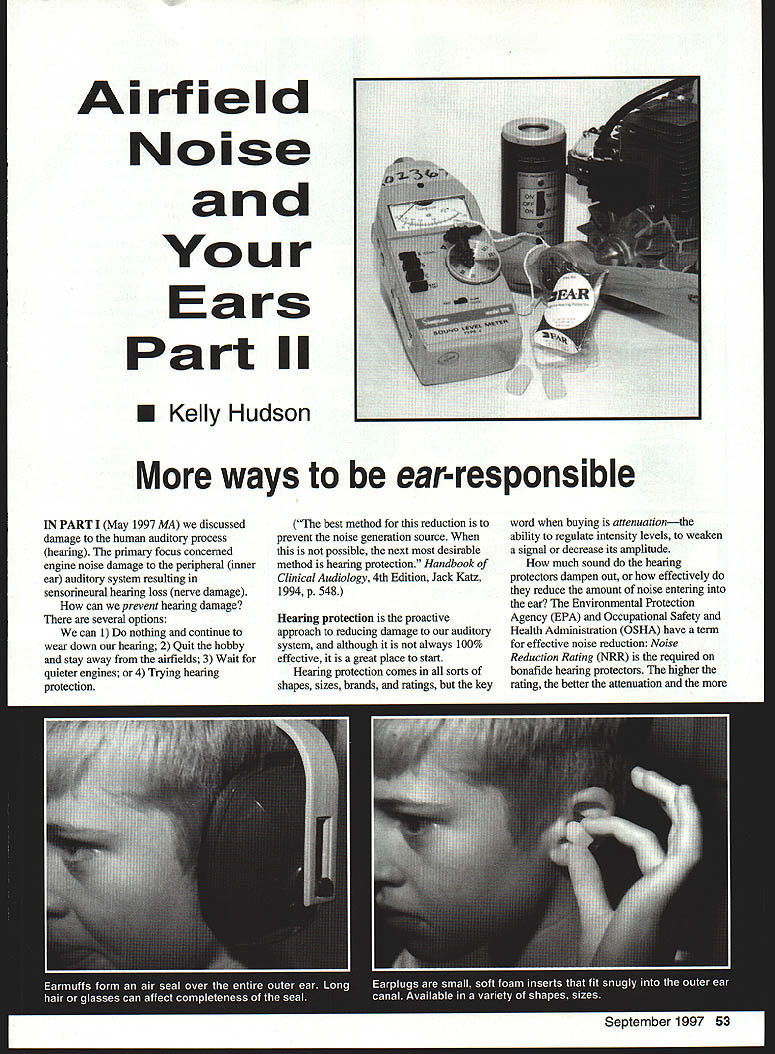
Hearing protectors come in all sorts of shapes, sizes, brands, and ratings, but the key word when buying is attenuation — the ability to reduce a sound's intensity or amplitude.
The Environmental Protection Agency (EPA) and the Occupational Safety and Health Administration (OSHA) use the Noise Reduction Rating (NRR) to indicate how effective a hearing protector is. The higher the NRR, the better the attenuation and the more protection provided to the auditory system.
Types of ear protection
Ear protectors come in two main forms: earmuffs and earplugs.
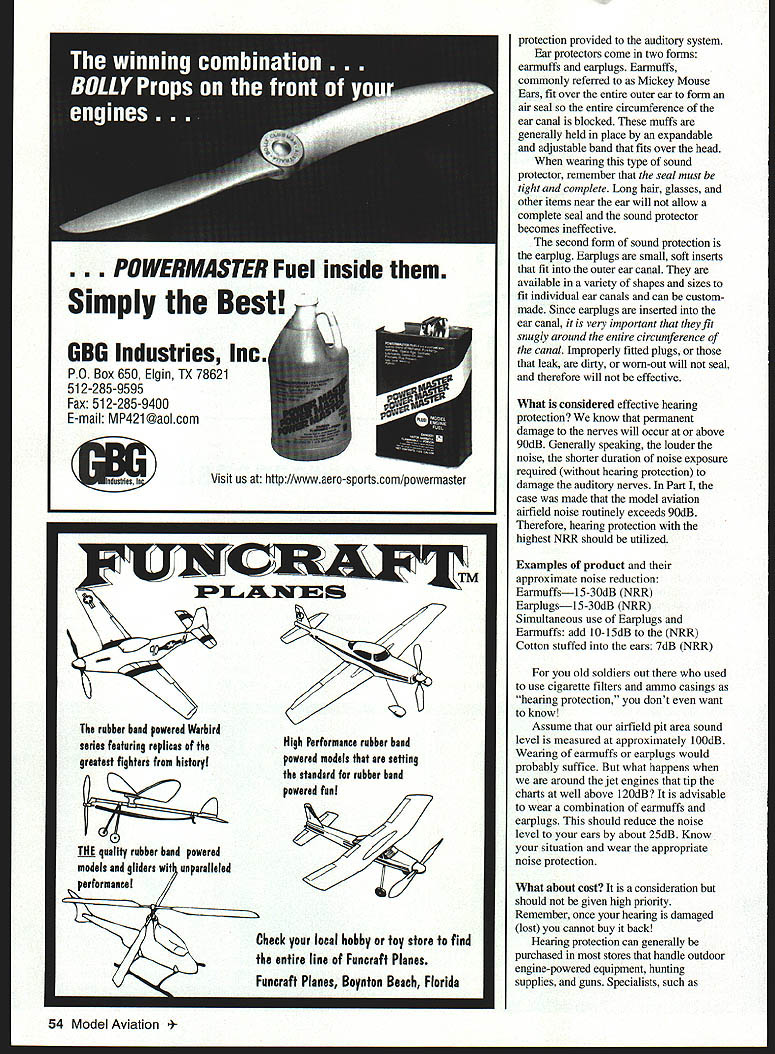
- Earmuffs: Commonly referred to as "Mickey Mouse" ears, these fit over the entire outer ear and form an air seal around the circumference so the ear canal is blocked. Muffs are generally held in place by an expandable adjustable band that fits over the head. The seal must be tight and complete; long hair, glasses, or other items near the ear will prevent a complete seal and make the protector ineffective.
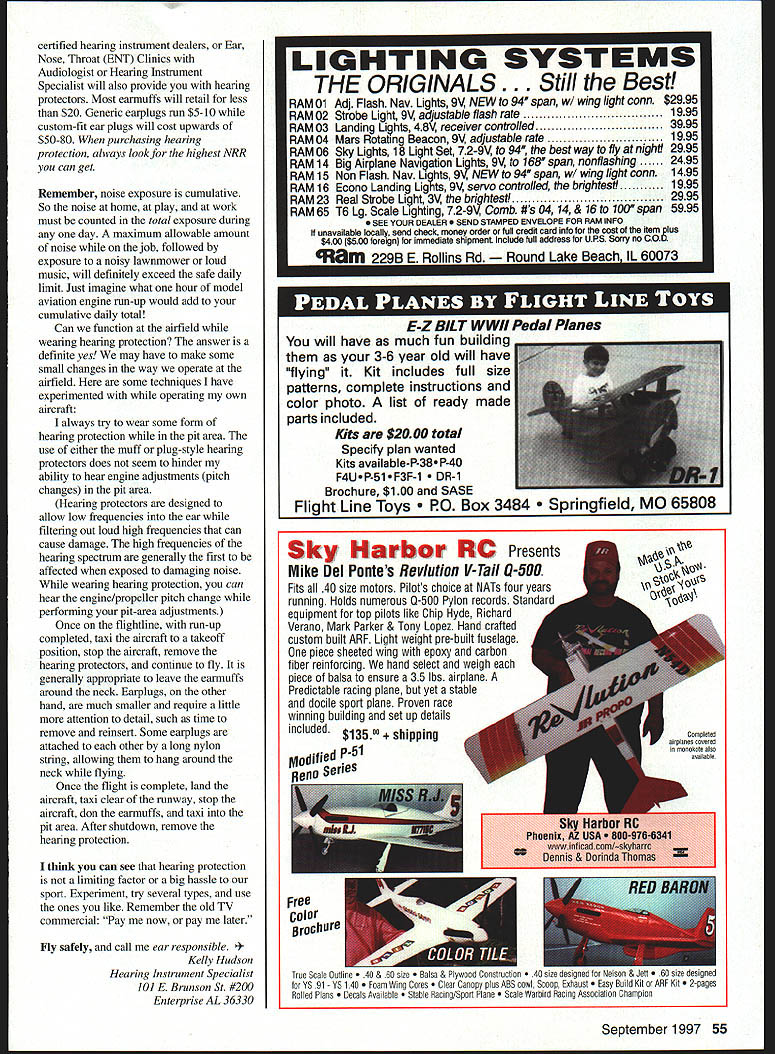
- Earplugs: Small, soft inserts that fit into the outer ear canal. They are available in a variety of shapes and sizes and can be custom-made. Because earplugs are inserted into the ear canal, it is very important that they fit snugly around the entire circumference of the canal. Improperly fitted, dirty, or worn-out plugs will leak and will not be effective.
What is considered effective hearing protection?
Permanent damage to auditory nerves can occur at or above 90 dB. Generally, the louder the noise, the shorter the duration of exposure required to cause damage. In many cases, model aviation/airfield noise routinely exceeds 90 dB. Therefore, use hearing protection with as high an NRR as practical.
Examples of product approximate noise reduction:
- Earmuffs: 15–30 dB NRR
- Earplugs: 15–30 dB NRR
- Simultaneous use (earplugs + earmuffs): add 10–15 dB NRR
- Cotton-stuffed ears: about 7 dB NRR
If the pit-area sound level is approximately 100 dB, wearing earmuffs or earplugs will probably suffice. Around jet engines whose tip speeds push levels well above 120 dB, it is advisable to wear a combination of earmuffs and earplugs; this should reduce the noise level at the ear by roughly 25 dB. Know your situation and wear appropriate noise protection.
Cost and where to buy
Cost is a consideration but should not be a barrier to protecting your hearing. Remember: once hearing is damaged, it is lost and cannot be bought back.
Hearing protection can generally be purchased at stores that handle outdoor engine-powered equipment, hunting supplies, and firearms. Specialists — certified hearing instrument dealers, Ear‑Nose‑Throat (ENT) clinics, audiologists, and hearing instrument specialists — will also provide hearing protectors.
Typical price ranges:
- Most earmuffs: less than $20
- Generic earplugs: $5–$8
- Custom-fit earplugs: $50–$80+
When purchasing hearing protection, look for the highest NRR you can get. Remember that noise exposure is cumulative: noise at home, at play, and at work counts toward your daily total. A maximum allowable occupational dose followed by a noisy lawnmower or loud music can exceed safe limits. One hour of model-engine run-up will add significantly to your daily exposure.
Can we function at the airfield while wearing hearing protection?
Yes. You may need to change some operating habits, but hearing protection need not limit your ability to participate. Practical tips:
- Wear protection in the pit area. Muffs or plugs generally do not hinder your ability to hear engine pitch changes during adjustments.
- Hearing protectors are designed to allow low frequencies while filtering high frequencies (the high frequencies are usually the first affected by damaging noise), so you can still hear pitch changes.
- On the flightline: after run-up, taxi to takeoff position, stop the aircraft, and remove the hearing protectors for the flight. Earmuffs can be left around the neck; earplugs may need reinserting after landing. Some earplugs are connected by a cord so they can hang around the neck.
- After landing and taxiing clear of the runway, put the protection back on before returning to the pit area. Don the protectors again after shutdown.
Experiment with several types and use the ones you like. Protect your ears now — "pay me now, or pay me later."
Fly safely, and call me ear-responsible.
Kelly Hudson Hearing Instrument Specialist 101 E. Brundson St. #200 Enterprise, AL 36330
Transcribed from original scans by AI. Minor OCR errors may remain.

