
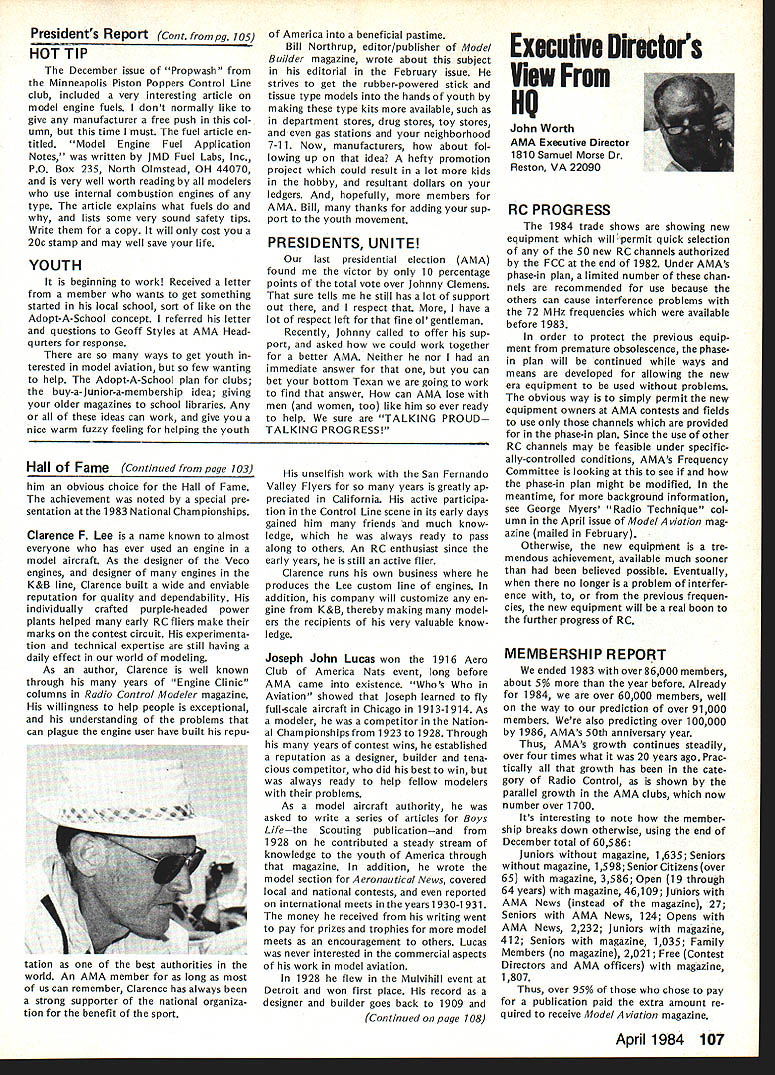
AMA Hall of Fame Honorees
The Council of Past AMA Presidents is pleased to announce the selections for the Hall of Fame from the 1983 nominations.
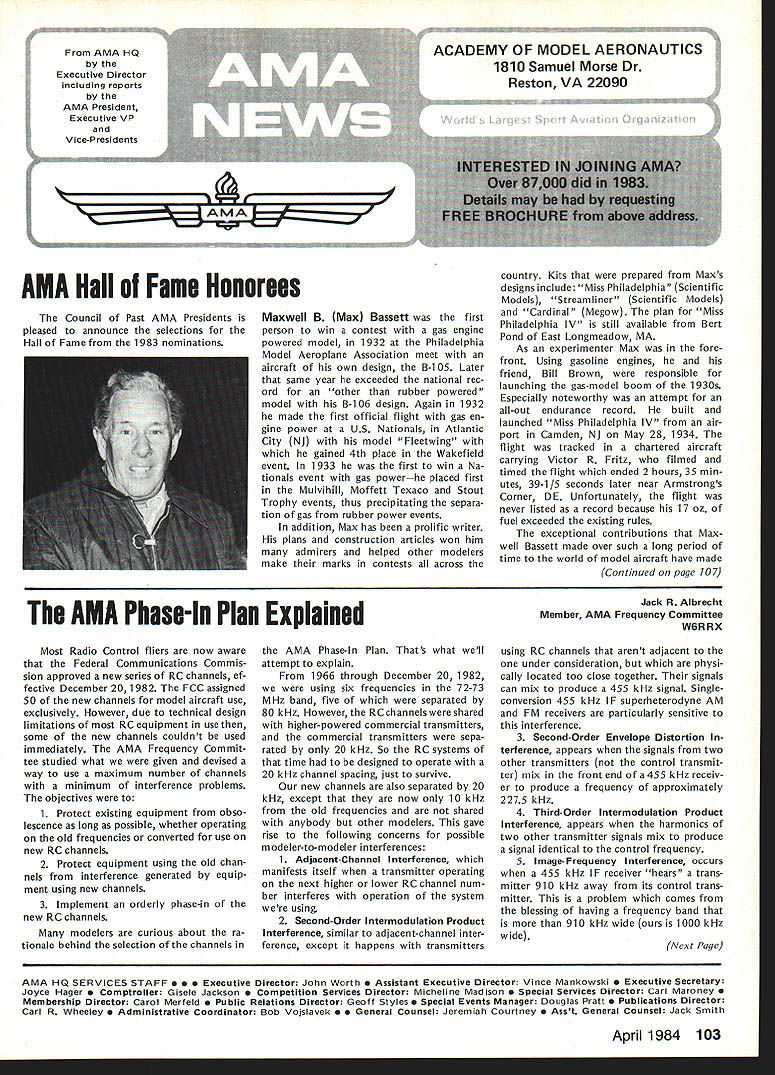
Maxwell B. (Max) Bassett
- Max Bassett was the first person to win a contest with a gas-engine–powered model (1932, Philadelphia Model Aeroplane Association meet) with his own design, the B-105. Later that year he exceeded the national record for an “other than rubber powered” model with his B-106 design.
- In 1932 he made the first official gas-engine flight at a U.S. Nationals (Atlantic City, NJ) with his model “Fleetwing,” placing 4th in the Wakefield event. In 1933 he was the first to win Nationals events with gas power—placing first in the Mulvihill, Moffett, Texaco and Stout Trophy events—helping precipitate the separation of gas and rubber-power events.
- Max was also a prolific writer; his plans and construction articles helped many modelers. Kits from his designs include Miss Philadelphia (Scientific Models), Streamliner (Scientific Models) and Cardinal (Megow). The plan for Miss Philadelphia IV is still available from Bert Pond, East Longmeadow, MA.
- As an experimenter, with friend Bill Brown he helped launch the gas-model boom of the 1930s. Notable was his endurance attempt with Miss Philadelphia IV launched from Camden, NJ on May 28, 1934; the flight was tracked and timed at 2:35:39.2, ending near Armstrong’s Corner, DE. The flight was not recognized as a record because the 17 oz. fuel load exceeded existing rules.
- The exceptional contributions Maxwell Bassett made over such a long period have made him a memorable figure in model aviation history.
AMA Phase-In Plan Explained
Jack R. Albrecht — Member, AMA Frequency Committee (W6RRX)
Most radio-control fliers are aware the Federal Communications Commission approved a new series of RC channels effective December 20, 1982. The FCC assigned 50 new channels exclusively for model aircraft use. Because of technical limitations of much existing RC equipment, some new channels could not be used immediately. The AMA Frequency Committee studied the situation and devised a phase-in plan to maximize usable channels while minimizing interference.
Objectives
- Protect existing equipment from obsolescence as long as possible, whether operating on old frequencies or converted for new RC channels.
- Protect equipment using old channels from interference generated by equipment using new channels.
- Implement an orderly phase-in of the new RC channels.
Background and rationale
- From 1966 through December 20, 1982, six frequencies in the 72–73 MHz band were used (five separated by 80 kHz). RC channels were shared with higher-powered commercial transmitters that were separated by 20 kHz, so RC systems were designed to survive 20 kHz spacing.
- The new FCC channels are also 20 kHz apart, but some are only 10 kHz from the old frequencies and are not shared with non-model users. This introduced possible modeler-to-modeler interference concerns.
Types of interference considered
- Adjacent-Channel Interference
- When a transmitter on the next higher or lower RC channel interferes with your system.
- Second-Order Intermodulation Product Interference
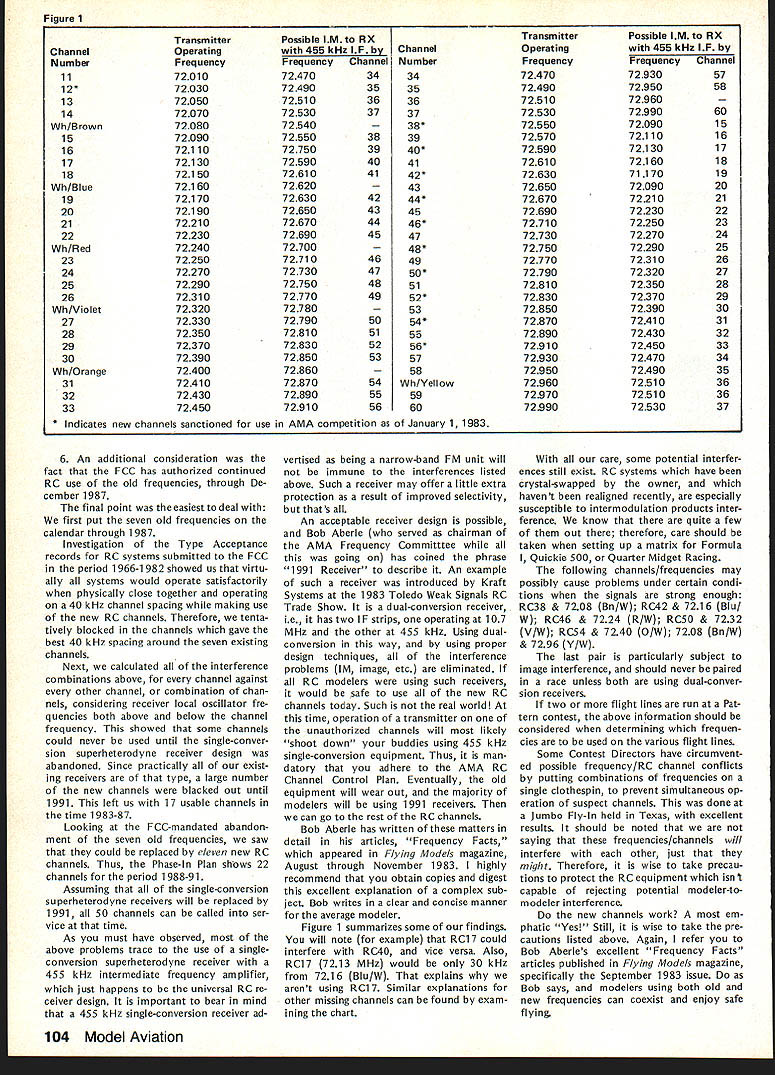
- Signals from nonadjacent transmitters mix (if physically close) to produce a 455 kHz product; single-conversion 455 kHz IF superheterodyne receivers are particularly sensitive.
- Second-Order Envelope Distortion Interference
- Signals from two other transmitters mix in the front end of a 455 kHz receiver to produce a frequency (example ~2,275 kHz) that causes interference.
- Third-Order Intermodulation Product Interference
- Harmonics of two transmitters mix and produce a signal identical to a control frequency.
- Image-Frequency Interference
- A 455 kHz IF receiver can “hear” a transmitter 910 kHz away from its control transmitter, a consequence of receiver architecture and band width.
- Regulatory consideration
- The FCC authorized continued RC use of the old frequencies through December 1987.
Phase-in decisions and receiver considerations
- The seven old frequencies were retained on the calendar through 1987.
- Investigation of Type Acceptance records (1966–1982) showed most systems would operate satisfactorily together with 40 kHz channel spacing while using new RC channels. Channels giving the best 40 kHz spacing around the seven existing channels were tentatively selected.
- Calculations of all interference combinations, including receiver local oscillator possibilities, showed some channels could not be used until single-conversion superheterodyne receivers were replaced. Given the prevalence of that receiver type, many new channels were blocked until 1991, leaving 17 usable channels for 1983–1987.
- After the old channels are abandoned (as required by the FCC), they can be replaced by eleven new channels; the Phase-In Plan shows 22 channels for 1988–1991.
- Advertised “narrow-band FM” single-conversion receivers are not immune to the interference types listed; improved selectivity may only provide limited protection.
“1991 Receiver” and modern designs
- An acceptable design is the dual-conversion receiver (example: first IF at 10.7 MHz, second IF at 455 kHz). Such designs, with proper techniques, eliminate IM, image, and other problems.
- Kraft Systems introduced an example dual-conversion receiver at the 1983 Toledo Weak Signals RC Trade Show.
- If everyone used such receivers, all new RC channels could be used immediately. Because most users still have single-conversion receivers, unauthorized channels can disable others’ equipment; adherence to the AMA RC Channel Control Plan is mandatory.
Practical notes and problem channel pairs
- Some channels (e.g., RC17) were excluded because of potential conflicts (RC17 could interfere with RC40 and is only 30 kHz from an old 72.16 channel).
- Crystal-swapped systems that haven’t been realigned are especially susceptible to intermodulation interference; take care when setting up matrices for racing classes (Formula 1, Quickie 500, Quarter Midget).
- The following channel/frequency pairs may cause problems under certain conditions (strong signals):
- RC38 & 72.08 (Bn/W)
- RC42 & 72.16 (Blu/W)
- RC46 & 72.24 (R/W)
- RC50 & 72.32 (V/W)
- RC54 & 72.40 (O/W)
- RC? & 72.96 (Y/W) — the last pair is particularly subject to image interference and should not be paired in a race unless both systems are dual-conversion receivers.
Recommendations
- When running multiple flight lines at a contest, consider these interference potentials when assigning frequencies.
- Some Contest Directors prevent conflicts by putting combinations of frequencies on a single flight line to avoid simultaneous operation of conflicting channel groups; this has been used successfully at events.
- The new channels do work, but take precautions. Consult Bob Aberle’s “Frequency Facts” articles (Flying Models, Aug–Nov 1983) for detailed explanations.
AMA News
RC Turn of Events
- A manufacturer has introduced an adaptation that allows selection of any of the 49 (or 50) available frequencies for aircraft use (“all-channel” synthesizer). It works very well but can cause problems when mixed with old wide-band receivers.
- Many modelers still use wide-band receiving equipment (10+ years old) that can detect signals on nearby frequencies. The implementation plan allowed eight years for owners to replace wide-band receivers with modern narrow-band units.
- When an “all-channel” unit is switched to a frequency near a wide-band receiver, it can unintentionally disable that receiver. Avoid switching to frequencies within 40 kHz of known wide-band users.
- Synthesizers are useful for fliers who operate alone (avoid local interference from pagers, etc.). The AMA will not allow use of frequencies in the 72 MHz band that are allocated to other users in remote exceptions; as far as the FCC is concerned, frequencies are legal to use until regulatory change.
- AMA insurance will cover models flown on synthesizer frequencies, but exercise caution in channel selection.
RC Progress
- 1984 trade shows show equipment that permits quick selection of any of the 50 new RC channels authorized by the FCC.
- Under the phase-in plan, only a limited number of channels are recommended until interference problems with pre-1983 72 MHz equipment are solved.
- The phase-in plan will continue until methods are developed that allow new-era equipment to be used without problems (one obvious solution is modern receiver design).
- The new equipment is a tremendous achievement and will be a real boon once old-equipment interference issues are resolved. See George Myers’ “Radio Technique” column (Model Aviation, April issue) for more background.
Hall of Fame (Continued from page 107)
Joseph Lucas
- In the mid-1930s Joseph Lucas worked closely with Lt. Alden and others to form a self-governing group within the National Aeronautic Association; this group was recognized in 1936 when the Academy of Model Aeronautics was established.
- As a designer, builder, teacher, organizer, competitor, writer and leader, Lucas made an outstanding contribution to model aviation and deserves Hall of Fame recognition.
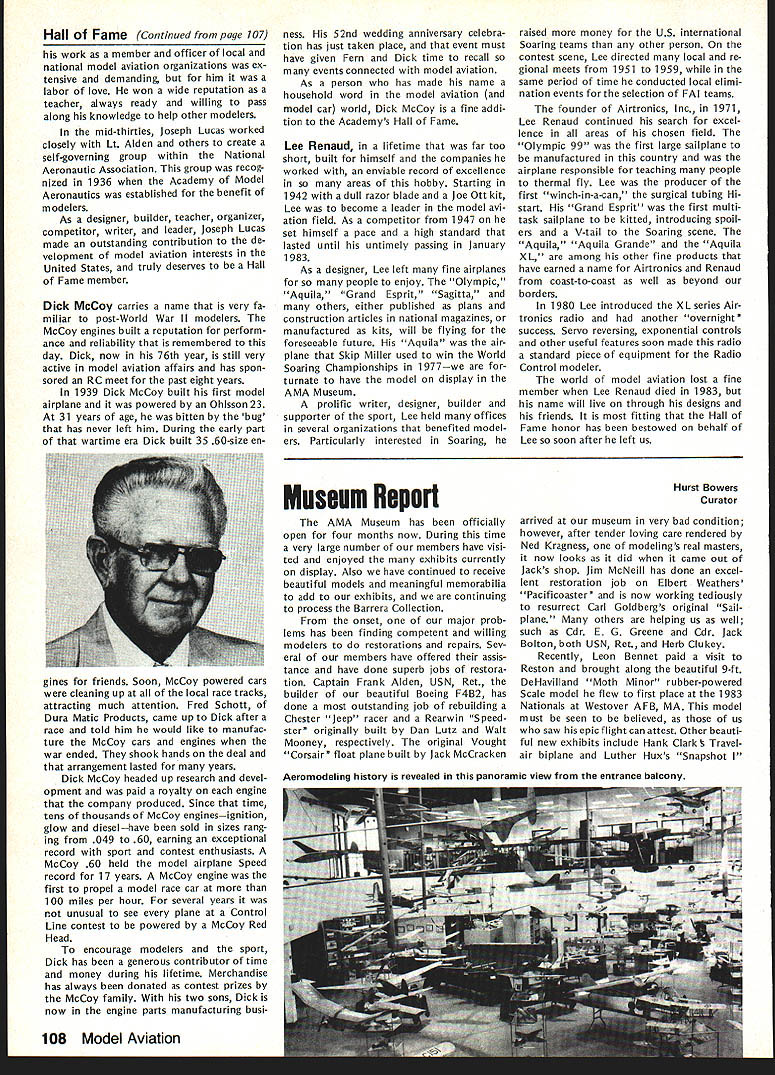
Dick McCoy
- Dick McCoy is well known to post–World War II modelers; McCoy engines earned a reputation for performance and reliability.
- He built his first model in 1939, worked on small engines during the wartime era, and later partnered with Dura Matic Products to manufacture McCoy cars and engines after the war.
- McCoy headed research and development and earned royalties on engines produced. Tens of thousands of McCoy ignition, glow and diesel engines (.049 to .60) were sold; a McCoy .60 held the model airplane speed record for 17 years, and a McCoy engine was the first to propel a model over 100 mph.
- Dick sponsored RC meets, donated merchandise for contest prizes, and, with his sons, remains in the engine parts manufacturing business. He is a fitting addition to the Academy’s Hall of Fame.
Lee Renaud
- Lee Renaud (died January 1983) left an enviable record of excellence. He began in 1942 and became a leader in model aviation from 1947 onward.
- As a designer, his notable models include the Olympic, Aquila, Grand Esprit, and Saggitta. His Aquila was used by Skip Miller to win the World Soaring Championships in 1977; the model is on display in the AMA Museum.
- Lee was a prolific writer, designer, builder and supporter of the sport. He raised significant funds for U.S. International Soaring teams and directed many local and regional meets.
- Founder of Airtronics, Inc. (1971), Lee introduced the Olympic 99 (first large U.S.-manufactured sailplane) and produced innovations such as the Hi-start and the first kitted multi-task sailplane (Grand Esprit) with spoilers and a V-tail.
- In 1980 the Airtronics XL radio included features (servo reversing, exponential pitch) that became standards. His contributions live on through his designs and the friends he left behind; the Hall of Fame honor is well deserved.
GEAR UP AND LOCKED!
Ohio • Pennsylvania • West Virginia
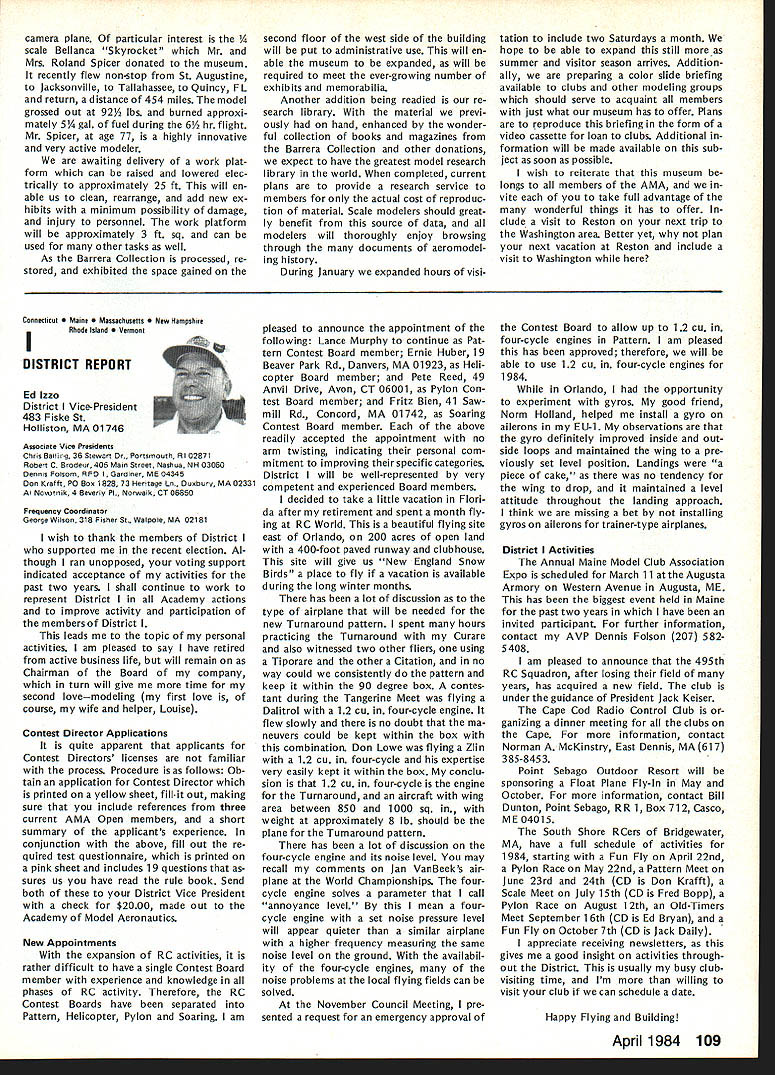
III District Report
Dave Brown — District III Vice‑President
4560 Layhigh Rd., Hamilton, OH 45013
Associate Vice Presidents
- Joe Eiben, 3689 Valley Forge Dr., Solon, OH 44139
- Francis Fluharty, 504 248 St., Vienna, WV 26101
- Corky Hershman, 509 N. North, Hollidaysburg, PA 16648
- Laird Jackson, 1025 Walnut St., Philadelphia, PA 19107
- Eugene Sheiley, 217 Euclid Ave., Scottdale, PA 15683
Frequency Coordinator
- James Bearden, 5522 Forman Ct., Cincinnati, OH 45239 — Phone: (513) 524-4650
Salt Fork II
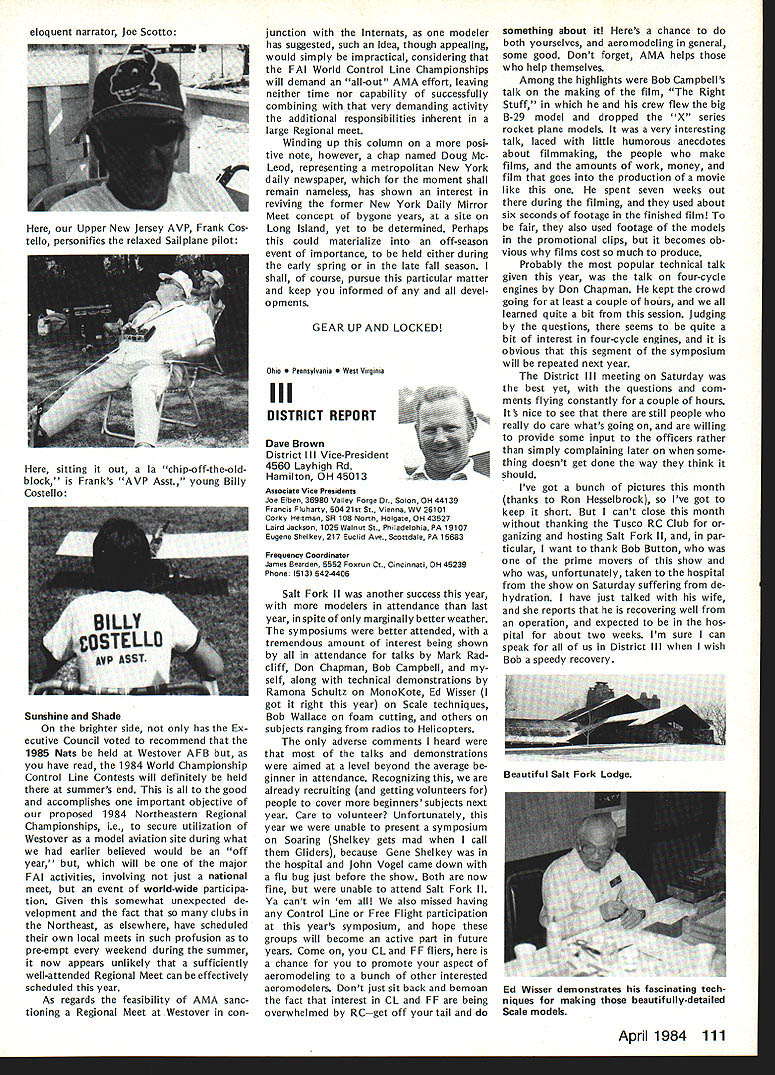
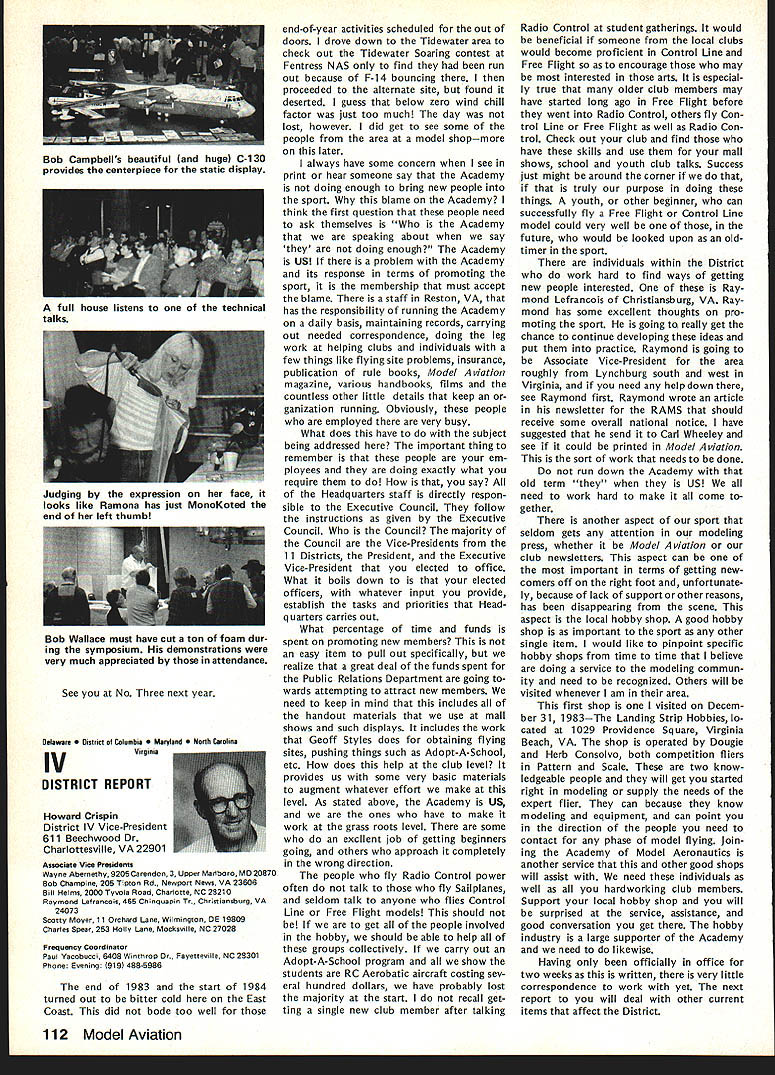
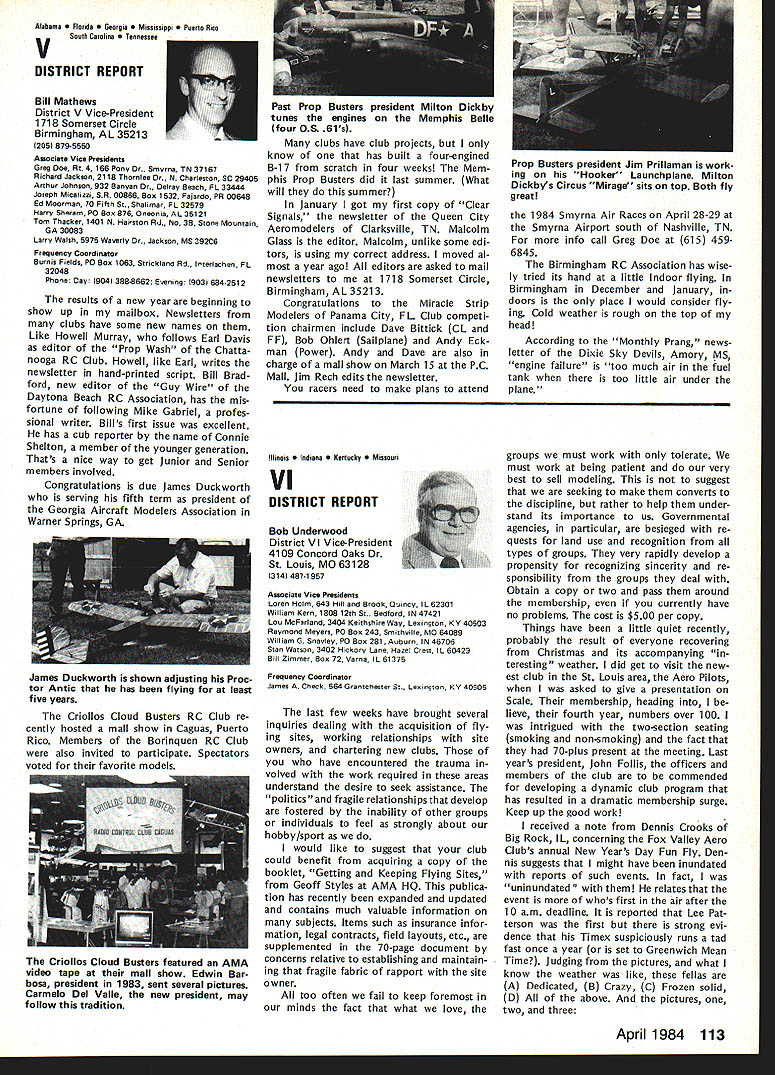
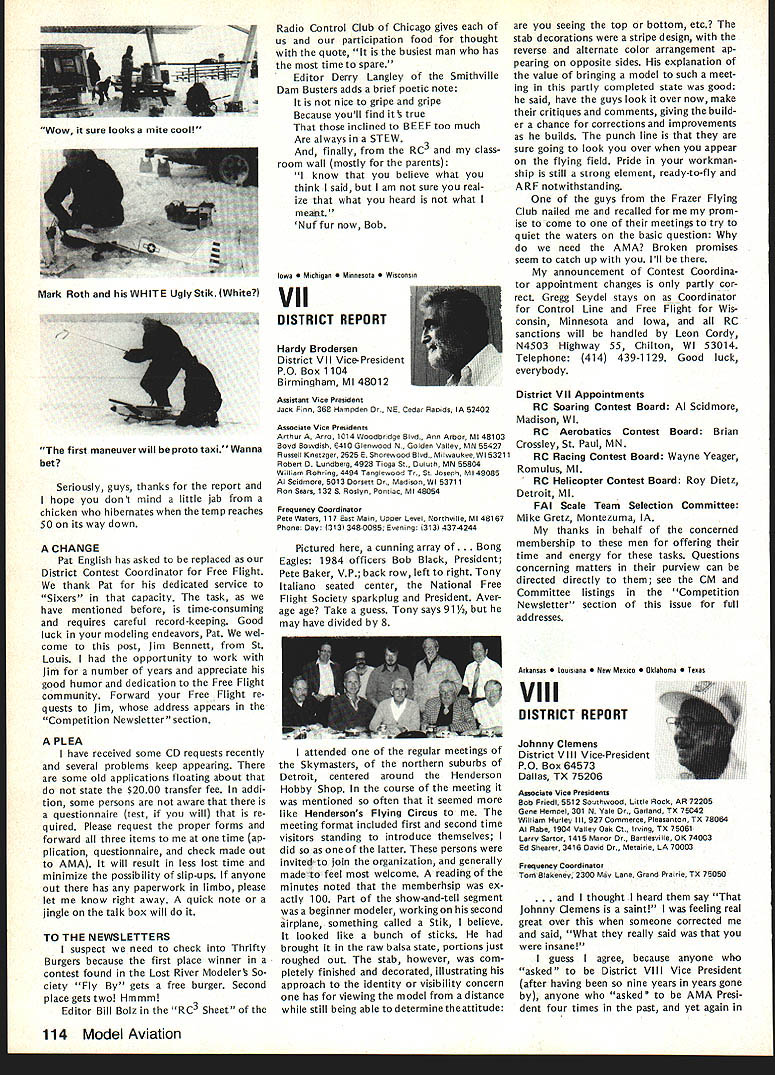
- Salt Fork II was successful with increased attendance despite marginal weather. Symposiums were well attended with talks by Mark Radcliffe, Don Chapman, Bob Campbell, Dave Brown and others.
- Technical demonstrations included Ramona Schultz (MonoKote), Ed Wisser (Scale techniques), Bob Wallace (foam cutting), and presentations on radios and helicopters.
- Some participants felt many talks were beyond the average beginner; organizers plan to include more beginner-level subjects next year and seek volunteers.
- Missing symposiums: Soaring (due to Gene Sheiley’s hospitalization) and Control Line/Free Flight participation. The Tusco RC Club organized and hosted Salt Fork II; thanks to Bob Button (hospitalized from the show) and best wishes for his recovery.
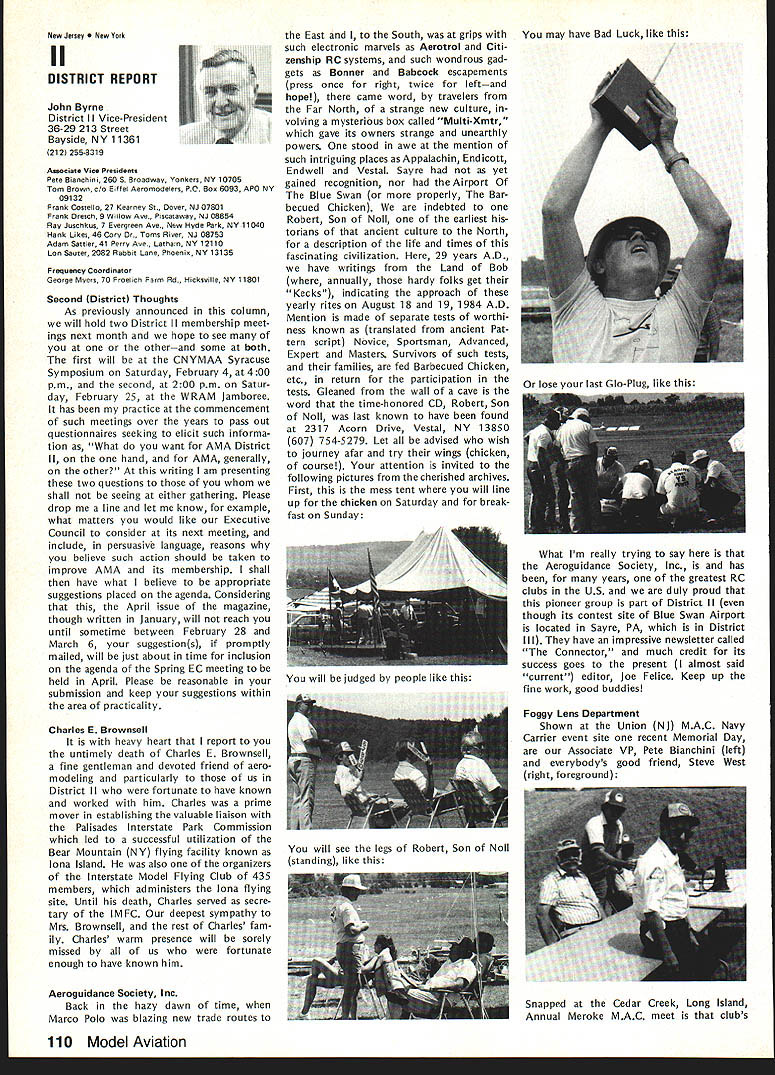
IV District Report
Howard Crispin — District IV Vice‑President
611 Beechwood Dr., Charlottesville, VA 22901
- Late 1983/early 1984 was bitterly cold on the East Coast and affected scheduled outdoor events.
- The Academy’s role in promoting the sport is a collective responsibility: the Academy is its membership. Headquarters staff carry out tasks directed by the Executive Council (district VPs, President, Executive VP); members should provide input to elected officers.
- Public Relations funds support member recruitment (handouts, mall shows, Adopt‑A‑School, flying-site efforts). Clubs must augment these efforts at the grassroots level.
- Cross-discipline outreach is important: RC pilots should reach out to sailplane, Control Line and Free Flight fliers. Showing only expensive RC aerobatic aircraft at schools can discourage newcomers; simpler demonstrations (CL, FF) can attract and retain new enthusiasts.
- Raymond Lefrancois (Christiansburg, VA) is active in promoting the sport and will serve as Associate Vice‑President for an area roughly from Lynchburg south and west in Virginia.
- Hobby shops are vital to the hobby. The Landing Strip Hobbies (1029 Providence Square, Virginia Beach, VA) run by Dougie and Herb Consolvo is highlighted as an exemplary shop—knowledgeable staff, support for beginners and experts alike. Support your local hobby shop.
V District Reports and Notices
District and Contest Coordinator changes
- Pat English has stepped down as District Contest Coordinator for Free Flight; Jim Bennett (St. Louis) assumes the post. Forward Free Flight requests to Jim (address in the Competition Newsletter section).
- For CD requests and transfers: include the $20 transfer fee and the required questionnaire with the application and check to AMA to avoid delays.
Newsletters and Club Notes
- Congratulations to many club newsletter editors for their contributions (see District IX list below for editors and newsletters).
VII District Report
Hardy Brodersen — District VII Vice‑President
P.O. Box 1104, Birmingham, MI 48012
Assistant Vice President
- Jack Finn, 362 Hampden Dr., NE, Cedar Rapids, IA 52402
Associate Vice Presidents
- Arthur A. Arco, Ann Arbor, MI
- David Bowdish, Golden Valley, MN
- Russell Knetzer, Milwaukee, WI
- Robert D. Lundberg, St. Joseph, MI
- William Rohring, St. Joseph, MI
- Al Schroeder, Madison, WI
- Ron Sears, Pontiac, MI
Frequency Coordinator
- Pete Waters, 117 East Main, Upper Level, Northville, MI 48167 — Day: (313) 348-0095; Evening: (313) 437-2424
Highlights and notes
- Attended a Skymasters meeting centered around Henderson Hobby Shop; membership at 100 and good newcomer welcome practices observed.
- Encouraged show-and-tell and critique of partially completed models to improve workmanship and preparedness for the flying field.
- Contest Coordinator appointments: Gregg Seydel remains Coordinator for Control Line and Free Flight for WI, MN, IA; Leonard Cordy will handle RC sanctions (N4503 Highway 55, Chilton, WI 53014 — Phone: (414) 439-1129).
- District VII Contest Board appointments:
- RC Soaring: Al Scidmore, Madison, WI
- RC Aerobatics: Brian Crossley, St. Paul, MN
- RC Racing: Wayne Yeager, Romulus, MI
- RC Helicopter: Roy Dietz, Detroit, MI
- F4J Scale Team Selection: Mike Gretz, Montezuma, IA
VIII District Report
Johnny Clemens — District VIII Vice‑President
P.O. Box 64573, Dallas, TX 75206
Associate Vice Presidents
- Bob Reeves, Little Rock, AR
- Gene Hemmel, Garland, TX
- William Hurley III, Pleasanton, TX
- Al Baca, Kerrville, TX
- Larry Sarto, Bartlesville, OK
- Ed Shearer, Metairie, LA
Frequency Coordinator
- Tom Balkeneye, 2300 Main Lane, Grand Prairie, TX 75050
Notes
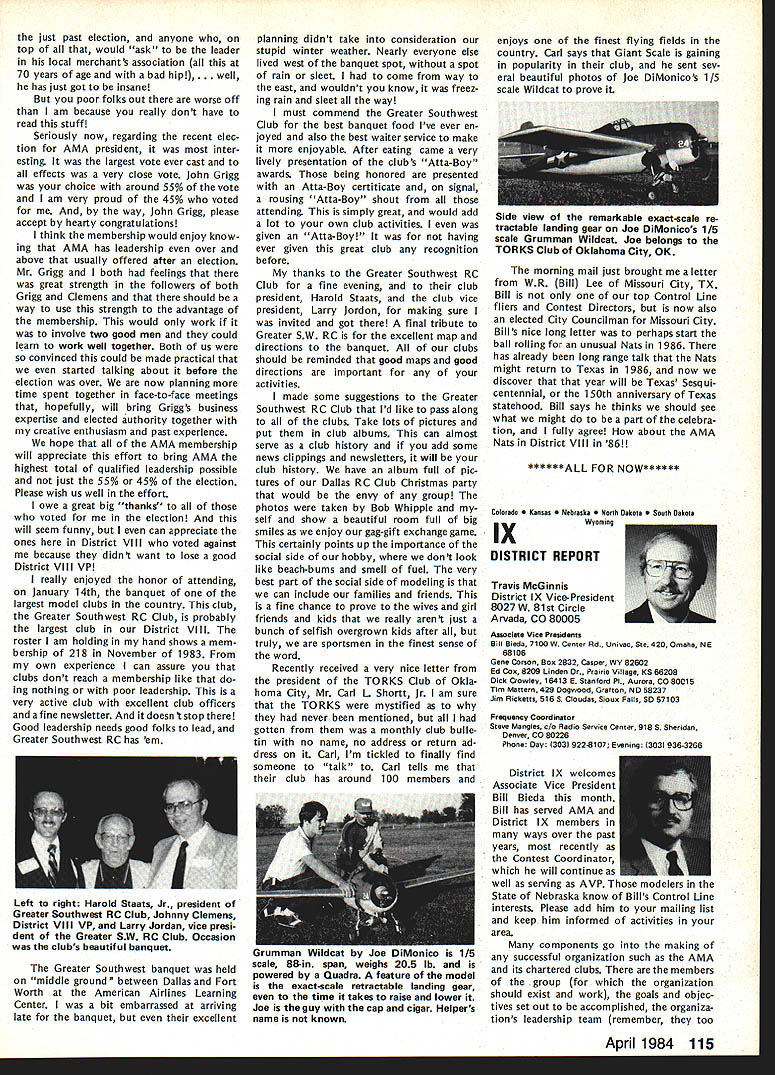
- Personal anecdotes and district activities continue; long-serving officials and volunteers remain active and those seeking help should contact the district officers.
District IX — Newsletter Editors and Clubs
A special thank-you to District IX newsletter editors for dedicating time to produce club newsletters. The following editors and publications were acknowledged:
Wyoming
- Flight Line, Casper Airmodelers — Gene and Carla Corson, editors.
North Dakota / South Dakota
- Valley Exhaust, Valley R/C Flyers (West Fargo) — Eric Anderson, editor.
- The Crash & Burn, Slope Soarers of Bismarck — Rex Herring, editor.
- Teddy Bear News, Basin Modelers Association — Chuck Wyland and Craig Schmidt, editors.
- Thunderbird R/C Club of Grafton — (editor not listed).
- G.L.I.T.C.H., Sioux Falls R/Cers — Wendy Van Wingerden, editor.
- Windfire News, Donovan's R/C Club of South Dakota — Becky Donovan, editor.
- Propbuster, Rapid City Propbuster Radio Control Club — Bill Paez, Jr., editor.
Nebraska
- Orbiting Eagles of Omaha — George Lieb, editor; Bob Tutt, publisher.
- Black Sheep Squadron, Lexington — Gary Darford, editor.
- The Clanking Armor, Lincoln Sky Knights R/C Club — Mark Wallick, editor.
- R/C Flyer, Grand Island Modelers Association — Randy Keldsen and Ron McLeran, editors.
- Skyview RC News, Alliance — Gary Sutton, editor.
- Model Aviation Newsletter, Mid‑Nebraska R/C Model Club — Lonnie Furbay, editor.
- Lark's Lip, Hastings Skylarks R/C Club — Dennis Thomas and Dallas Wilhelm, editors.
- The L.A.S.S. Edition, Lincoln Area Soaring Society — Larry W. Sheffield, editor.
Kansas
- Flying Flapjacks Follies, Liberal — Mike Blackard, editor.
- Hugoton Skylark News, Hugoton — Reggie Hall, editor.
- WRRC News, Wichita Radio Control Club — Bill Hannah, editor.
- KCCL News, Kansas City Control Line Club, Shawnee — John E. Holliday, editor.
- The Knight Flyer, Kansas City Northern Knights M.A.C., Overland Park — Mike Mockridge, editor.
- The Buzz Job, Model Association of Central Kansas, Great Bend — newsletter staff.
- Flight Log, Leavenworth County Aeromodelers — Walt DeFrees, editor.
- R/C Barnstormers Pilot Poop Sheet, Kansas City — Braun & Associates, editors.
- Top Class News, Topeka Control Line Association — James Lee, editor.
- Fly Paper, Shawnee‑Olathe — Glenn Adams, editor.
- North Central Kansas Radio Control Club newsletter — Fred Souchek, editor.
Colorado
- The Hi Flyer, Arvada Associated Modelers — Kent Drotar, editor.
- Prop Wash, Grand Junction Modelers — Drew Prister, editor; Jim Gale, assistant editor.
- Tail‑Spinners, Mile‑Hi RC Club, Denver — Tom Ryan, editor.
- The Bullet, Sky Corral RC Club, Pueblo — Joan Alyea, editor.
- The Model Museum Flying Club, Denver — Tim Dannell, editor.
- The Max‑Out, Magnificent Mountain Men Club, Denver — Rick Pangel, editor.
- Thermals, Rocky Mountain Soaring Association, Denver — Ryan Blakeley, editor.
- The Spoiler, Pikes Peak Soaring Society, Colorado Springs — John Read, editor.
- Hangar Talk, Miniature Aero Sporters, Northridge — Vince Gutschalk and Roy McGee, editors.
- Magnificent Mammoths, Chapter 124 I.M.A.A., Pueblo — Joan Alyea, editor.
- TaleSpinner, L.A.M.A. — (editor not listed).
Scale Model Research
- Scale Model Research (scale documentation and photo source) formerly owned by Dale Willoughby has been sold to Bob Banka, a scale builder. He will continue to offer a large collection of photo packs covering aircraft and engines. Dale Willoughby will continue photographing and enlarging the collection.
- Catalog: $1.00 and a large SASE to Scale Model Research, 418 E. Ocean Front B, Newport Beach, CA 92661.
Closing Notes
- The AMA continues to support club visits, airshow appearances, and resources; contact your district officers for scheduling.
- For further FAI or competition matters, see the Competition Newsletter and Committee listings for addresses and contacts.
Transcribed from original scans by AI. Minor OCR errors may remain.

