
Behind the Scenes at Toledo
By Fred Berman
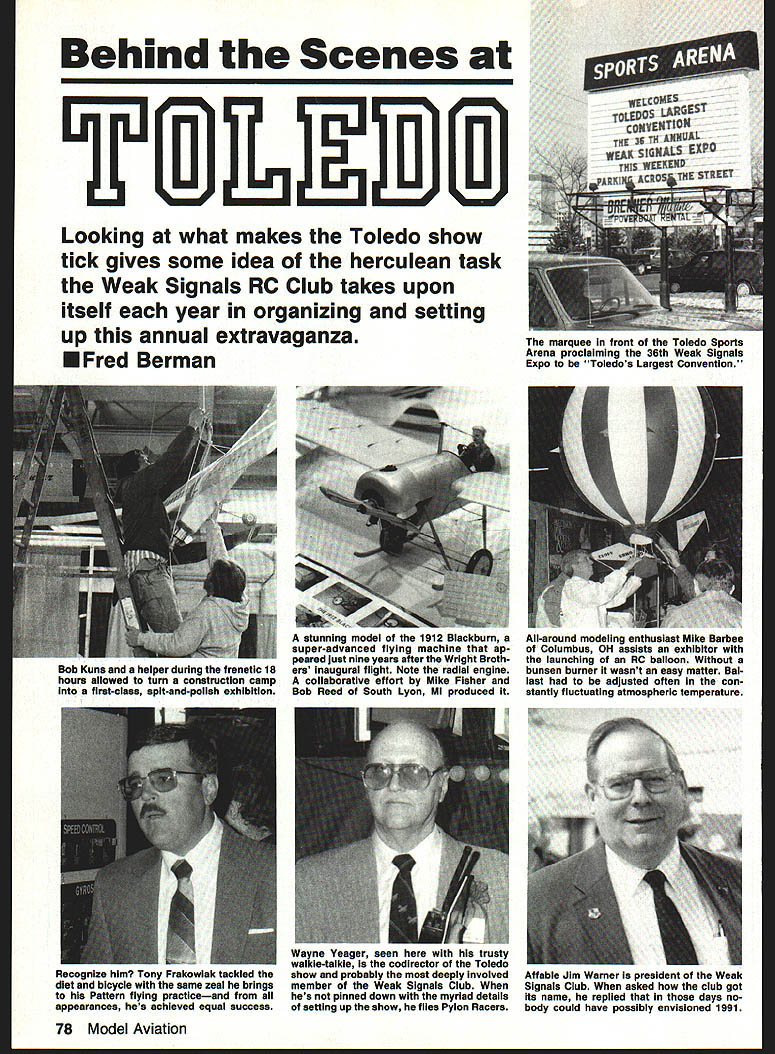
The Weak Signals annual April bash can be described as tradition, convention, model show, hobby supermarket, super flea market and elite builders' contest rolled into one. Its focus: a perennial migration of roughly 20,000 hobby fans from some 19 states and Canada to the Toledo Sports Arena.
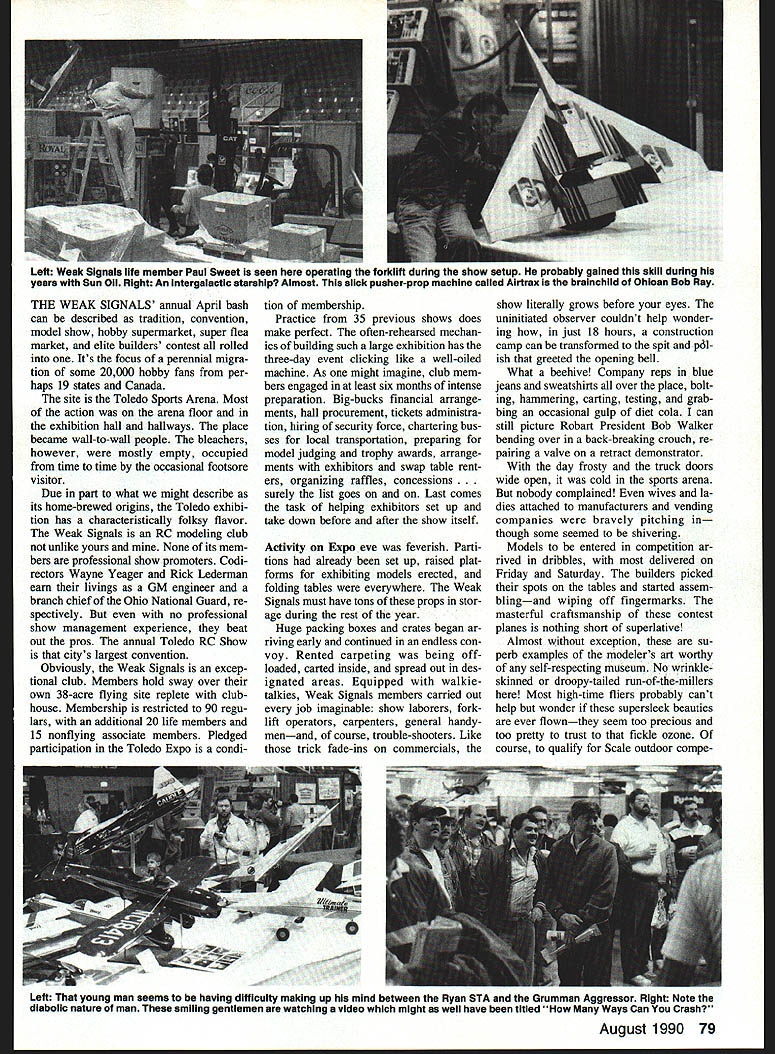
Most of the action is on the arena floor, exhibition hall and concourses, which became wall-to-wall people. The bleachers, however, were mostly empty, occupied only occasionally by the footsore visitor.
The Weak Signals RC Club
Due in part to its home‑brewed origins, the Toledo exhibition has a characteristically folksy flavor. Weak Signals is not run by professional show promoters. Co-directors Wayne Yeager and Rick Lederman earn their livings as a GM engineer and a branch chief in the Ohio National Guard, respectively; with no professional show‑management background they nonetheless run the city's largest RC convention.
Club highlights:
- Members control a 38-acre flying site, complete with a clubhouse.
- Membership is restricted to 90 regulars.
- There are an additional 20 life members and 15 nonflying associate members.
- Pledged participation in the Toledo Expo is a condition of membership.
- The club has staged 35 previous shows — practice does make perfect.
Preparation and logistics
Club members spend at least six months in intense preparation. Tasks include:
- Big‑bucks financial arrangements and hall procurement
- Ticketing and administration
- Hiring security and arranging local transportation and charter buses
- Preparing model‑judging and trophy award procedures
- Renting exhibitors' swap tables and organizing raffles and concessions
- Coordinating help for exhibitors with setup and takedown
Setup night and show build
Activity on Expo eve is feverish. Partitions are set up, raised platforms and exhibiting models erected, folding tables arranged — Weak Signals must have tons of props in storage the rest of the year. Huge packing boxes and crates arrive in an endless convoy. Rented carpeting is offloaded, carted inside and spread in designated areas.
Equipped with walkie‑talkies, members perform every job imaginable: show laborers, forklift operators, carpenters, handymen and, of course, trouble‑shooters. Like a trick fade‑in in commercials, the show literally grows before the eyes; what looks like a construction camp 18 hours earlier becomes a spit‑polished arena at opening bell.
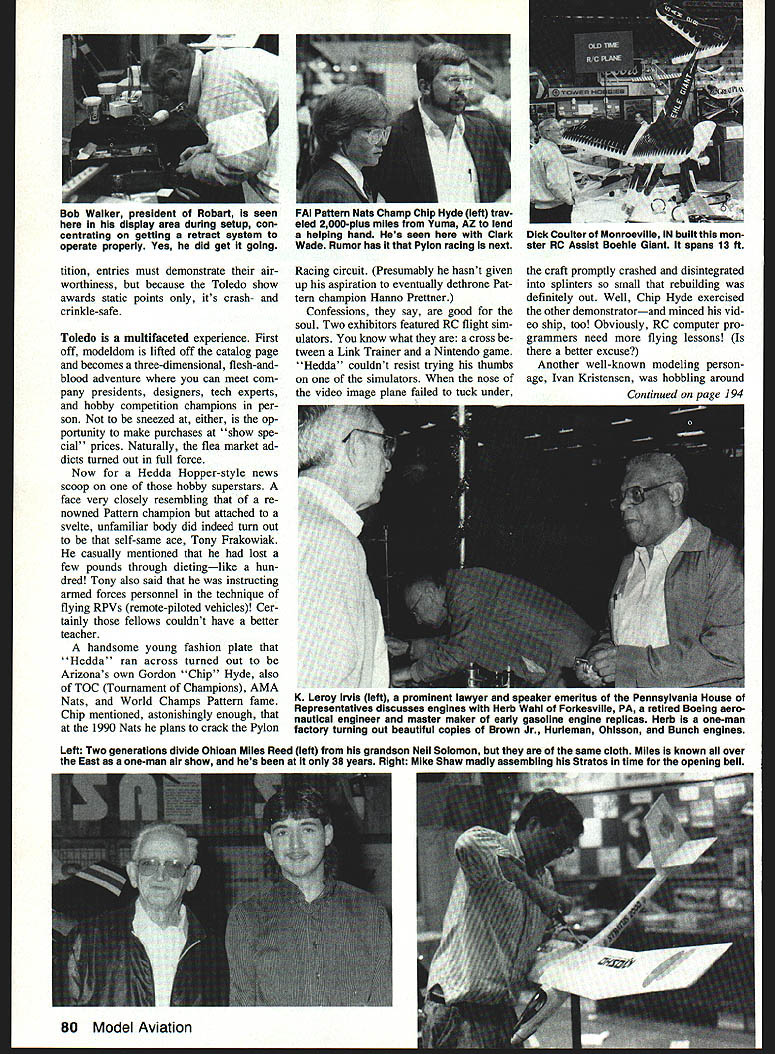
Company reps in blue jeans and sweatshirts are everywhere — bolting, hammering, carting, testing, and grabbing occasional gulps of cola. One memorable image: Robart president Bob Walker crouched, repairing a valve on a retract demonstrator while frosty truck doors were wide open. Wives and other helpers also pitch in despite the chill.
On the show floor
The Toledo expo is a multifaceted experience. Modeldom is lifted from catalog pages into three dimensions: company presidents, designers, tech experts and competition champions are all on hand. Show‑special pricing attracts buyers, and the flea market draws addicts in full force.
Models to be entered in competition arrive in dribbles on Friday and Saturday. Builders pick spots on the tables, begin assembling and carefully wipe off fingerprints. The craftsmanship on display is often museum‑worthy — superb examples of the modeler’s art.
The contest models
Most contest entries are superlative, with no wrinkle‑skinned or droopy‑tailed run‑of‑the‑mill work. While Scale outdoor competition entries must demonstrate airworthiness, the Toledo show awards static points only — crash‑ and crinkle‑safe for the models on display.
People and personalities
A few memorable personalities and moments:
- Tony Frakowiak, the renowned Pattern champion, showed up noticeably slimmer and mentioned he had lost a lot of weight. He also said he was instructing armed forces personnel in flying RPVs (remote‑piloted vehicles).
- Gordon "Chip" Hyde of Arizona — a TOC, AMA Nats and World Champs Pattern competitor — said he planned to try Pylon Racing at the 1990 Nats, while still aiming high in Pattern competitions.
- Two exhibitors featured RC flight simulators (a cross between a Link Trainer and a video game). Several demonstrators, including Chip Hyde, promptly crashed their video planes — a reminder that RC computer programmers might need a few more flying lessons.
- Ivan Kristensen was seen hobbling around the show.
- One entrant, a paint contractor who is also a Pattern ace and precision scale modeler, entered an immaculate black Weeks Special; he brings a new project to each year's contest.
- Ken Koeppel, spirited District II AVP, STARS member and owner of a fleet of five quarter‑scale Bristol Scouts, had already made his motel reservation for the 1991 Toledo Expo — Ken is 81 years young.
Looking ahead
The 1990 expo lived up to the high standards that have earned Toledo its reputation. But the show’s real spark comes from the people — the socializing, the shared enthusiasm and the exchange of ideas.
Mark your calendar for the next Toledo Expo: April 5, 6 and 7, 1991. Will you be there?
Transcribed from original scans by AI. Minor OCR errors may remain.

