
Chopper Fly-In
How two whirly-bird clubs got together for a day of fun flying for all levels of expertise, from just hovering to spectacular aerobatics.
Event overview
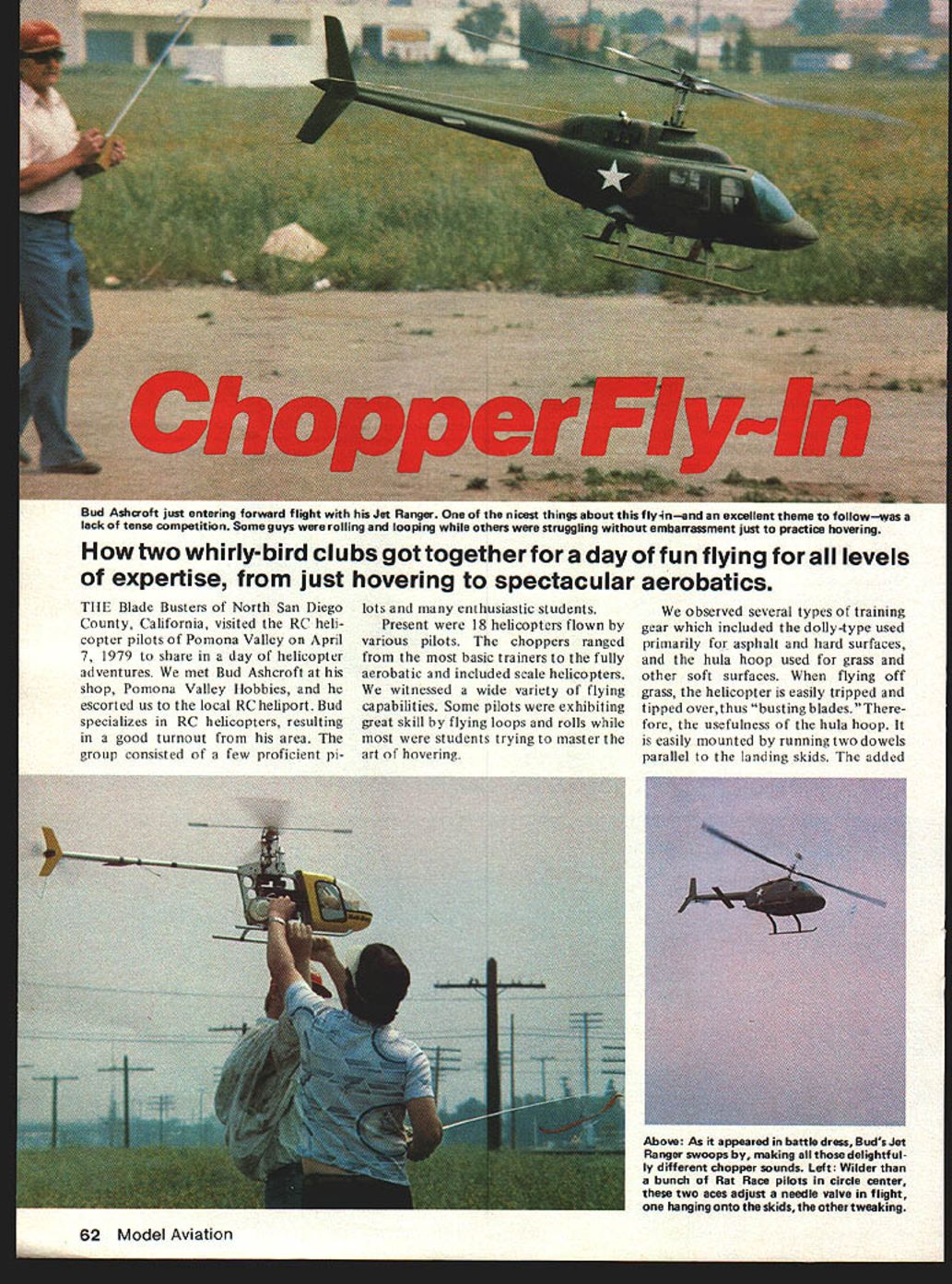
The Blade Busters of North San Diego County, California, visited the RC helicopter pilots of Pomona Valley on April 7, 1979 to share a day of helicopter adventures. We met Bud Ashcroft at his shop, Pomona Valley Hobbies, and he escorted us to the local RC heliport. Bud specializes in RC helicopters, which resulted in a good turnout from his area. The group included a few proficient pilots and many enthusiastic students.
Pilots and helicopters
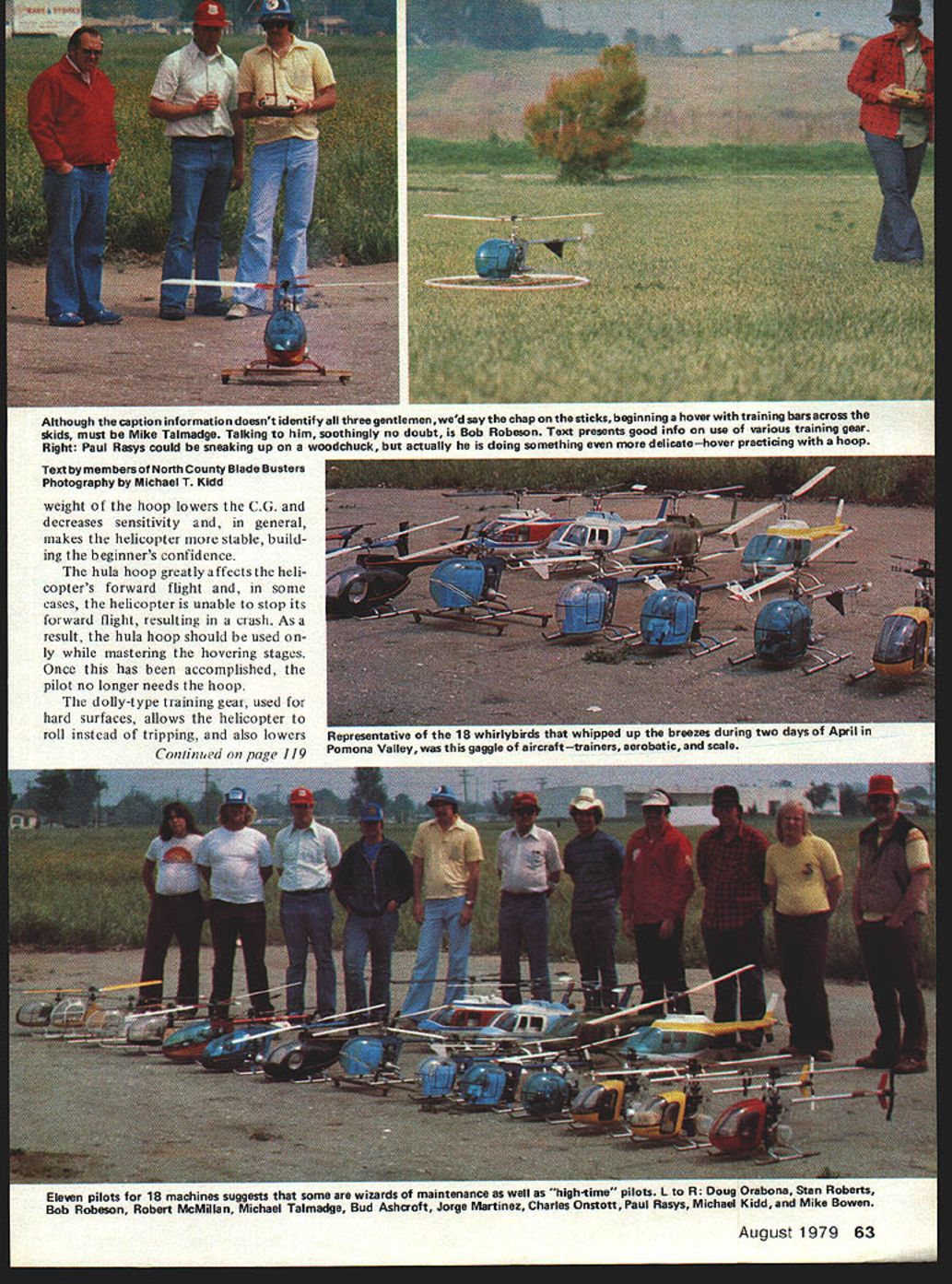
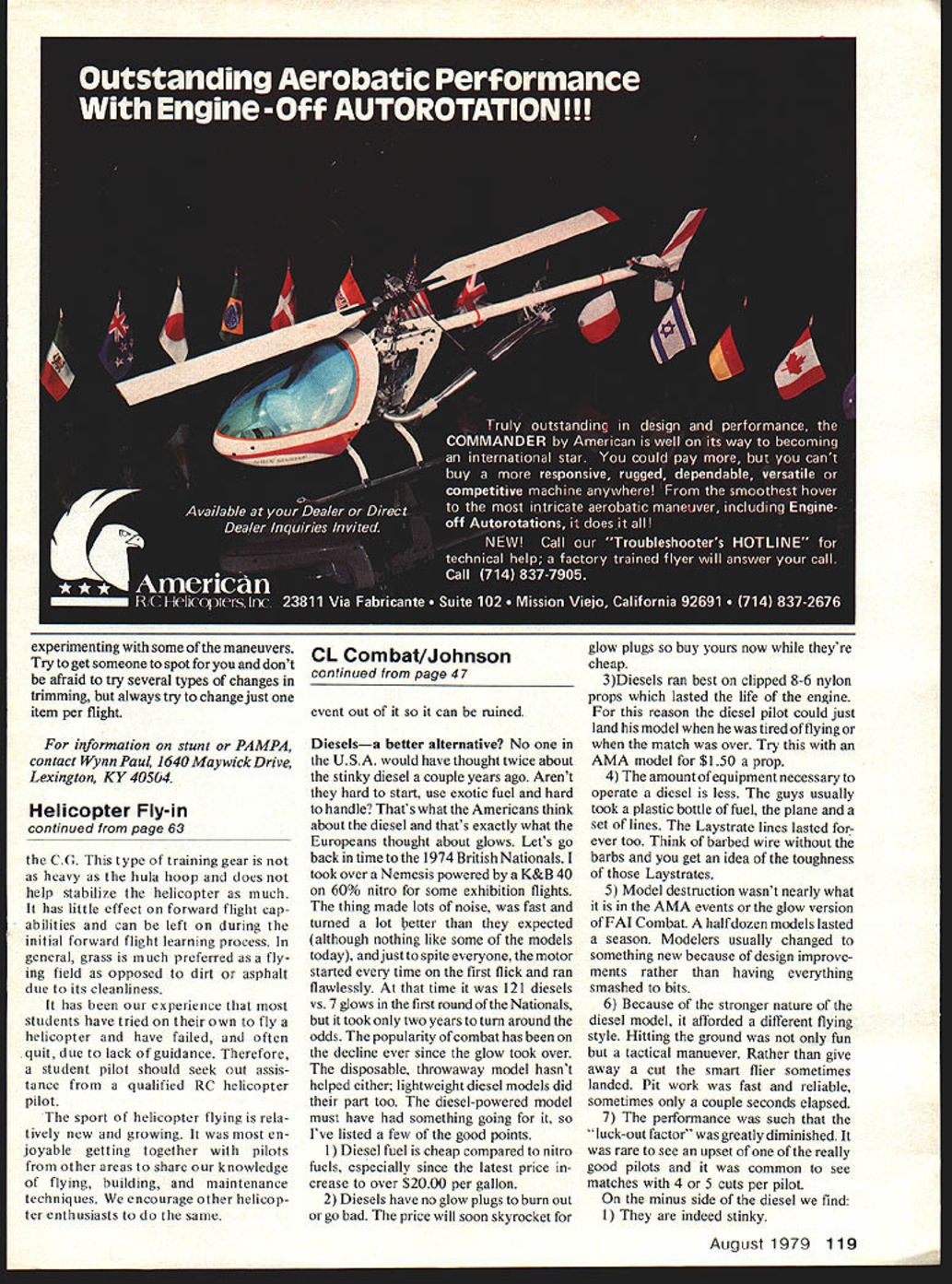
Present were 18 helicopters flown by various pilots. The choppers ranged from the most basic trainers to fully aerobatic machines and included scale helicopters. We witnessed a wide variety of flying capabilities:
- Some pilots flew advanced maneuvers such as loops and rolls.
- Most attendees were students working to master hovering.
Training gear
We observed several types of training gear and techniques:
- Hula hoop trainer
- Used primarily for grass and other soft surfaces.
- Mounted by running two dowels parallel to the landing skids.
- The added weight lowers the C.G. and decreases sensitivity, making the helicopter more stable and building beginner confidence.
- Caution: the hula hoop can greatly affect forward flight; in some cases the helicopter is unable to stop forward motion, which can result in a crash. Use the hoop only while mastering hovering; remove it once hovering is mastered.
- Dolly-type trainer
- Used primarily for asphalt and other hard surfaces.
- Allows the helicopter to roll instead of tripping and also lowers the C.G.
- Not as heavy as the hula hoop and does not stabilize the helicopter as much.
- Has little effect on forward flight capabilities and can be left on during initial forward-flight learning.
General note: grass is much preferred as a flying field over dirt or asphalt because it is cleaner and more forgiving.
Instruction and recommendations
It has been our experience that many students try to learn on their own, fail, and often quit due to lack of guidance. A student pilot should seek assistance from a qualified RC helicopter pilot.
The sport of RC helicopter flying is relatively new and growing. It was very enjoyable to get together with pilots from other areas to share knowledge of flying, building, and maintenance techniques. We encourage other helicopter enthusiasts and clubs to do the same.
Conclusion
Club meet-ups, shared instruction, and proper use of training gear help newcomers progress and keep the hobby growing.
Transcribed from original scans by AI. Minor OCR errors may remain.

