
CL World Champs: Speed F2A
Charlie Johnson
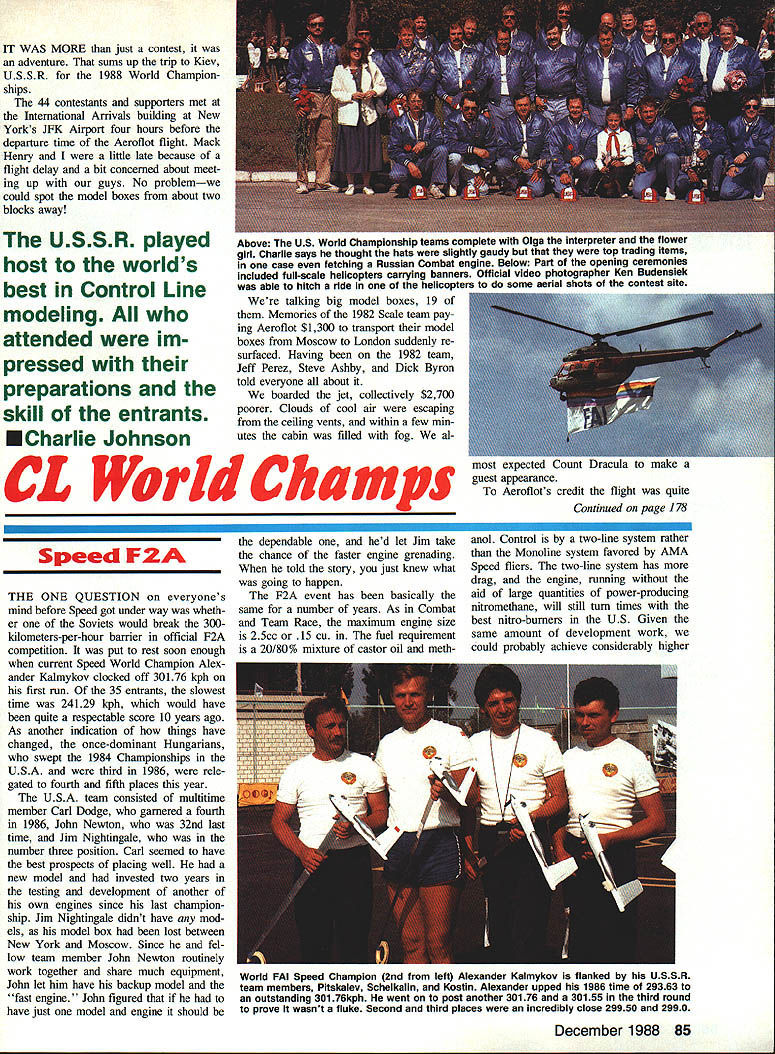
It was more than just a contest — it was an adventure. That sums up the trip to Kiev, USSR, for the 1988 World Championships. Forty-four contestants and supporters met at the International Arrivals building at New York's JFK Airport four hours before the Aeroflot departure. Despite a flight delay, we could spot the model boxes from a block away.
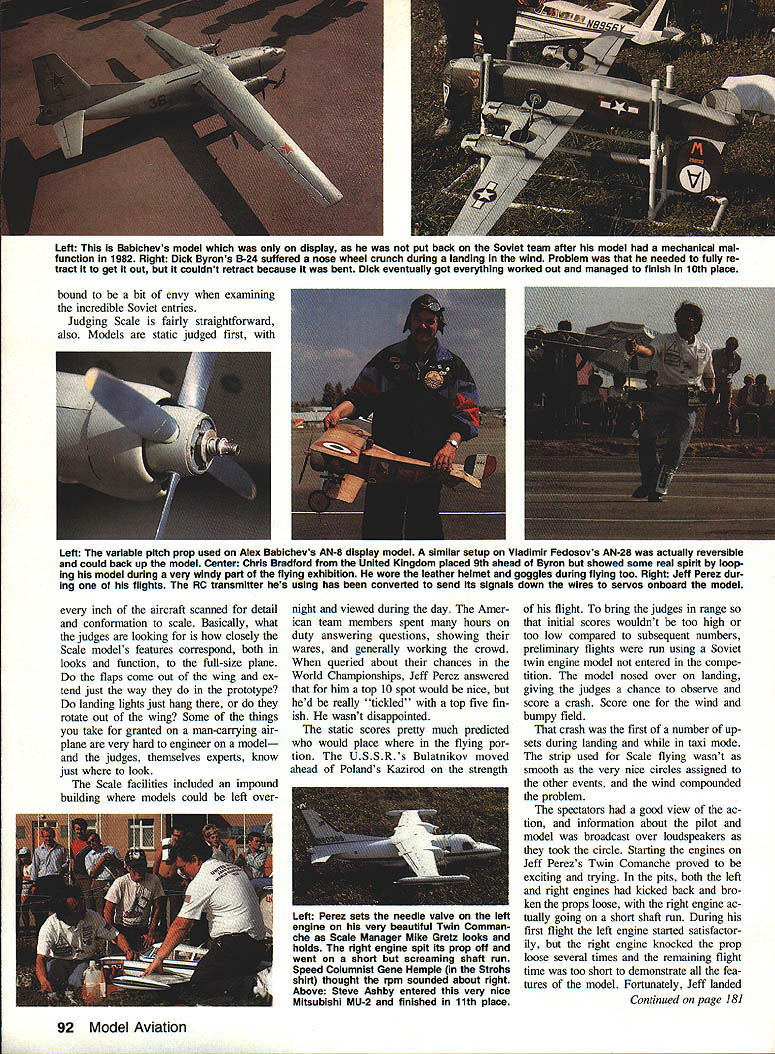
Memories of the 1982 scale team paying Aeroflot $1,300 to transport model boxes resurfaced. Having been on the 1982 team, Jeff Perez, Steve Ashby, and Dick Byron told the tale of boarding the jet collectively $2,700 poorer. The Aeroflot cabin filled with cool fog from the vents within minutes, and the trip was underway.
Accommodations near the flying site were mixed. Some bungalows were reasonable; others lacked running water and indoor toilets. Team Manager Walt Perkins and assistant Bill Lee worked long hours to sort things out. Our early arrival turned out to be an advantage—teams had time to set up, tour the area, and visit the excellent sports complex at Chaika, where the championships were held.
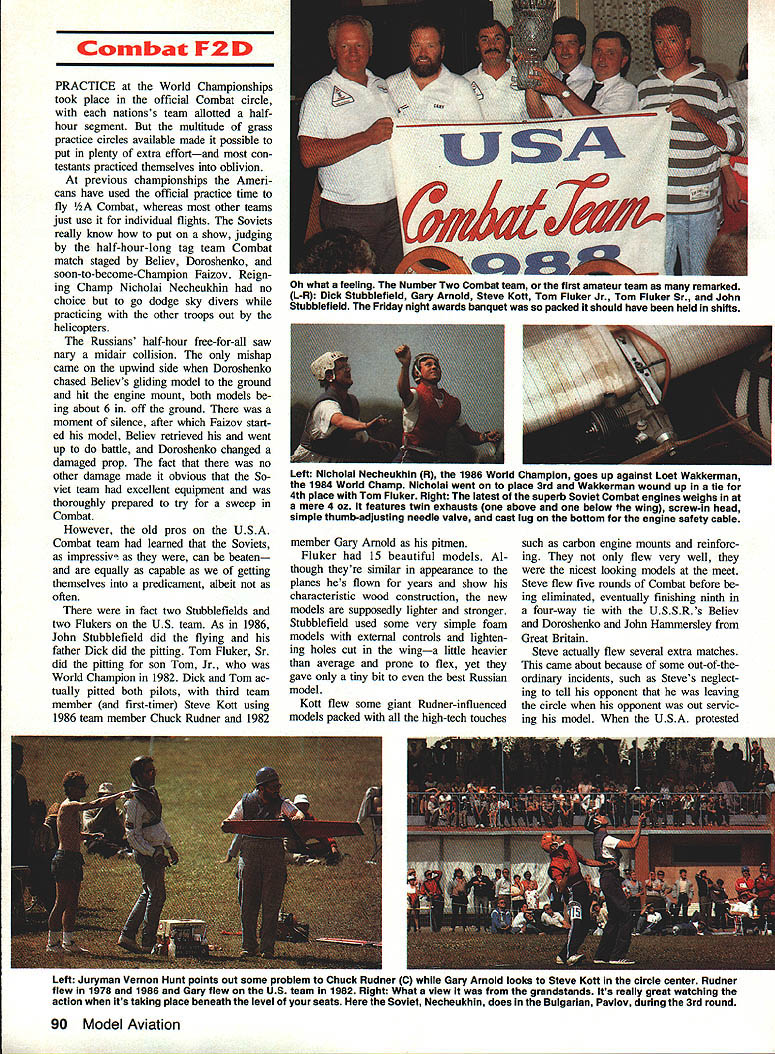
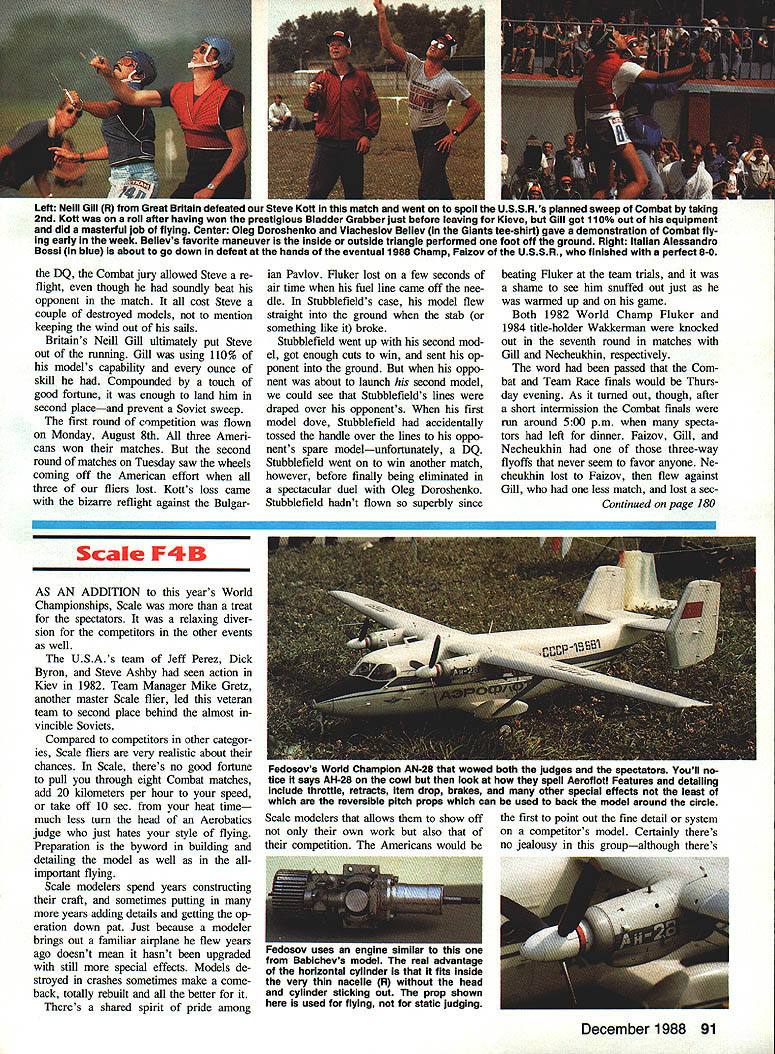
Chaika was impressive: caged circles for Speed, Racing, and Aerobatics; a grass Combat circle with an asphalt center; a separate asphalt strip for Scale and stunt practice; permanent buildings and towers for officials and jury members; and team shops for storage and work. The Soviets had clearly spent enormous effort preparing the site, repainting circles and adding graphics and banners. From the opening ceremonies to a two-hour air show, the event was staged on a grand scale.
Speed F2A
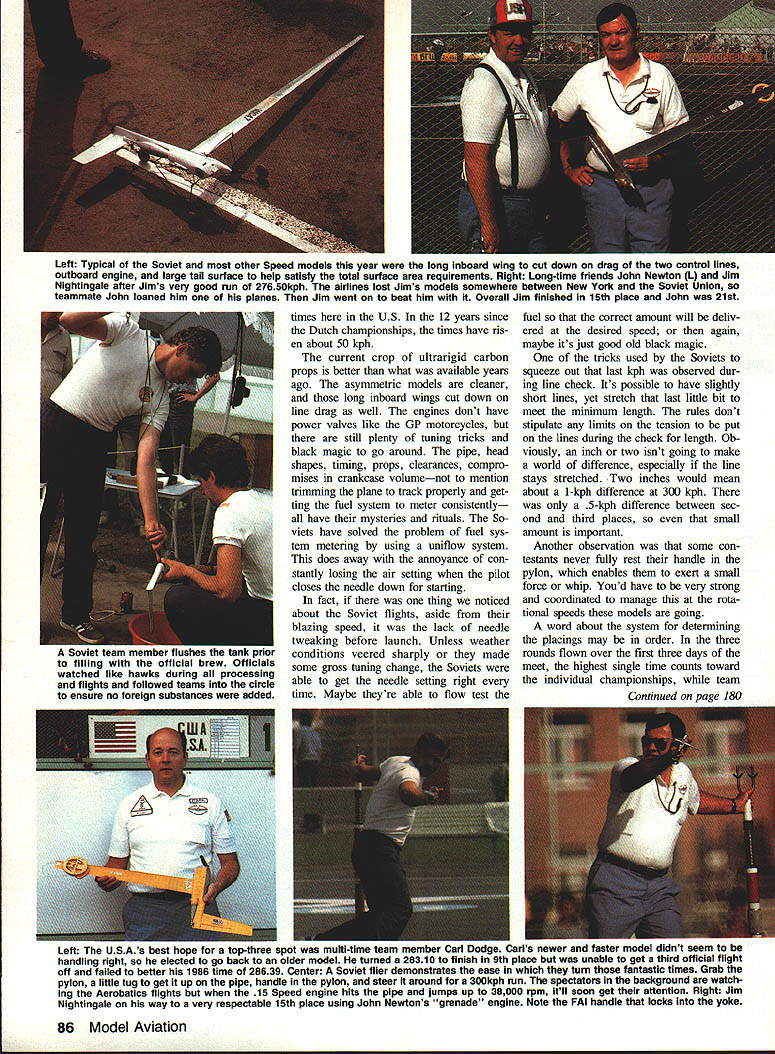
The one question on everyone's mind before Speed got under way was whether the Soviets would break the 300 kph barrier in official F2A competition. That was answered when current Speed World Champion Alexander Kalmykov recorded 301.76 kph on his first run. He followed with 301.76 and 301.55 in the other rounds to show it was no fluke. Of the 35 entrants, the slowest official time was 241.29 kph — a respectable mark a decade earlier. Second and third were extremely close at 299.50 and 299.09 kph.
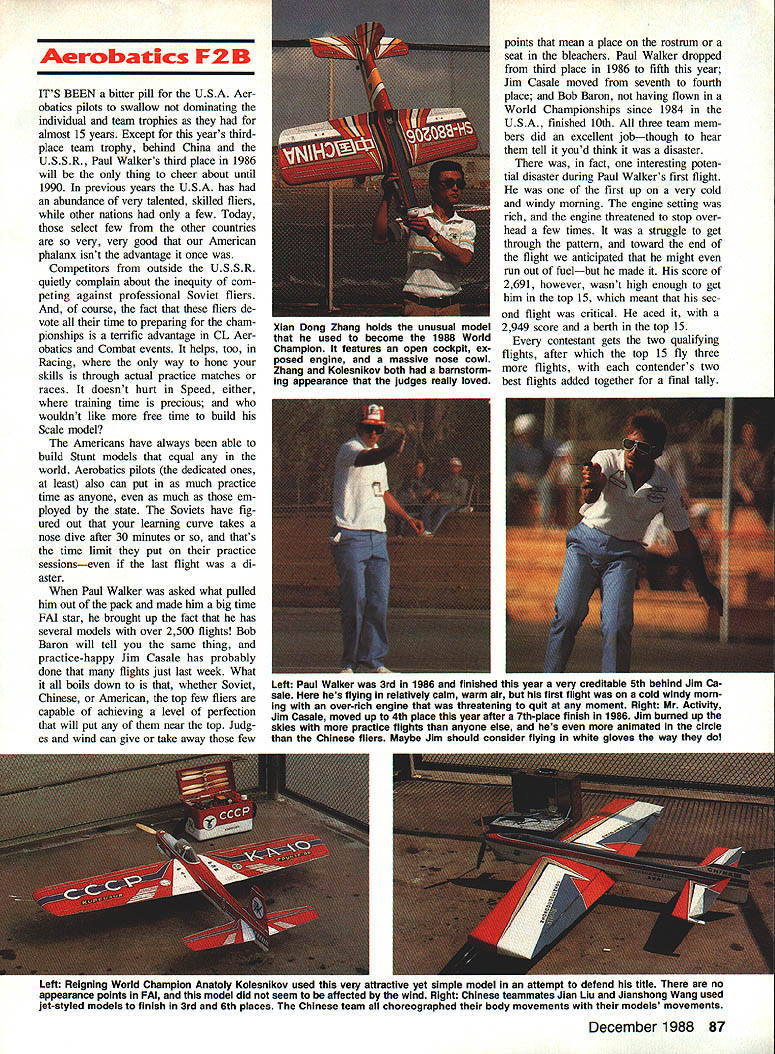
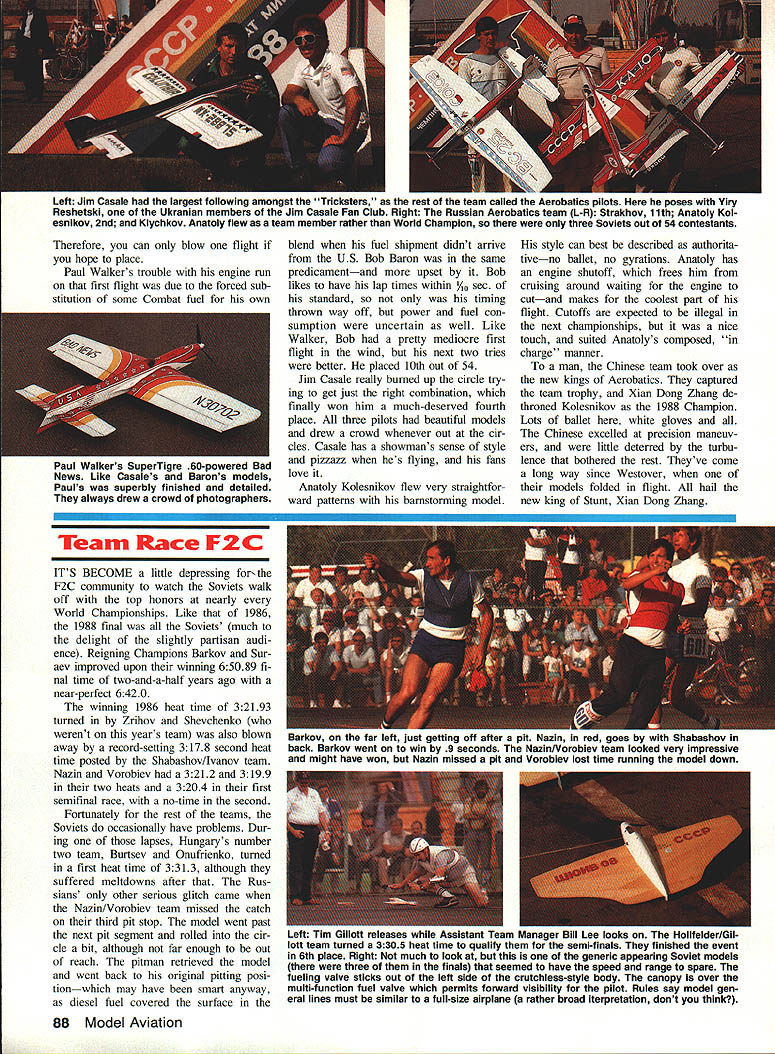
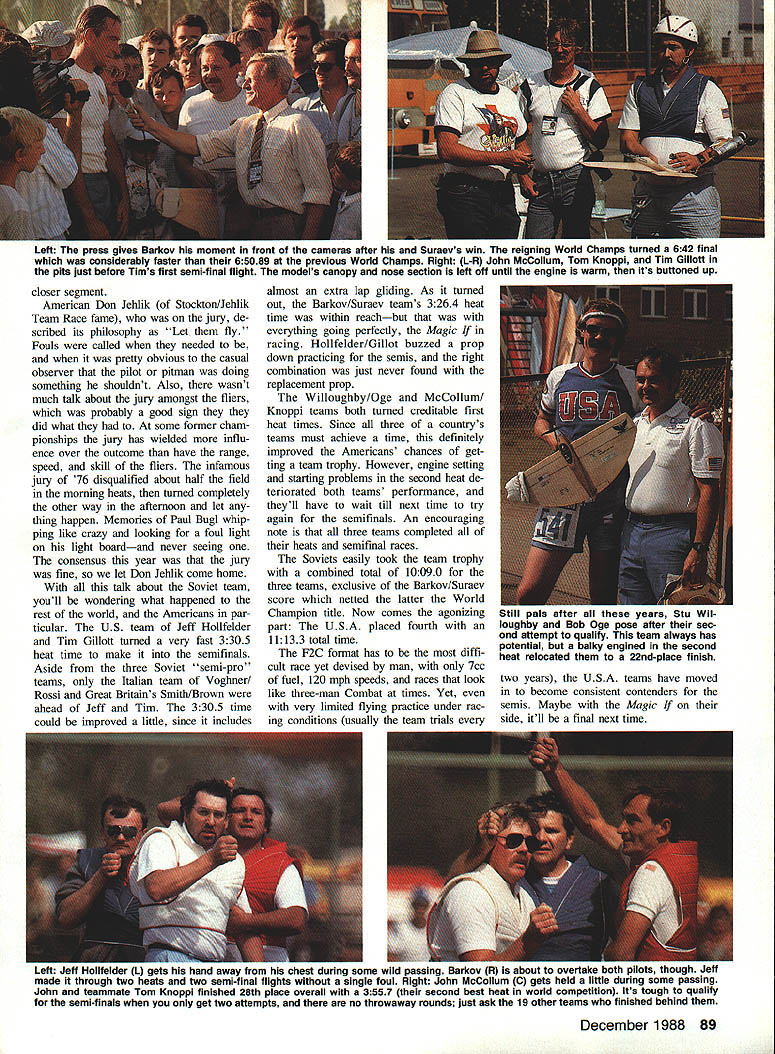
The U.S.A. team consisted of Carl Dodge (multi-time member, fourth in 1986), John Newton (32nd last time), and Jim Nightingale (third previously). Carl appeared to have the best prospects — a new model and two years of development — but his new ship didn’t deliver and the older model lacked much reserve. Jim’s model box was lost between New York and Moscow; John, who routinely works with Jim and shares equipment, loaned him a backup model and a faster engine. Jim turned in a solid 276.50 kph under the circumstances and finished 15th overall; John finished 21st.
Rules and equipment:
- Maximum engine size: 2.5 cc (0.15 cu in).
- Fuel: 20/80% castor oil and methanol.
- Control: two-line system (not the monoline used by some AMA Speed fliers), which increases line drag compared with monoline rigs.
Times have climbed rapidly — roughly a 50 kph increase in the 12 years since the Dutch championships — thanks to improvements in materials and design:
- Ultrarigid carbon props are far better than earlier props.
- Asymmetric models with long inboard wings reduce line drag.
- Tuning remains complex: pipe and head shapes, timing, props, clearances, crankcase volume compromises, and precise trimming and tracking all matter.
The Soviets showed particular mastery in fuel metering and engine reliability. Many teams used a uniflow fuel system to avoid losing the air setting when closing the needle for starting, which reduced the need for needle tweaking before launch. Soviet fliers rarely adjusted needles between flights unless conditions changed markedly.
Small details made measurable differences at these speeds:
- Slightly short lines, tensioned during the line check, can reduce lap times. An inch or two of stretch can equal about 1 kph at 300 kph, and fractions of a kph separated podium places.
- Some pilots avoid fully resting the handle in the pylon, enabling a subtle flick or whip for micro-control — a demanding technique at these rotational speeds.
Scoring and placings:
- Individual placings were based on the highest single time from the three rounds flown over the first three days.
- Team placings were based on the combined total of each team's members' best times; all three team members needed creditable flights to contend for team prizes.
Jury and sportsmanship:
- American Don Jehlik, serving on the jury, described the philosophy as “Let them fly.” Fouls were called when obvious; otherwise the jury stayed out of the way. That approach was well received compared with notorious past juries that had a heavier hands-on influence.
Team results and conclusion:
- The Soviets dominated the meet across events and easily took the team trophies in the speed and team disciplines. Their three teams combined for a very low total (the Soviet teams’ combined times showcased their depth).
- The U.S.A. placed respectably but fell short of top honors; their combined times left them out of the medals in Speed.
The meet showcased how far the sport has advanced — improved materials, refined aerodynamics, meticulous tuning, and highly disciplined team preparation. The Soviets’ extensive on-site training and meticulous engineering paid off, but other countries showed they are closing in. It promises to be a real shootout at the next world championships.
Transcribed from original scans by AI. Minor OCR errors may remain.

