
Control Line: Scale
Bill Boss
Introduction
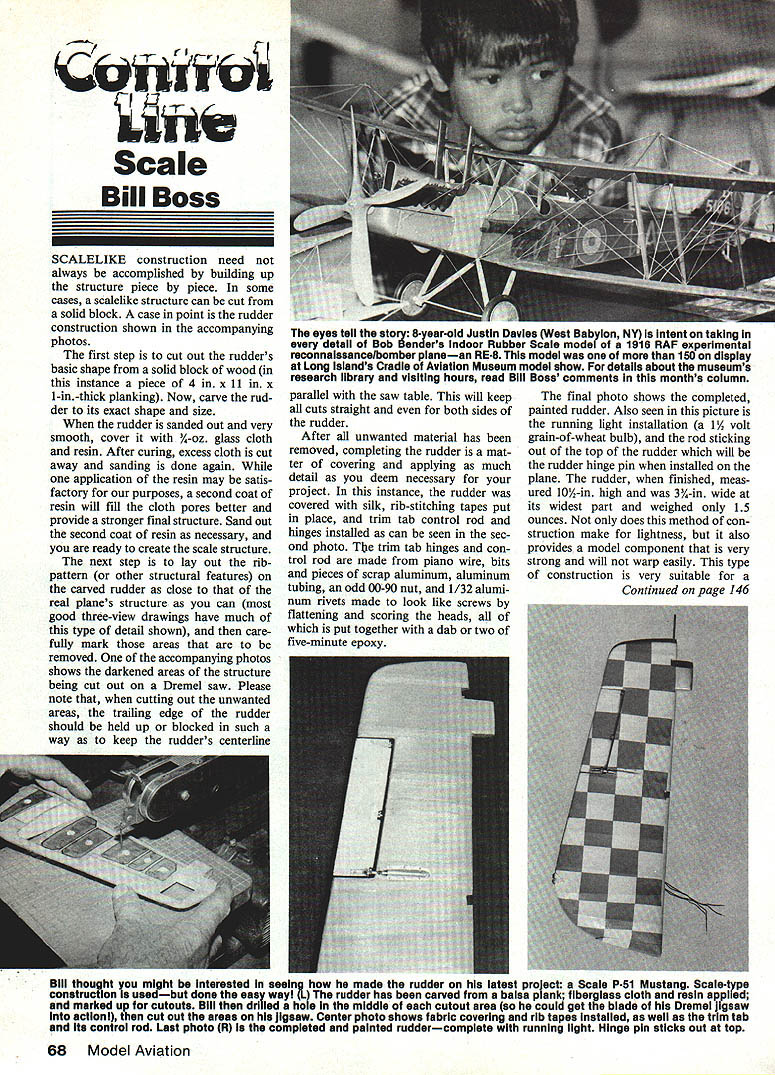
Scale-like construction need not always be accomplished by building up the structure piece by piece. In some cases a scale-like surface can be cut from a solid block. The rudder construction described here is one such example.
Materials and initial shaping
- Solid block of wood used here: 4 in. x 11 in. x 1-in. planking.
- Cut out the rudder's basic outline from the block.
- Carve the rudder to its exact shape and size, then sand smooth.
Glassing and strengthening
- Cover the sanded rudder with 3/4-oz. glass cloth and resin.
- After curing, trim away excess cloth and sand smooth.
- For best results, apply a second coat of resin to fill cloth pores and strengthen the part.
- Sand the second coat as necessary until smooth and ready for scale detailing.
Laying out the scale structure
- Use good three-view drawings to lay out the rib pattern and other structural features to match the full-size airplane.
- Carefully mark the areas to be removed to reveal the rib bays and other internal detail.
Cutting out unwanted material
- Remove the marked areas with a Dremel saw (or similar tool).
- Important: support the trailing edge on blocks so the rudder's centerline is parallel to the saw table. This keeps cuts straight and even on both sides.
Finishing and detailing
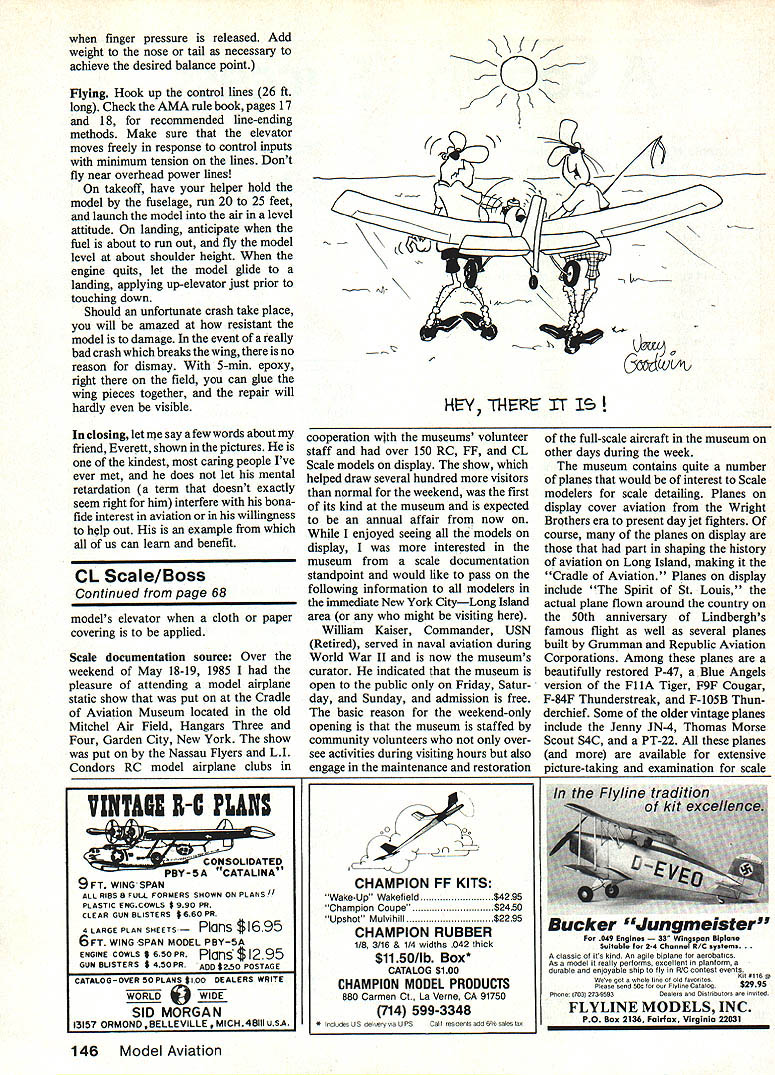
- After removing unwanted material, cover and add detail as desired.
- In this example:
- Rudder covered with silk.
- Rib-stitching tapes applied.
- Trim tab control rod and hinges installed.
- Trim-tab hinges and control rod materials:
- Piano wire
- Bits of scrap aluminum and aluminum tubing
- An odd 00-90 nut
- 1/32-in. aluminum rivets made to look like screws by flattening and scoring the heads
- Assembled with a dab or two of five-minute epoxy
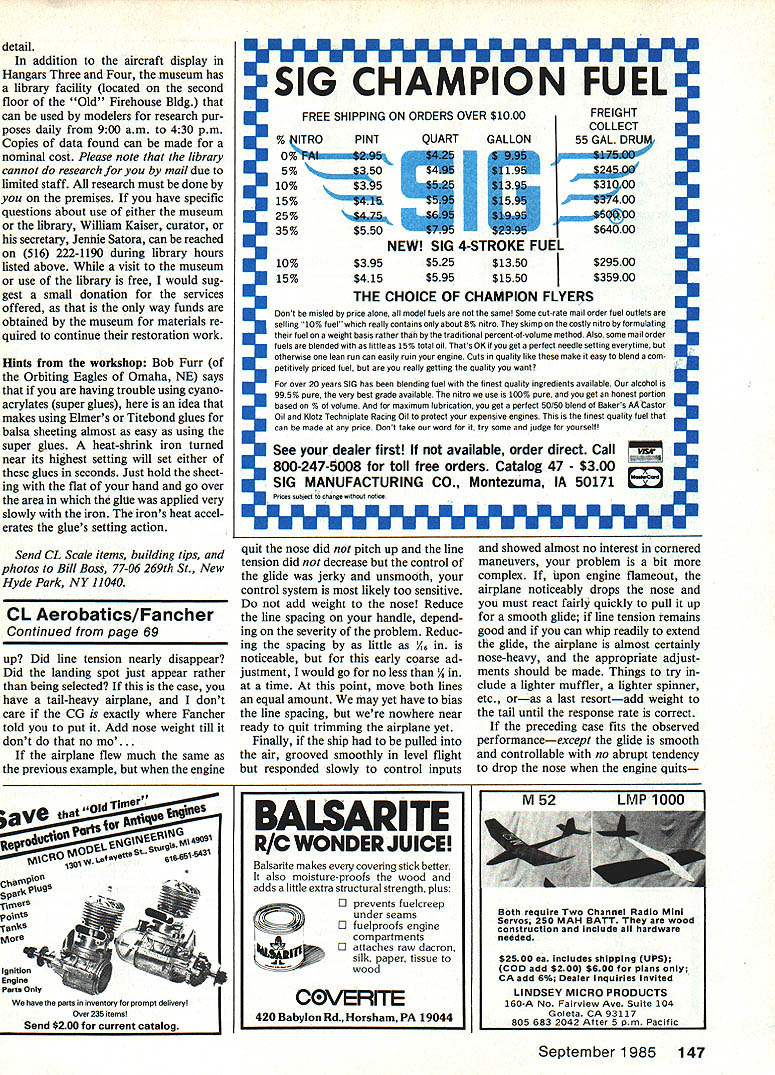
Final assembly and features
- Running light: 1½-volt grain-of-wheat bulb installed.
- A rod protruding from the top of the rudder serves as the hinge pin when installed.
- Final painted rudder dimensions and weight:
- Height: 10½ in.
- Widest part: 3½ in.
- Weight: 1½ oz.
- Benefits: this construction method yields a very light, strong component that resists warping.
Flying tips and setup
- Control lines: 26 ft. long.
- Check the AMA rule book (pages 17–18) for recommended line-ending methods.
- Ensure the elevator moves freely with minimum line tension.
- Balance: check the model's balance point and add weight to the nose or tail as necessary to achieve the desired balance.
- Safety: do not fly near overhead power lines.
- Takeoff procedure:
- Have a helper hold the model by the fuselage.
- Run 20–25 ft. and launch the model in a level attitude.
- Landing procedure:
- Anticipate engine cutoff as fuel runs out.
- Fly level at about shoulder height; when the engine quits, let the model glide to a landing, applying up-elevator just prior to touchdown.
Field repairs
- The construction is very crash-resistant. For serious damage (for example, a broken wing), five-minute epoxy at the field can often repair pieces so the fix is hardly visible.
Acknowledgment
A few words about my friend Everett (shown in the pictures): he is one of the kindest, most caring people I have met. His developmental disability does not diminish his genuine interest in aviation or his willingness to help. His example is something we can all learn from and benefit by.
Scale documentation — Cradle of Aviation Museum show (May 18–19, 1985)
- Event: Model airplane static show at the Cradle of Aviation Museum, Mitchel Air Field, Hangars Three and Four, Garden City, NY.
- Organized by: Nassau Flyers and L.I. Condors RC clubs with museum volunteers.
- Attendance: Over 150 RC, FF, and CL scale models on display; the show drew several hundred additional visitors and is intended to become an annual event.
- Museum info:
- William Kaiser, Commander, USN (Ret.), is the museum curator.
- Open to the public Friday–Sunday; admission free (staffed by community volunteers).
- The collection spans aviation from the Wright Brothers era to modern jets and includes many types useful for scale detailing, for example:
- Spirit of St. Louis (50th-anniversary display)
- Grumman and Republic-built aircraft
- P-47, F11A Tiger (Blue Angels), F9F Cougar, F-84F Thunderstreak, F-105B Thunderchief
- Vintage aircraft such as the Jenny JN-4, Thomas Morse Scout S4C, and PT-22
- These aircraft are available for extensive photography and examination for scale modeling reference.
Transcribed from original scans by AI. Minor OCR errors may remain.

