
Control Line: Speed
Gene Hempel 301 N. Yale Dr. Garland, TX 75042
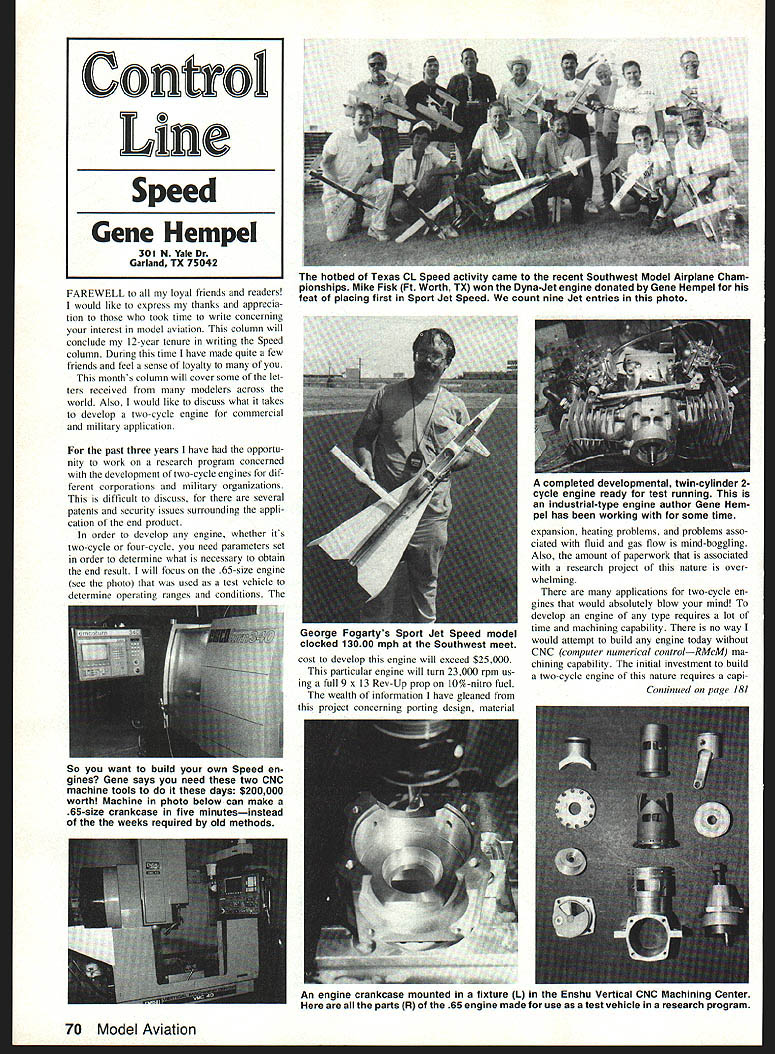
FAREWELL to all my loyal friends and readers! I would like to express my thanks and appreciation to those who took time to write concerning your interest in model aviation. This column concludes my 12-year tenure writing the Speed column. During this time I have made many friends and feel a strong sense of loyalty to many of you.
This month's column covers some of the letters received from modelers across the world and discusses what it takes to develop a two‑cycle engine for commercial and military applications.
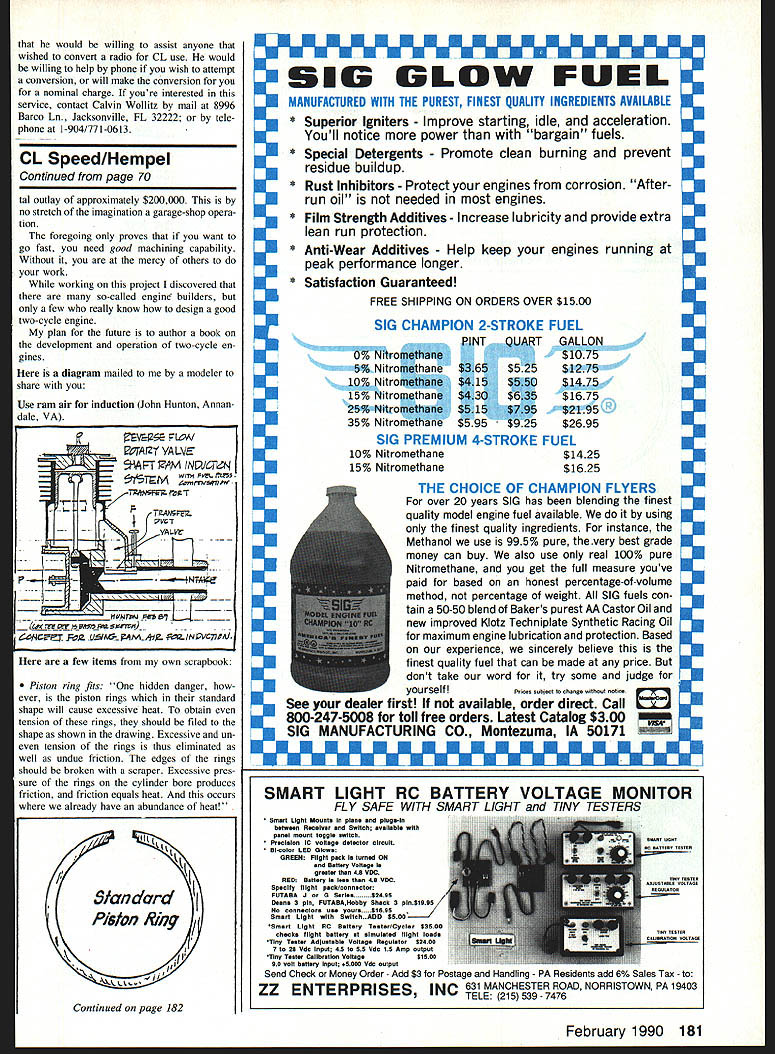
For the past three years I have had the opportunity to work on a research program concerned with development of two‑cycle engines for various corporations and military organizations. The project is difficult to describe in detail because of patents and security issues surrounding the end product. In order to develop any engine, whether two‑cycle or four‑cycle, you must set parameters to determine what is necessary to obtain the desired result.
I will focus on a .65‑size engine that was used as a test vehicle to determine operating ranges and conditions. Cost to develop this engine will exceed $25,000. This particular engine will turn 23,000 rpm using a full 9 x 13 Rev‑Up prop on 10% nitro fuel.
The wealth of information I have gleaned from this project concerning porting design, material expansion, heating problems, and fluid and gas flow is mind‑boggling. The amount of paperwork associated with a research project of this nature is overwhelming. There are many applications for two‑cycle engines that would amaze you.
To develop an engine of this type requires a lot of time and machining capability. I would not attempt to build any engine today without CNC (computer numerical control) machining capability. The initial investment to build a two‑cycle engine of this nature requires a capital outlay of approximately $200,000 — by no stretch a garage‑shop operation. This only proves that if you want to go fast, you need good machining capability; otherwise you are at the mercy of others to do your work.
While working on this project I discovered there are many so‑called engine builders, but only a few who really know how to design a good two‑cycle engine. My plan for the future is to author a book on the development and operation of two‑cycle engines.
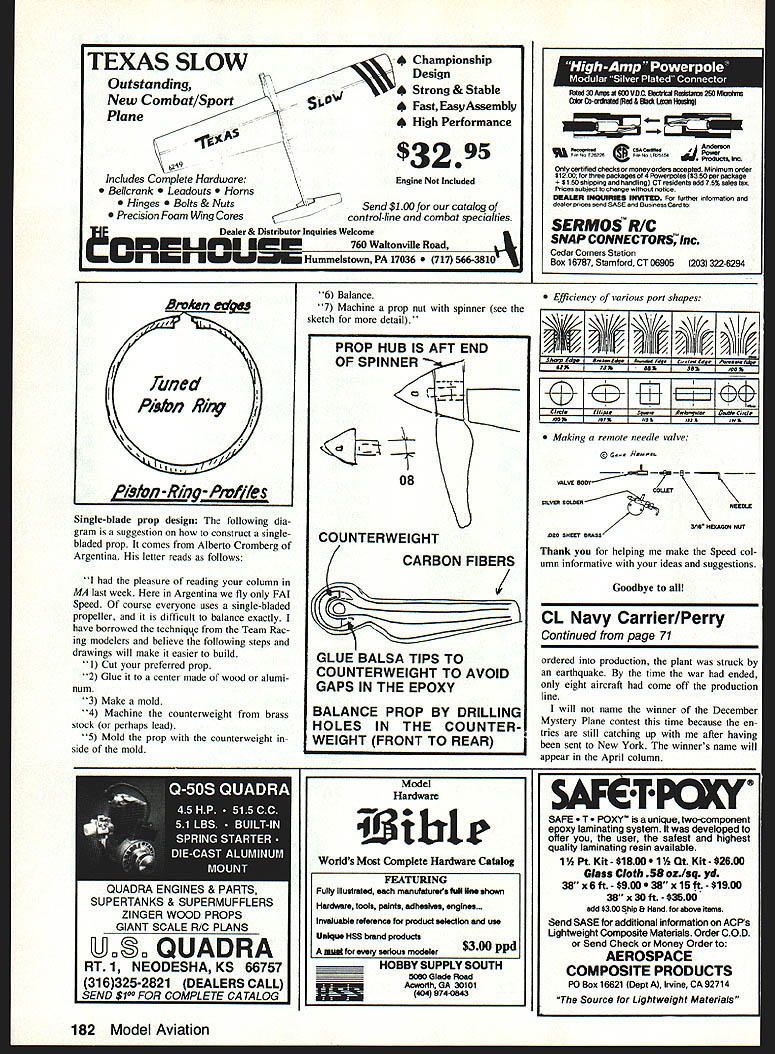
Here is a diagram mailed to me by a modeler to share with you: Use ram‑air induction. (John Hunton, Annandale, VA)
Here are a few items from my own scrapbook:
- Piston ring fits:
"One hidden danger, however, is the piston rings which in their standard shape will cause excessive heat. To obtain even tension of these rings, they should be filed to the shape as shown in the drawing. Excessive and uneven tension of the rings is thus eliminated as well as undue friction. The edges of the rings should be broken with a scraper. Excessive pressure of the rings on the cylinder bore produces friction, and friction equals heat. And this occurs where we already have an abundance of heat."
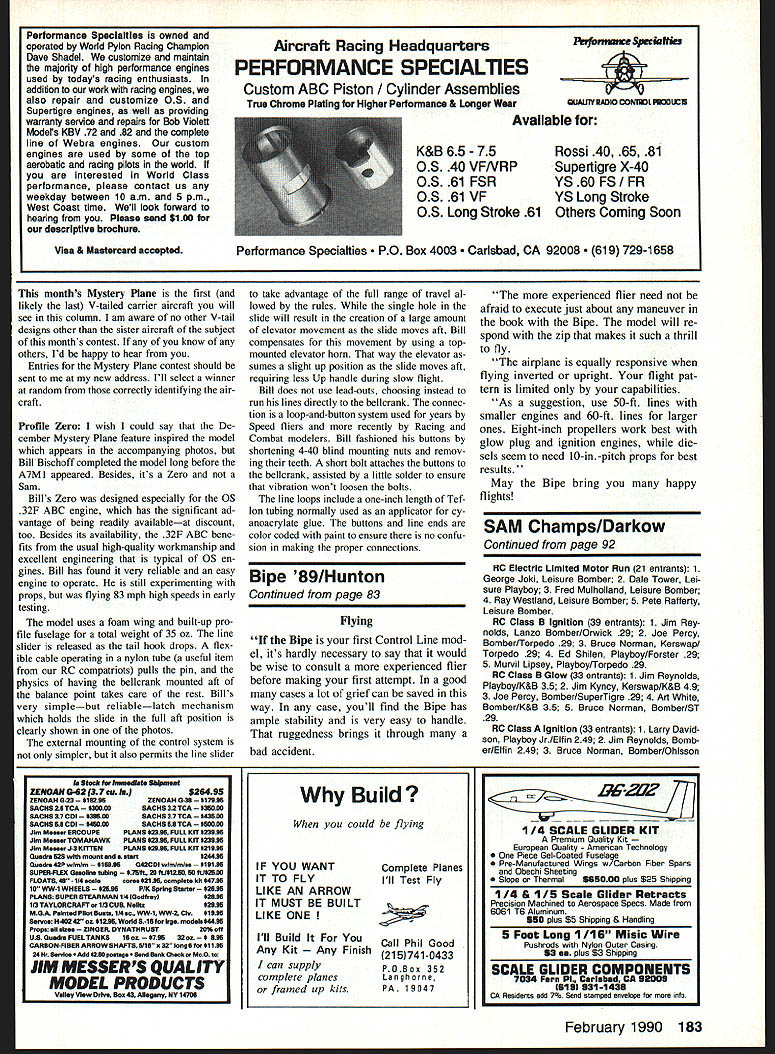
- Single‑blade prop design (from Alberto Cromberg, Argentina):
"I had the pleasure of reading your column in MA last week. Here in Argentina we fly only FAI Speed. Of course everyone uses a single‑bladed propeller, and it is difficult to balance exactly. I have borrowed the technique from the Team Racing modelers and believe the following steps and drawings will make it easier to build.
- Cut your preferred prop.
- Glue it to a center made of wood or aluminum.
- Make a mold.
- Machine the counterweight from brass stock (or perhaps lead).
- Mold the prop with the counterweight inside of the mold.
- Balance.
- Machine a prop nut with spinner (see the sketch for more detail)."
Making a remote needle valve:
Thank you for helping make the Speed column informative with your ideas and suggestions.
Goodbye to all!
Transcribed from original scans by AI. Minor OCR errors may remain.

