
Don Jehlik
ENGINE TECHNIQUE
ENGINE TESTS are just a small part of an overall picture the serious power modeler needs to be concerned about. When I discussed the column format with M.A., it was suggested I combine a healthy dose of information useful to the sport modeler with some more sophisticated information useful to the competitive modeler. It's possible to do both. The purpose of this column will be to make your power modeling more enjoyable and proficient.
For the purposes of this column, power systems will be defined as being composed of the following sub-systems (elements):
- Powerplant
- Mounting
- Fuel Supply
- Fuels
- Propellers
- Operating environment
- Measurements
- Personal skills
Let's begin with some of the basics in this installment and see where it all goes.
Rule 1. All modelers must learn to properly operate internal combustion engines on a test stand. This is necessary because (a) you will become familiar with the operating characteristics of each engine (yes, each engine really is different), and (b) it's necessary for a person to concentrate on a specific skill in order to learn it well.
Let me digress a minute, because it's very important. When Herb Stockton and I went to the '68 World Champs, Herb ran the #1 Bugl engine on the test stand in his basement—recorded the rpm on the test prop and duration of the run by stopwatch. He put the engine in the plane and we flew it at the circles. The speed (97 mph) and laps (37) were exactly as predicted from the test-stand data. I did not touch the engine compression or needle valve. We packed the models and went to Finland. At the Malmi Airport test site we put #1 up again. Speed 98, laps 38. I hadn't touched the settings yet!
Two days later we drew the very first heat of the World Champs. Now that's a time to be nervous. Herb and I both had a lot of things to do to get ready and fly the heat. But the most critical thing—adjust the engine—had been done on Herb's test stand in his basement two weeks before! That setting produced the fastest heat time of the WC and placed us in the Finals. Two weeks, a run in an air-conditioned basement, test flight in 95° 85% weather, Finland flights at 75° 40% weather on the same setting. That's why test running is important.
Think about your own experiences. The problems you have had running engines can practically be eliminated by acquiring what I call personal skills in sub-system #8. I will describe in this and future columns how to develop the personal skills needed to successfully run engines.
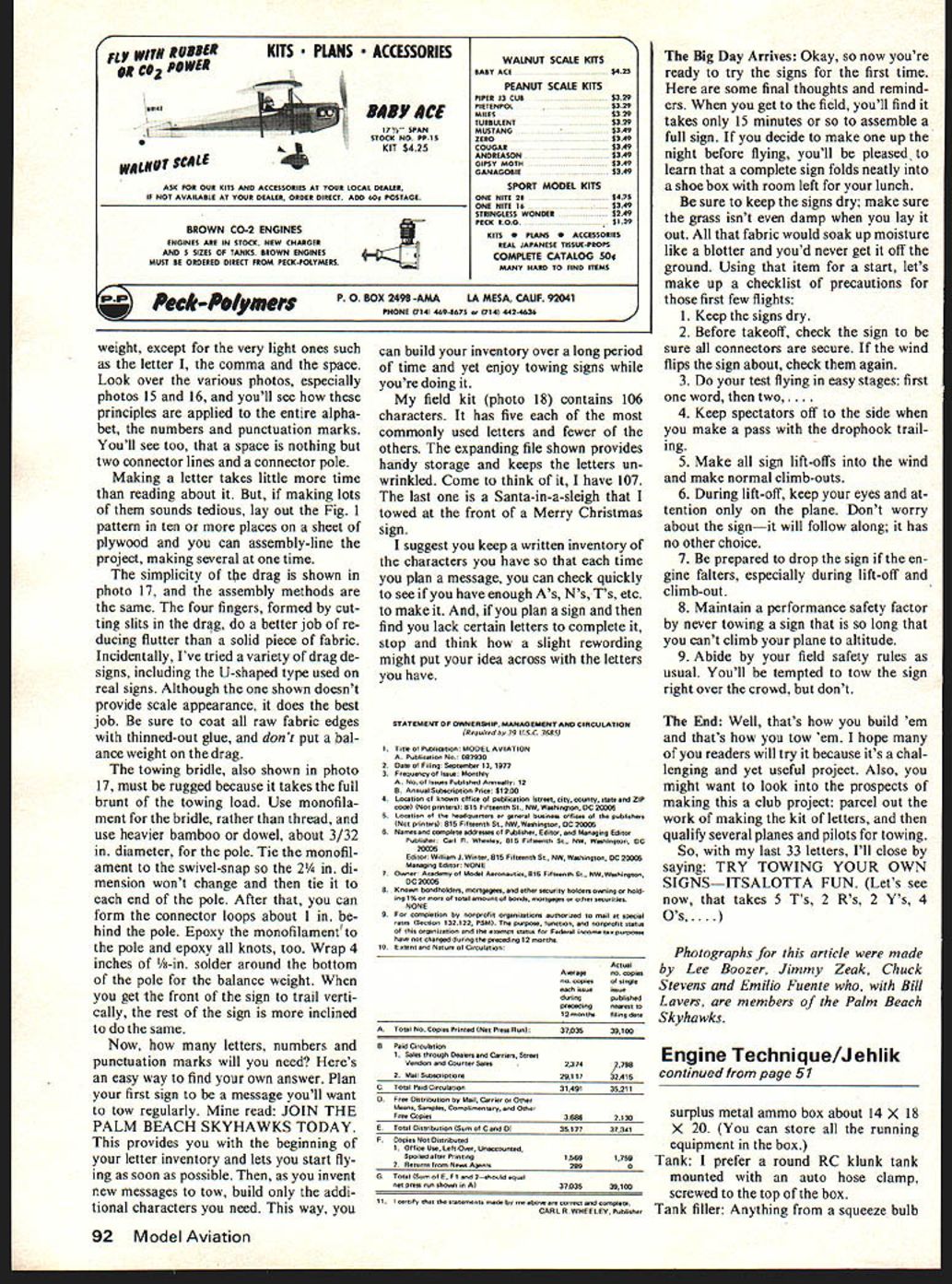
Here's a list of items you will need in order to do your test stand running:
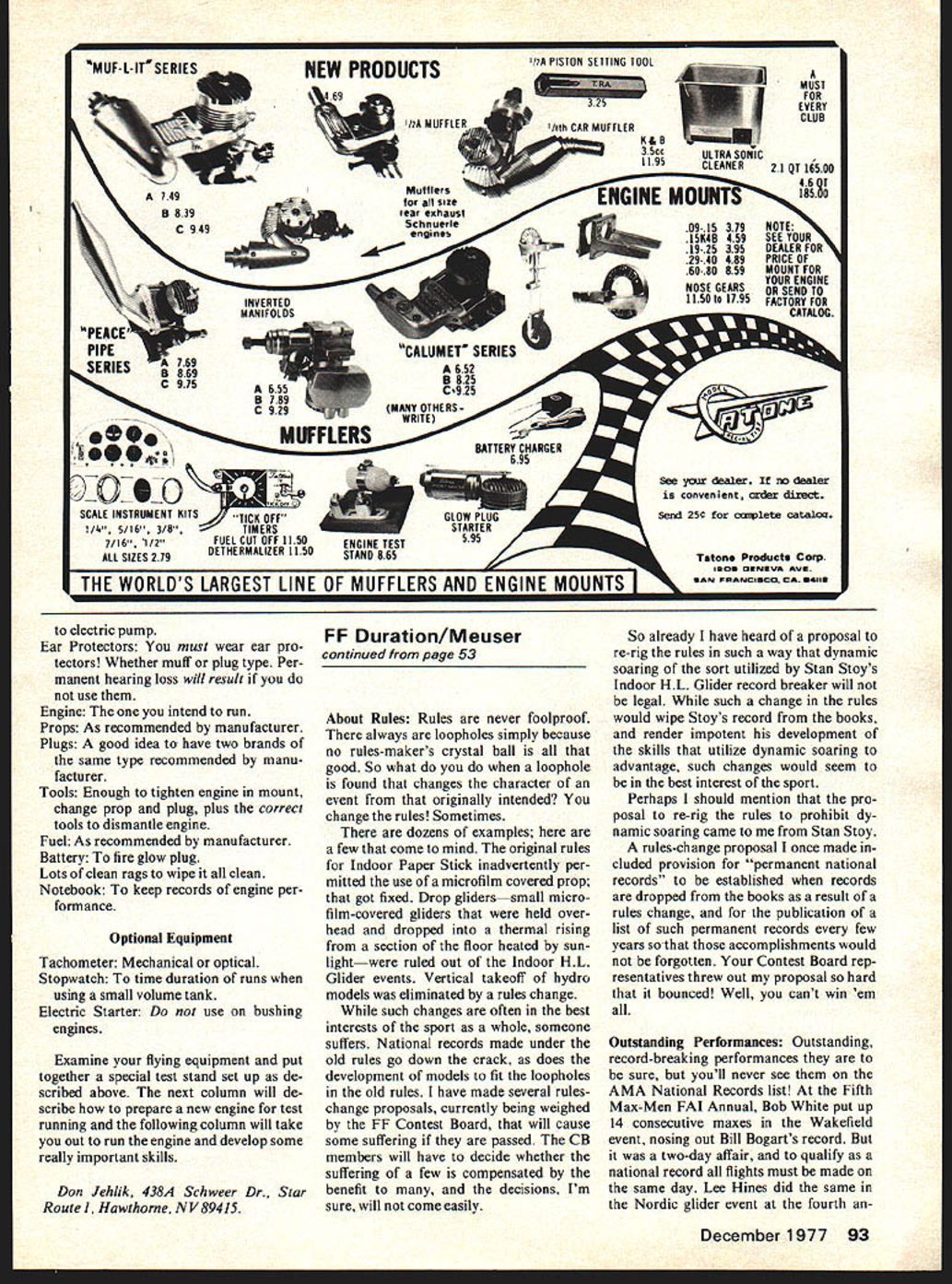
Test Stand: E-Z Just, Tatone, Sullivan adjustable. Just be sure it's a sturdy mount.
Mount for Stand: Sturdy wooden box or surplus metal ammo box about 14 x 18 x 20. (You can store all the running equipment in the box.)
Tank: I prefer a round RC klunk tank mounted with an auto hose clamp, screwed to the top of the box.
Tank filler: Anything from a squeeze bulb to electric pump.
- Ear Protectors: You must wear ear protectors! Whether muff or plug type. Permanent hearing loss will result if you do not use them.
- Engine: The one you intend to run.
- Props: As recommended by manufacturer.
- Plugs: A good idea to have two brands of the same type recommended by manufacturer.
- Tools: Enough to tighten engine in mount, change prop and plug, plus the correct tools to dismantle engine.
- Fuel: As recommended by manufacturer.
- Battery: To fire glow plug.
- Lots of clean rags to wipe it all clean.
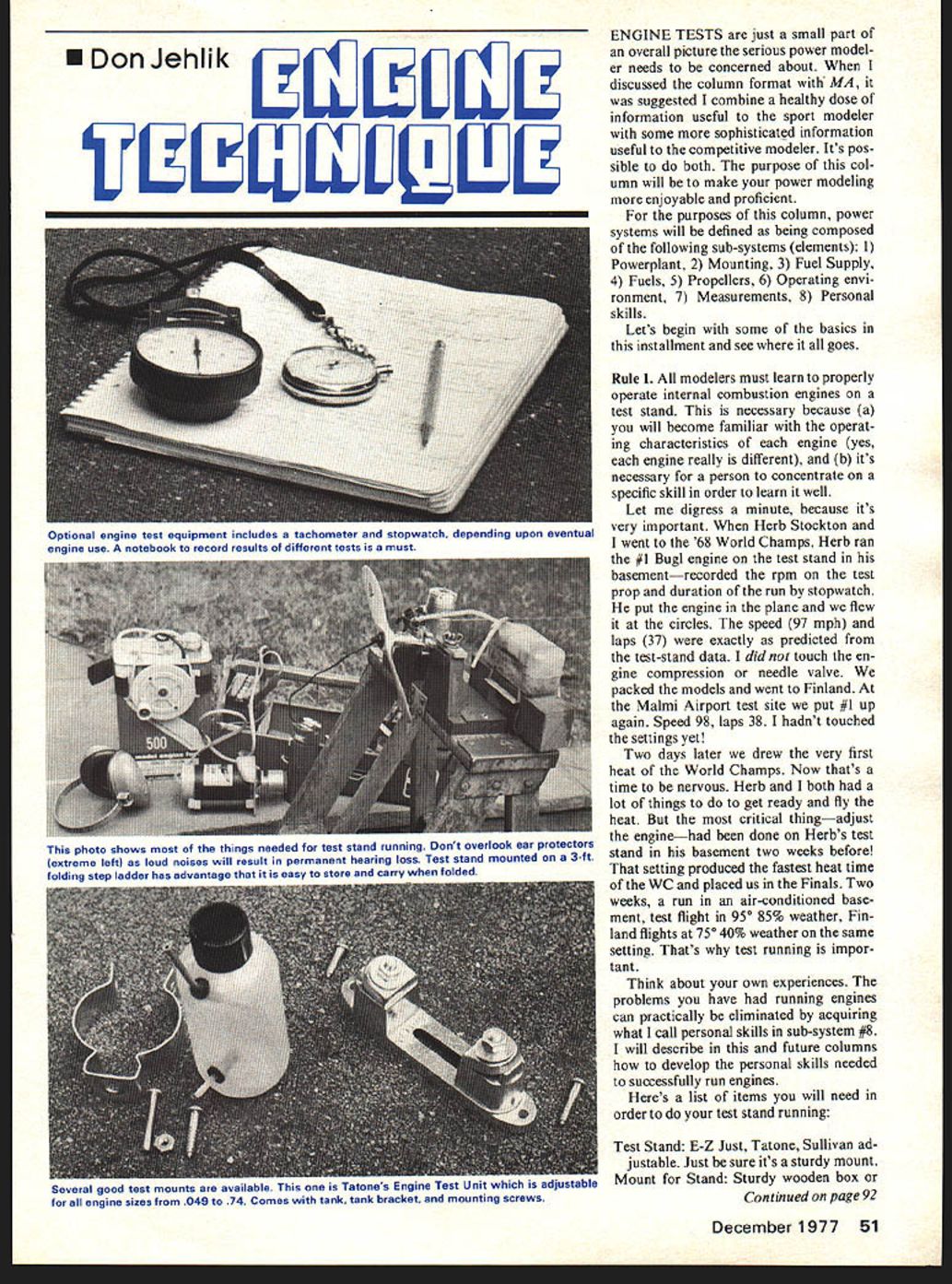
- Notebook: To keep records of engine performance.
Optional Equipment
- Tachometer: Mechanical or optical.
- Stopwatch: To time duration of runs when using a small volume tank.
- Electric Starter: Do not use on bushing engines.
Examine your flying equipment and put together a special test stand set up as described above. The next column will describe how to prepare a new engine for test running and the following column will take you out to run the engine and develop some really important skills.
Don Jehlik, 438A Scherer Dr., Star Route 1, Hawthorne, NV 89415.
Transcribed from original scans by AI. Minor OCR errors may remain.

