
F2B Aerobatics World Champs
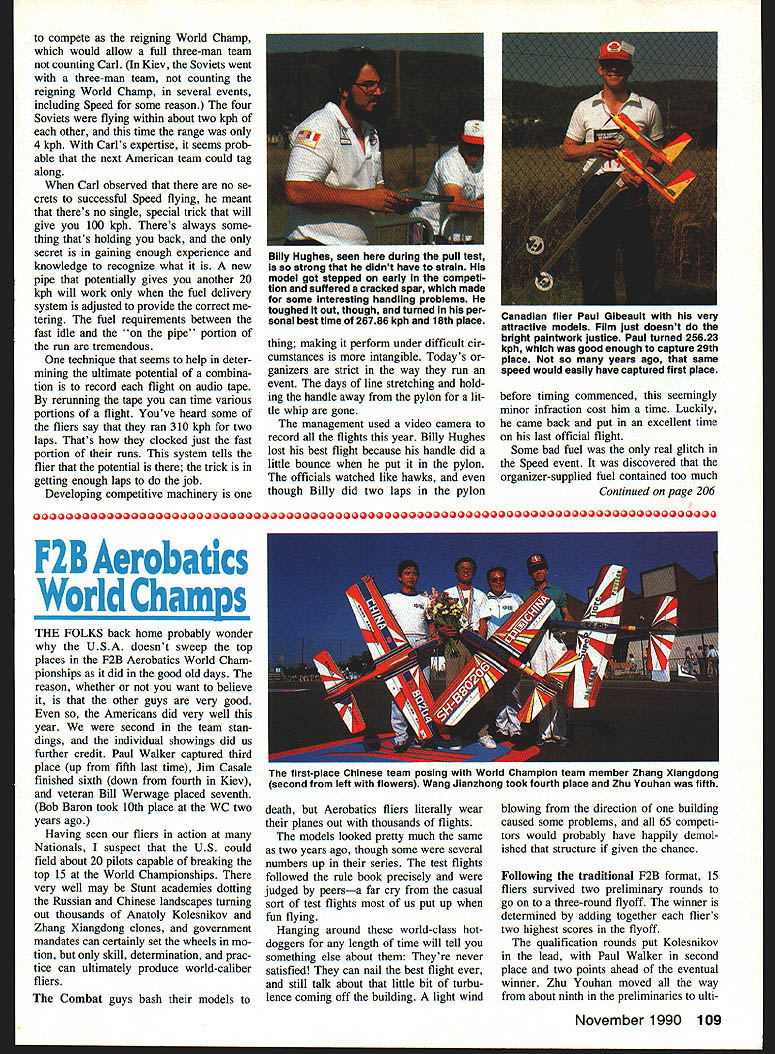
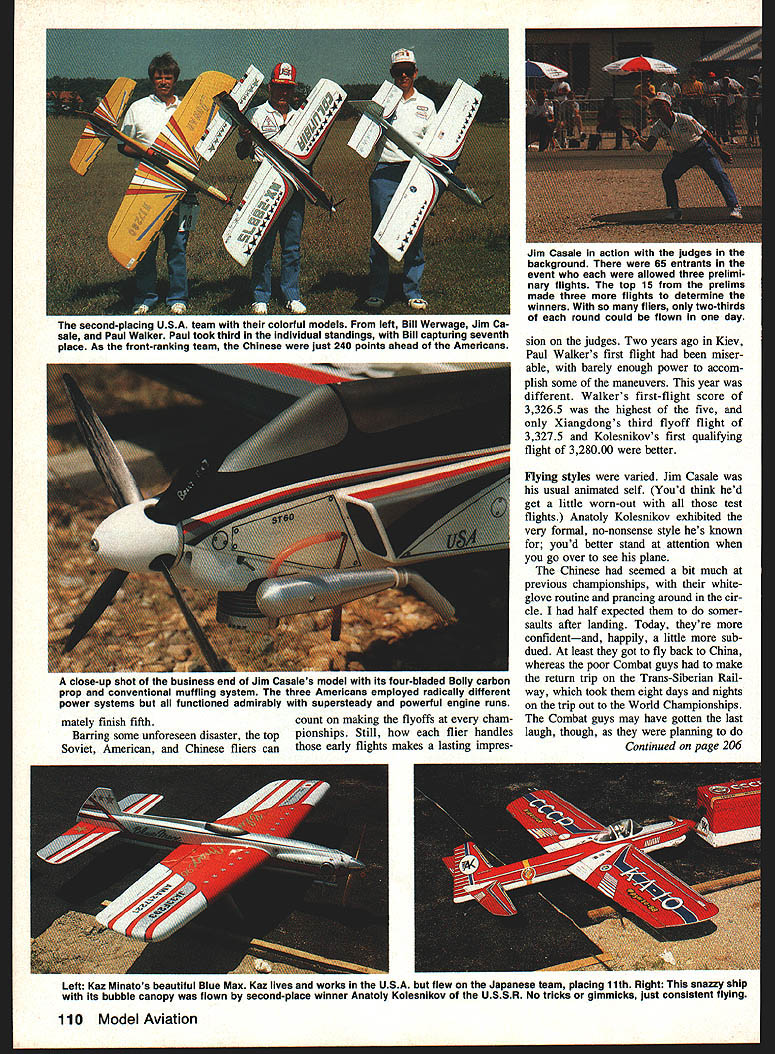
The folks back home probably wonder why the U.S.A. doesn't sweep the top places in the F2B Aerobatics World Championships like it did in the good old days. The reason—whether you want to believe it or not—is that the other countries are very good. Even so, the Americans did very well this year: the U.S. finished second in the team standings, and the individual showings were strong.
Results
- Winner: Zhu Youhan (moved up from about ninth in the preliminaries to win)
- Third place: Paul Walker (up from fifth last time)
- Sixth place: Jim Casale (down from fourth in Kiev)
- Seventh place: Bill Werwage
- (Bob Baron took 10th place at the World Championships two years ago.)
Observations on international competition
Having watched the fliers at many Nationals, I suspect the U.S. could field some 20 pilots capable of breaking the top 15 at Worlds. There may be stunt academies in Russia and China producing many talented fliers, and government support can accelerate development, but ultimately skill, determination, and practice produce world‑class competitors.
Aerobatics pilots wear their planes out with thousands of flights; the models this year looked much the same as two years ago, though some had moved up in their series. Test flights were run strictly to the rule book and judged by peers—a far cry from the casual test flying most of us do for fun.
Hanging around these world‑class hot‑doggers for any length of time reveals another trait: they're never satisfied. Even after a near‑perfect flight they'll still fret about a little turbulence off a nearby building. A light wind from that direction caused problems this year, and many competitors joked they would happily have demolished the structure if given the chance.
Format and key performances
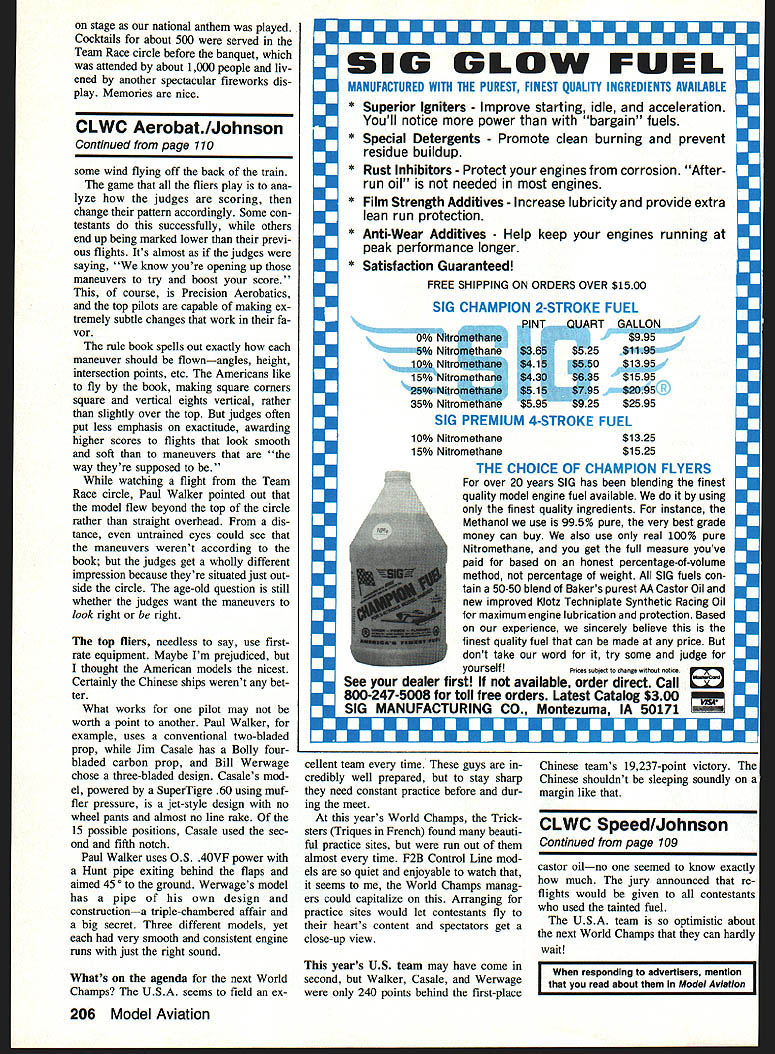
Following the traditional F2B format, 15 fliers advanced through two preliminary rounds to a three‑round flyoff. The winner is determined by summing each flier's two highest flyoff scores. The qualification rounds put Anatoly Kolesnikov in the early lead, with Paul Walker close behind. Walker posted a very strong first flyoff flight—the highest among his flights—and only Zhang Xiangdong produced a flyoff flight that edged it.
Styles and personalities
- Jim Casale: animated and energetic—very visible in the circle (and tireless with test flights).
- Anatoly Kolesnikov: formal and no‑nonsense—very precise in presentation and flying.
- Chinese team: more confident and noticeably subdued compared with some earlier championships; less of the theatrical white‑glove routine seen in the past.
Logistics and travel
The aerobatics teams generally flew home. By contrast, the Combat competitors endured a long journey on the Trans‑Siberian Railway—an eight‑day, nights‑included trek to reach the championships. They may have had their hardships, but they kept their sense of humor and camaraderie.
Closing note
This year's U.S. team finished second. Walker, Casale, and Werwage were only 240 points behind the first‑place Chinese team's 19,237‑point total—a narrow margin that should give the U.S. plenty of optimism heading into the next World Championships.
Transcribed from original scans by AI. Minor OCR errors may remain.

