
Florida Jets: Second annual international jet gathering at Flagler Airport
Jim Haught
The second Florida Jets was held February 26–March 1 at Flagler Airport, Bunnell, Florida (about 30 minutes from Daytona Beach). ZAP, RC Jet International, RA Microjets, and Sophia Turbines were platinum-level sponsors.
The strange winter of 1997–98 affected the event; conditions were cooler and damper than in 1997, and several preregistered pilots did not make it to the site. Tornadoes had struck parts of Florida near the site only days earlier, and "those reports probably scared off a few people," said event promoter Frank Tiano.
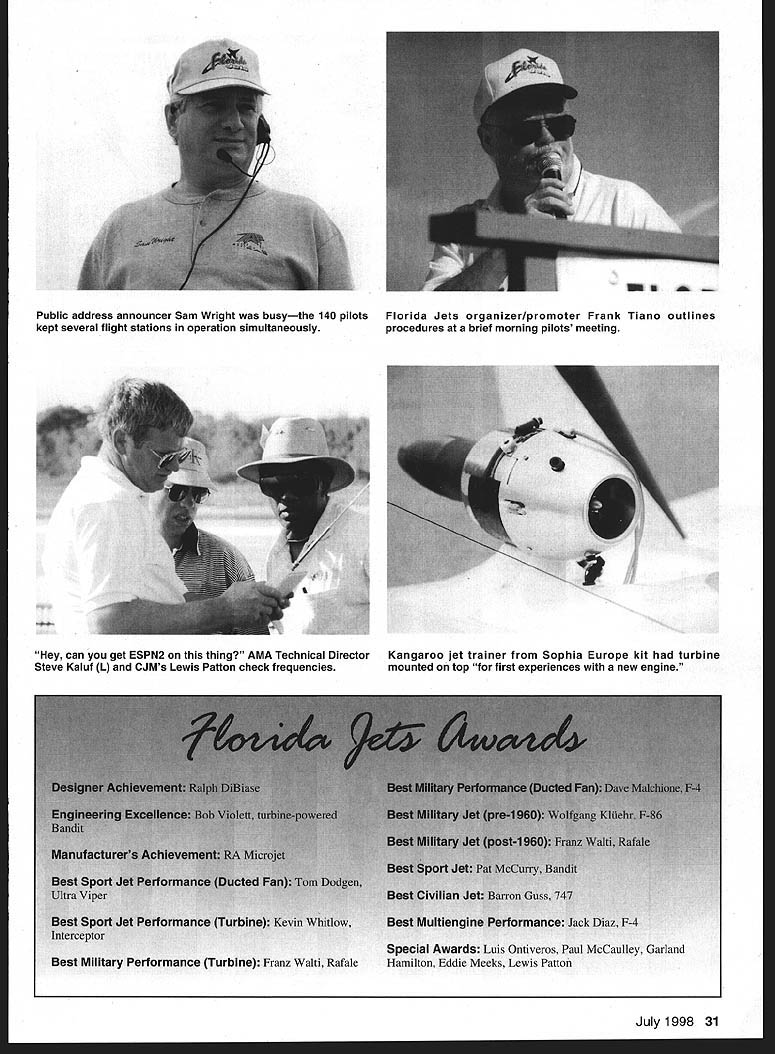
Still, roughly 140 pilots and most of the major players in the RC jet industry were present, and many factory team representatives flew a variety of models. More than 400 flights had been made by midday Sunday, keeping PA announcer Sam Wright plenty busy with pilot/model identifications.
Skies were gray to overcast for much of the event, and many pilots and crews wore jackets on Sunday morning when temperatures were particularly chilly for Florida. As in 1997, a crosswind from behind the pit area appeared from time to time, creating turbulence that required extra work from pilots on takeoffs and landings.
There were a few crashes and takeoff/landing problems, but almost all were relatively minor, and the flightline crew kept things under control. (See Steve Kaluf’s "Technical Director" column in the June issue for an outline of the most serious incident, which was handled quickly by the crew.)
Highlights and observations
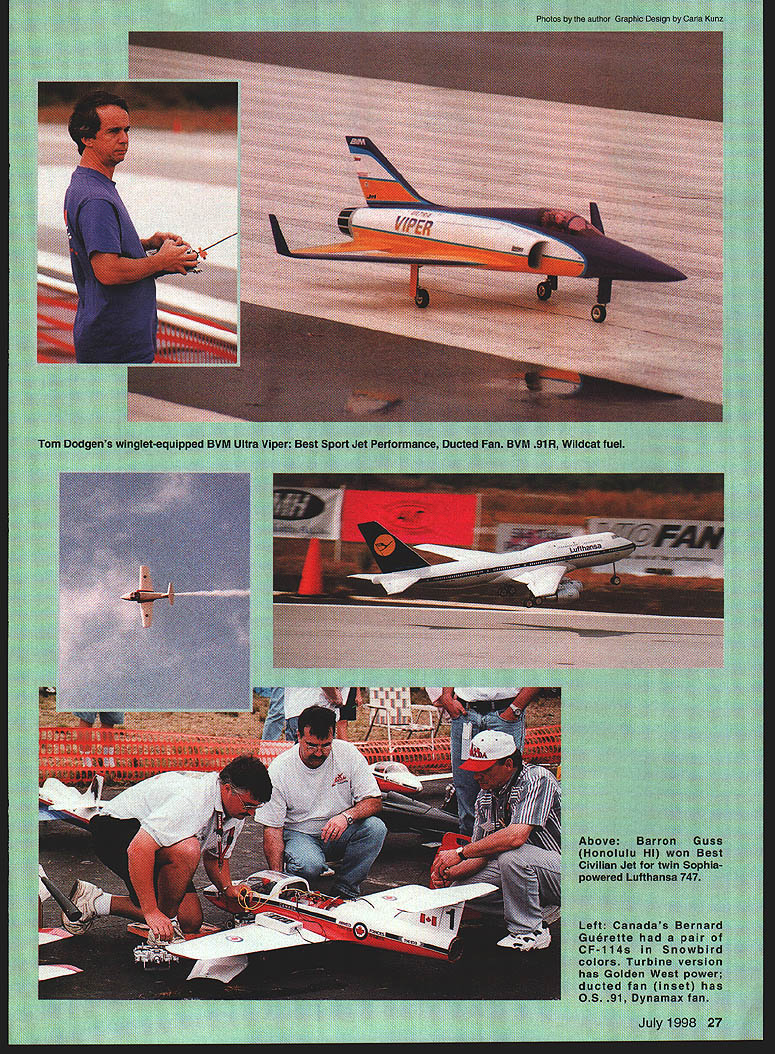
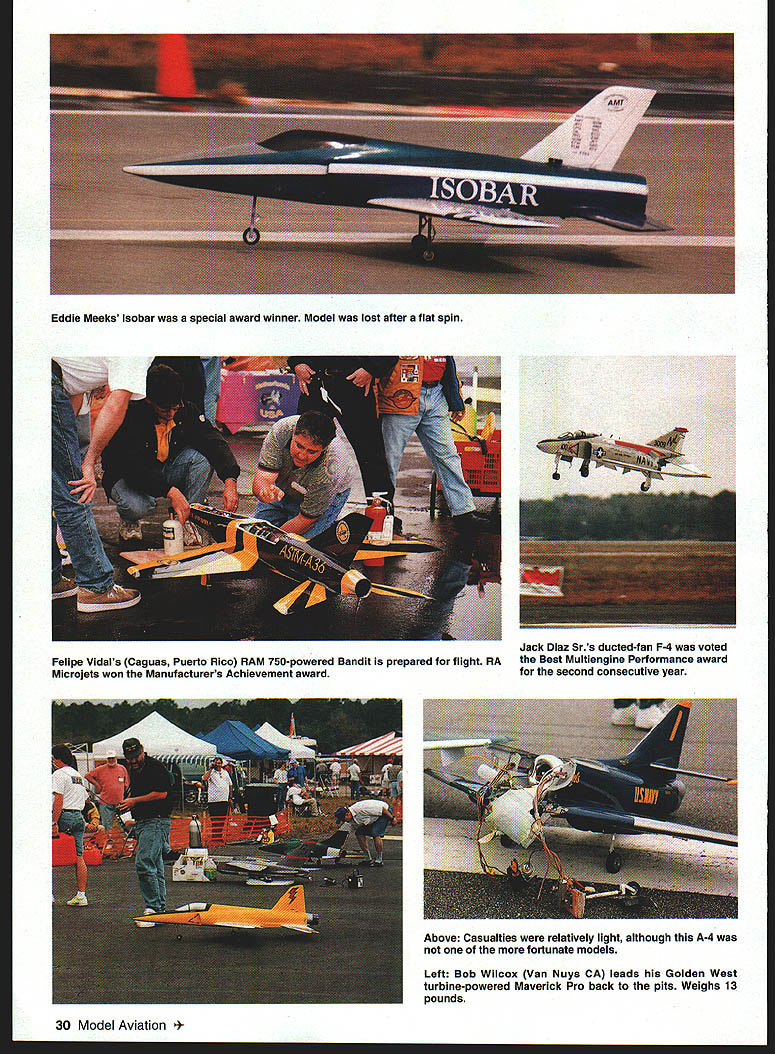
- Bob Violett’s RAM 750–powered Bandit incorporated Kevlar fuel-cell technology borrowed from motorsports. This development offers greater protection from fire in the event of a crash. A smoke system will be used in this model but was not ready at this event. The Bandit won the Engineering Excellence award.
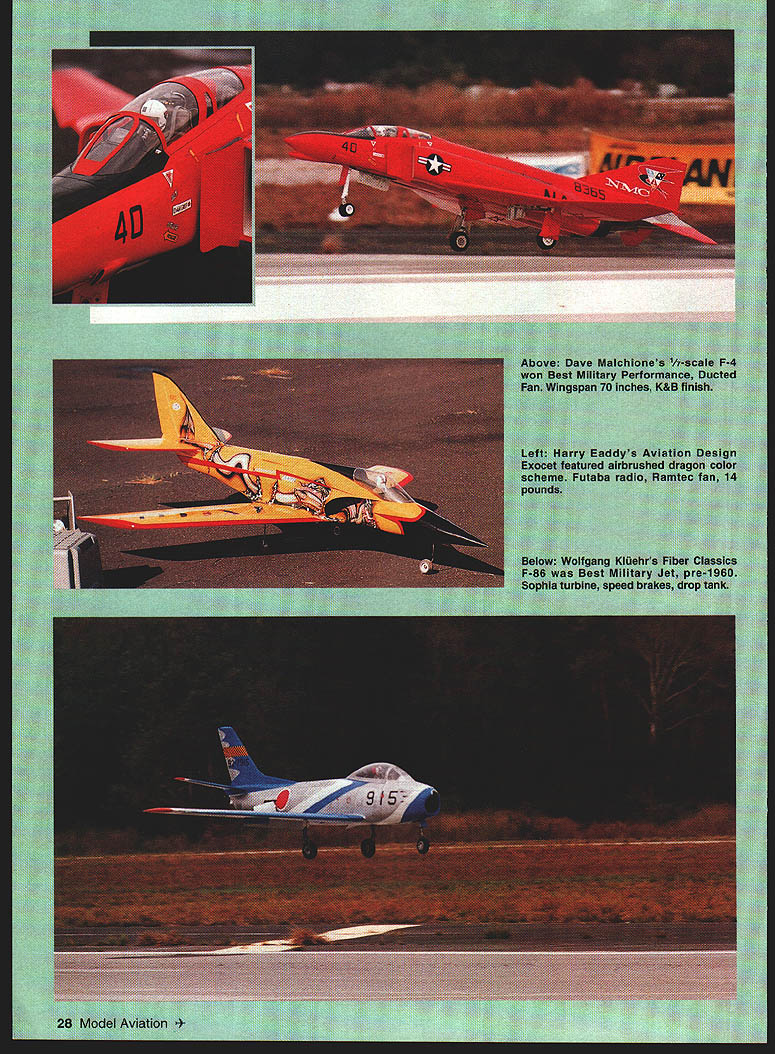
- Bernard Gurette of Canada flew a pair of 1/10-scale Canadair CF-114 Tutors. One was powered by a Golden West turbine; the other used a Dynamax ducted fan with an O.S. .91 engine and put on an impressive smoke demonstration. The Hobbypoxy- and Monokote-finished models were trimmed in the colors of the Canadian Snowbirds show team.
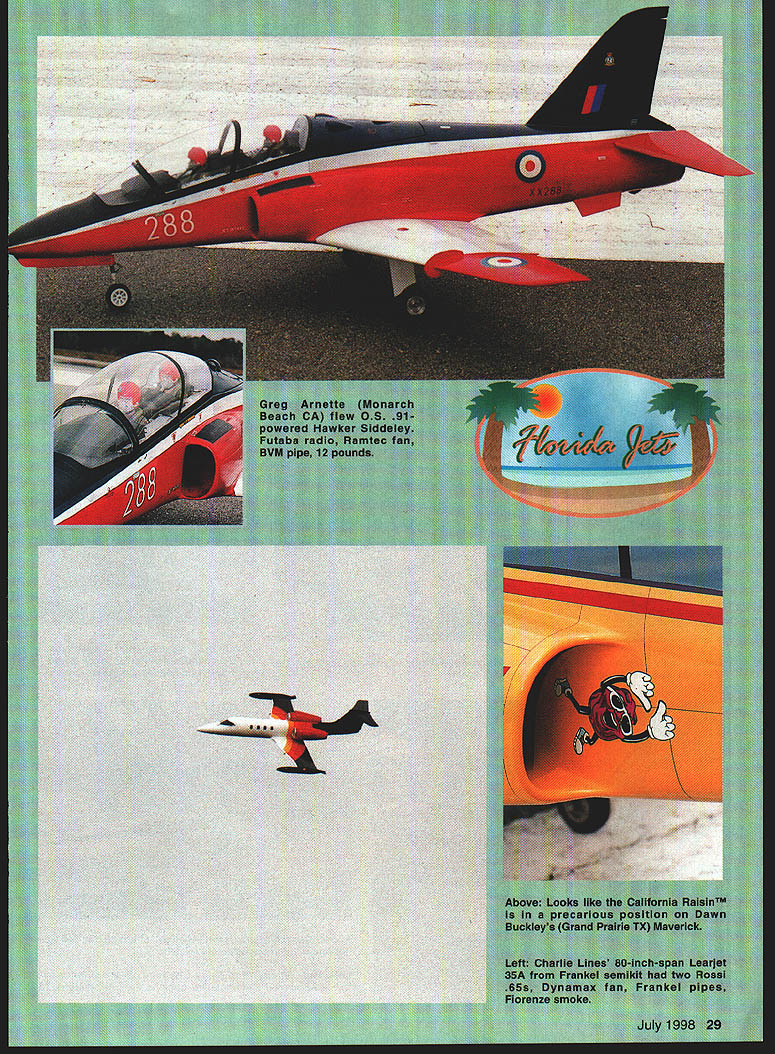
- Barron Guss (Honolulu, HI) flew a twin Sophia J-450–powered Lufthansa 747 airliner to the Best Civilian Jet award.
- To familiarize more fliers with ducted-fan flight, a pilot station was reserved for AMA members who had some flying experience but wished to try this form of modeling. Flight tickets were sold for $20 each, and a buddy-box system was set up. The popular arrangement (see cover) was staffed by Pat McCurry (who also won Critics’ Choice, Ducted Fan) and others to good effect.
- The growth and development of the turbine market was evident. A greater variety of engines and airframes was on display, and pilots’ comfort with turbine startup, handling, and piloting appears to have increased dramatically over the previous 12 months.
Spectator turnout was somewhat disappointing to the organizers; weather was a factor, and the Flagler site's relatively remote location may have contributed to fewer-than-expected paid admissions.
"From a promoter's standpoint, yes, I am concerned," said Frank Tiano. "As far as the number of pilots goes, there's no problem." Merchandise raffle ticket sales—particularly the raffle for a turbine—were important to the event’s financial success. "That, and the help of our sponsors, really makes this event possible."
Transcribed from original scans by AI. Minor OCR errors may remain.

