
IMAA 2nd Annual Giant Scale Fun-Fly Festival
A tough act to follow. That's what we heard about the International Miniature Aerobatic Association's big event this year. The turnout of modelers and their airplanes was phenomenal, and the facilities and planning made the weekend memorable.
Overview
During the last weekend of August 1982, the International Miniature Aircraft Association, with a big assist from Byron Originals, demonstrated the truth of the association's motto: Big is Better. At the IMAA's Second Annual Fun-Fly Festival, from Friday the 27th through Sunday the 29th, over 375 registered participants and approximately 450 Giant Scale models literally flabbergasted the populace of a large chunk of northwestern Iowa. A lot of the participants were flabbergasted as well.
Location and Facilities
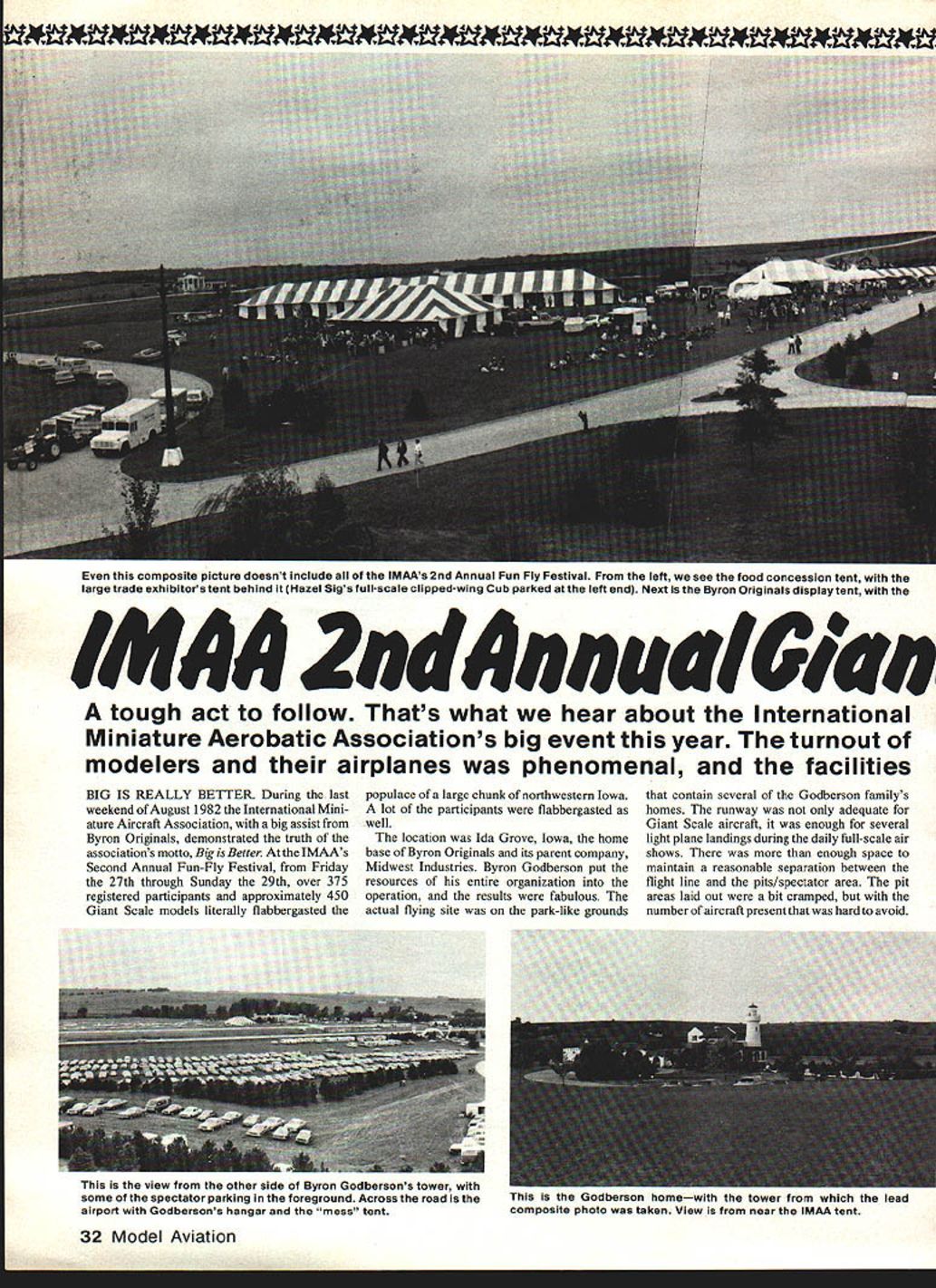
The festival was held in Ida Grove, Iowa, the home base of Byron Originals and its parent company, Midwest Industries. Byron Godberson put the resources of his organization into the operation, and the results were fabulous. The actual flying site was on park-like grounds that include several of the Godberson family's homes.
The runway was more than adequate for Giant Scale aircraft — it even accommodated several light-plane landings during the daily full-scale air shows. There was ample space to maintain reasonable separation between the flight line and the pits/spectator area, though the pit areas were a bit cramped given the number of aircraft present.
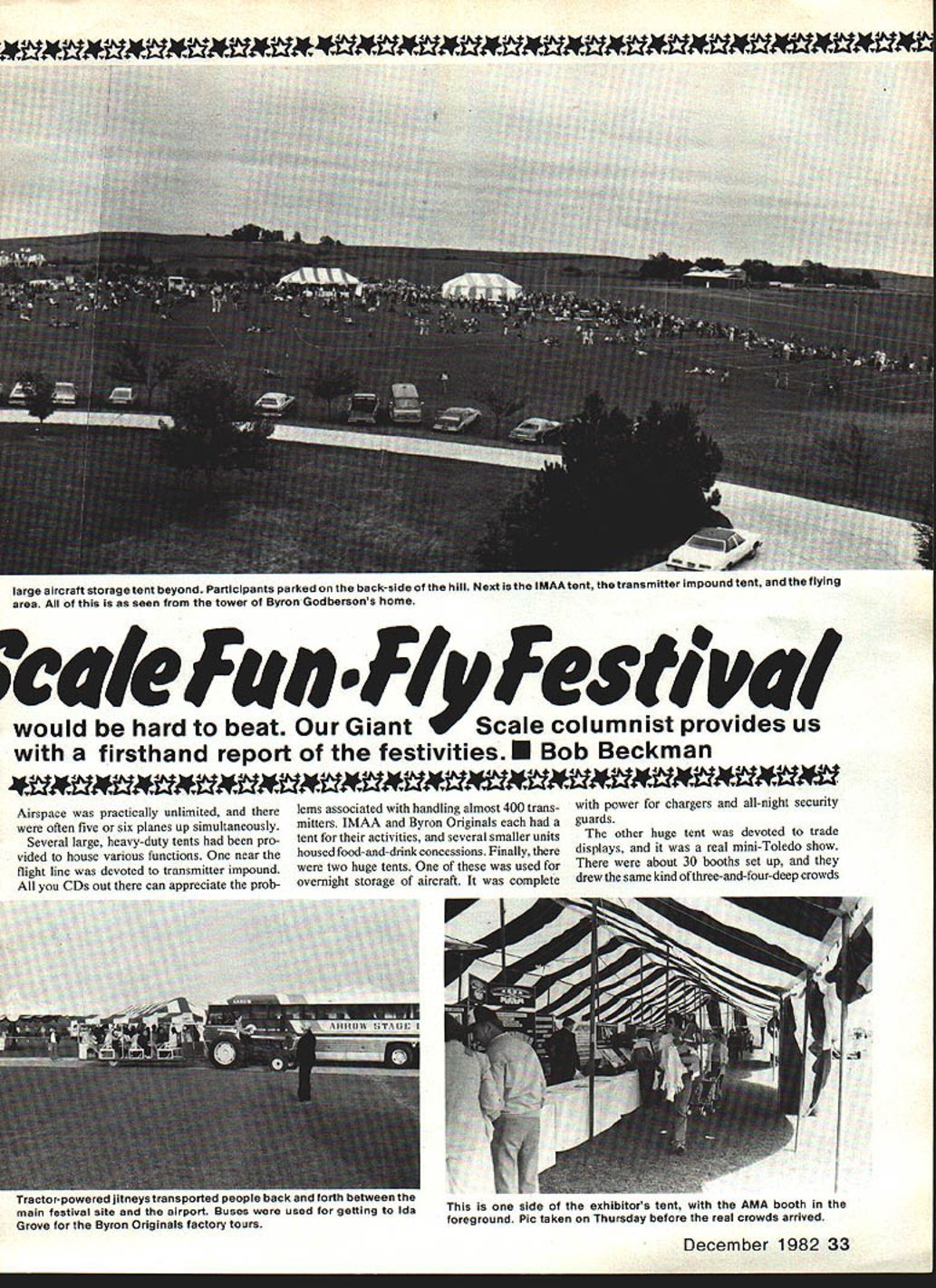
Airspace was practically unlimited; often five or six planes were up simultaneously. Tractor-powered jitneys transported people between the main festival site and the airport, and buses shuttled attendees to Ida Grove and on Byron Originals factory tours.
Tents and Exhibits
Several large, heavy-duty tents provided housing for festival functions near the flight line:
- A devoted transmitter impound to handle nearly 400 transmitters.
- Tents for IMAA and Byron Originals activities.
- Smaller units for food-and-drink concessions.
- Two huge tents: one for overnight storage of aircraft (complete with power for chargers and all-night security) and one devoted to trade displays.
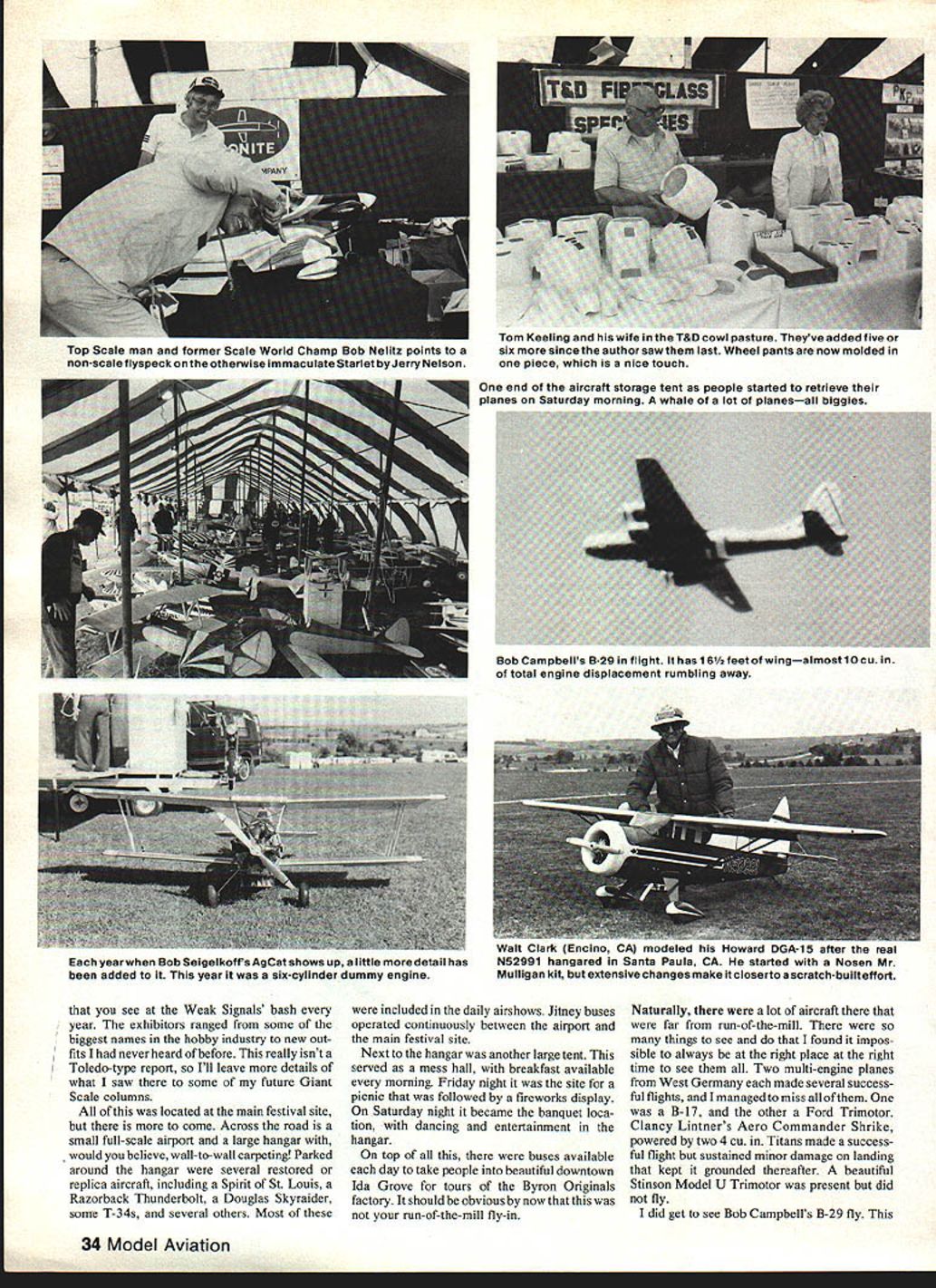
The trade-display tent was a true mini-Toledo show: about 30 booths drew three- and four-deep crowds. Exhibitors ranged from some of the biggest names in the hobby industry to new outfits — there was a wide variety to see.
Airport, Full-Scale Aircraft, and Airshows
Located across the road from the main festival site was a small full-scale airport with Godberson's hangar and the mess tent. Parked around the hangar were several restored replica aircraft, including the Spirit of St. Louis, a Razorback P-47 Thunderbolt, a Douglas Skyraider, T-34s, and others. Most of these participated in daily full-scale airshows.
Daily activities at the airport included:
- Full-scale fly-bys of restored and replica Golden Age and WWII aircraft.
- Aerobatic displays by a clipped-wing Taylorcraft and a Christen Eagle.
- Parachutists added to the Saturday show.
- Jitney buses ran continuously between the airport and the main festival site.
Notable Model and Multi-Engine Flights
Several large multi-engine scale models received special attention; other activities were suspended while they operated. All reasonable safety precautions and tight crowd control were enforced, and spectators were treated to a fantastic show.
Highlights included:
- Two multi-engine planes from West Germany that made successful flights.
- A Ford Trimotor (Clancy Lintner's Aero Commander Shrike powered with two 4-cylinder Titans) that flew successfully but sustained minor landing damage.
- A beautiful Stinson Model U Trimotor that flew.
- Bob Campbell's B-29, which proved to be a reliable flier with many safe and successful flights; this was its first operation from a grass field but it performed well.
- A big Super Sport mother ship rigged to carry Gary Rehault's rocket-powered X-1; the X-1 dropped from the mother plane and fired its rocket, although on this occasion it didn't return intact. The crowd appreciated the realism.
All of these multi-engine aircraft were treated as special events, drawing concentrated attention from the thousands of spectators present.
Build Quality and Scratch-Built Models
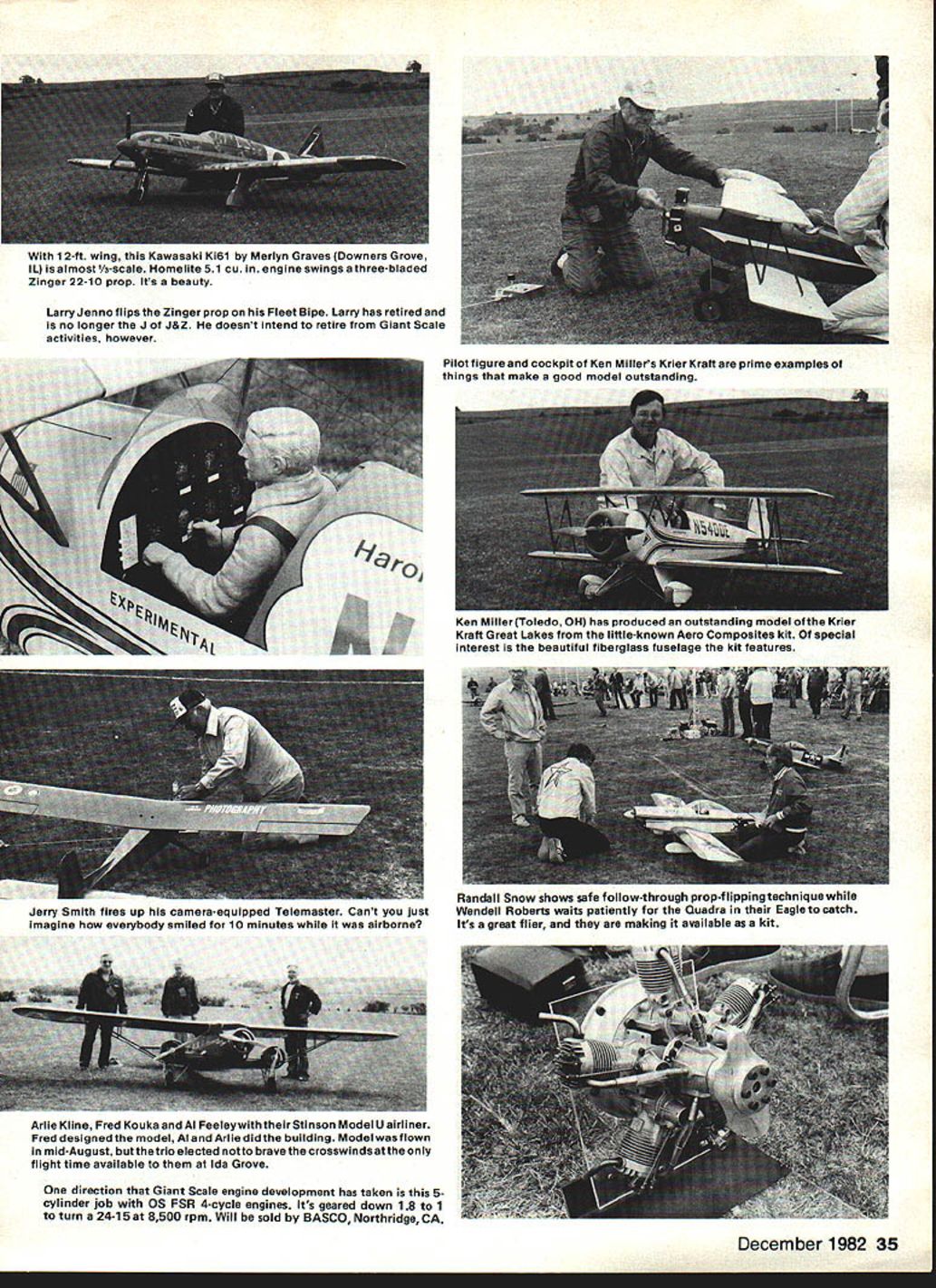
I think you could have found at least one example of every kit produced and many models built from plans. Most interesting were the many true scratch-built examples — some did not fly, but most demonstrated convincing flight capability. Many of these models represent labors of love; they embody the essence of the hobby: creating something with your own hands and then seeing it perform.
Schedule, Weather, and Activities
The show effectively started earlier in the week: tents and equipment went up as early as Wednesday afternoon, and participants began arriving then. Thursday was sunny but cool and windy, used for settling in and preparing for Friday's official opening.
Friday morning dawned cloudy, windy, and cold — temperatures were in the 50s and low 60s until noon — but people still came to fly and the flight lines were busy from 9 a.m. By noon the sky cleared, the wind dropped, and the sun warmed everything up. A full-scale air show at noon was filled with fly-bys and aerobatic acts; model acts filled the gaps, including Miles Reed's remarkable CAP-20 performance (with a convincing series of Lomcevaks).
Friday evening featured a picnic dinner in the Mess Tent, followed by a fireworks display and live musical entertainment.
Saturday was not quite as cold or windy, and activities continued at a furious pace. Early Saturday morning and at noon the large multi-engined model planes were flown. The full-scale air show was repeated with additional acts. The sky was filled with Giant Scale models the rest of the day.
Saturday afternoon, Dick Phillips, Jerry Smith, and the author climbed to the top of the tower that is part of Byron Godberson's home to photograph the almost overwhelming panorama of the Fun-Fly Festival.
Sunday brought cold, wind, rain, and mud — a final blow from the weather gods. Many participants had to depart earlier or contend with poor conditions, but the weather could not put much of a dent in the overall success of the event.
Social Events and Attendance
As with Friday's picnic, Saturday's banquet saw close to a thousand people gathered to eat, drink, and make merry. Brief speakers, live music for dancing, prizes, and surprises added to the festivities. Many participants stayed late, some traveling back to motels as far as 50 miles from Ida Grove.
Conclusion
Future IMAA Fun-Fly Festivals may exceed this one in numbers of participants or aircraft, but they will have a hard time equaling the impact of this "2nd Annual" extravaganza. The festival showcased the scale-modeling hobby at its best: spectacular flying, fine craftsmanship, excellent organization, and a community that came together to celebrate big airplanes and big fun.
Transcribed from original scans by AI. Minor OCR errors may remain.

