
Lest We Forget
L. F. Randolph
Since engines are getting more and more expensive every day, it's time to review the things we should be doing to protect and extend the life of our power plants. The photos show the basic minimum procedures that should be followed at the field before, during and after a flying session.
Before starting / Preparation
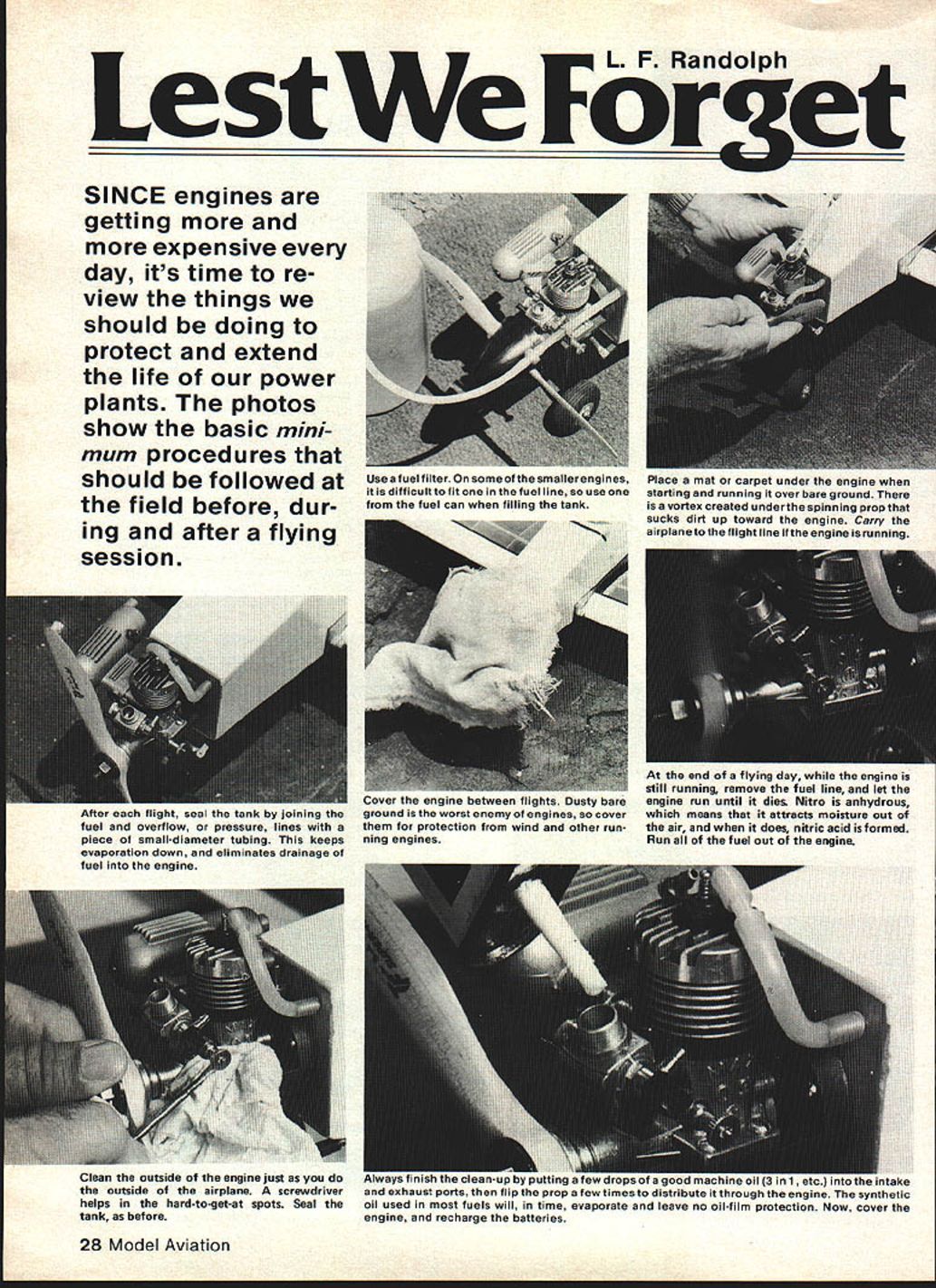
- Use a fuel filter. On some of the smaller engines it is difficult to fit one in the fuel line, so use one from the fuel can when filling the tank.
- Place a mat or carpet under the engine when starting and running it over bare ground. There is a vortex created under the spinning prop that sucks dirt up toward the engine. Carry the airplane to the flight line if the engine is running.
During and between flights
- After each flight, seal the tank by joining the fuel and overflow (or pressure) lines with a piece of small-diameter tubing. This keeps evaporation down and eliminates drainage of fuel into the engine.
- Cover the engine between flights. Dusty bare ground is the worst enemy of engines, so cover them for protection from wind and other running engines.
End of the flying day
- At the end of a flying day, while the engine is still running, remove the fuel line and let the engine run until it dies. Nitro is hygroscopic, which means that it attracts moisture out of the air, and when it does, nitric acid is formed. Run all of the fuel out of the engine.
Cleaning and storage
- Clean the outside of the engine just as you do the outside of the airplane. A screwdriver helps in the hard-to-get-at spots. Seal the tank as before.
- Always finish the clean-up by putting a few drops of a good machine oil (3-in-1, etc.) into the intake and exhaust ports, then flip the prop a few times to distribute it through the engine. The synthetic oil used in most fuels will, in time, evaporate and leave no oil-film protection.
- Now cover the engine, and recharge the batteries.
Transcribed from original scans by AI. Minor OCR errors may remain.

