
Lightweight Radial Simulation
By Bud Chappell
We wouldn't be modelers in the true sense if we weren't always thinking of better, easier ways to do things. Our author turned his attention to the simulated radial engine and came up with an easy way that looks good—and doesn't weigh very much.
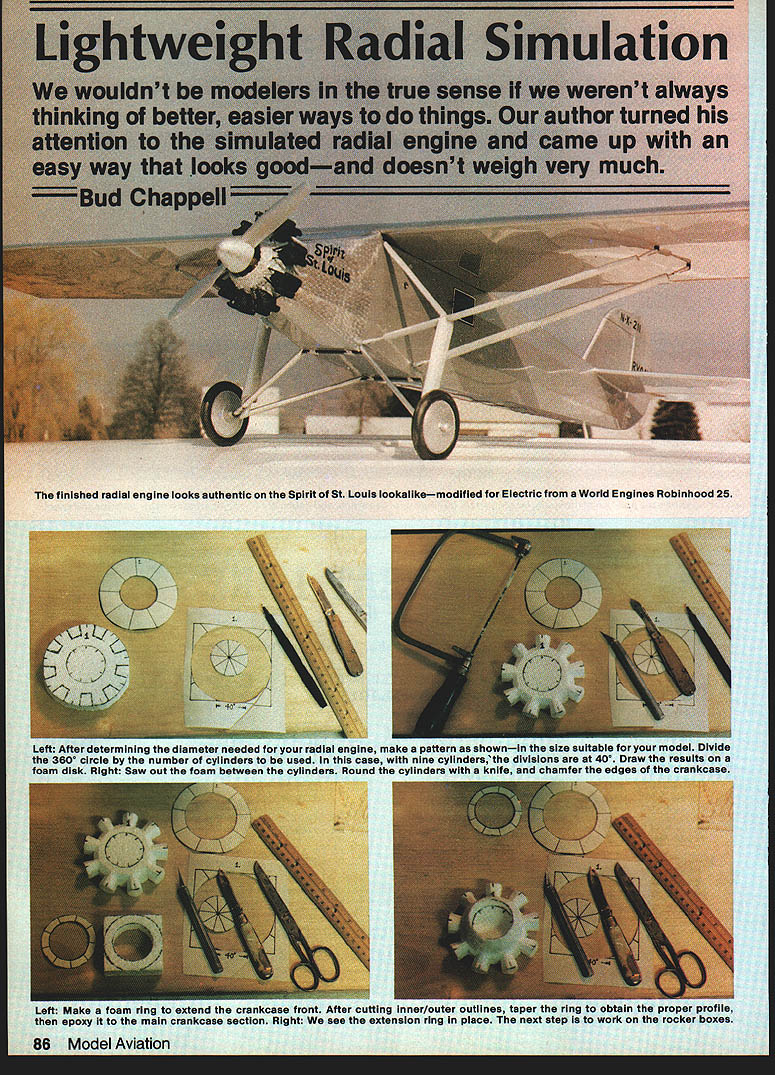
One of the difficult tasks modelers building miniature radial-engine planes face is duplicating the appearance of a realistic round engine. Often it's too hard for hobbyists. Plastic parts such as cylinders, crankcases, and complete engine kits are available, but they don't always come in the proper scale or fit a particular model. Hands-on experience has led me to try to find an easier method that would produce good results within a short period of time.
Lately my activities have centered around development of electric models, especially scale types in the Golden Age category. Many of those planes originally used radial engines and thus need a better way to make dummy engines.
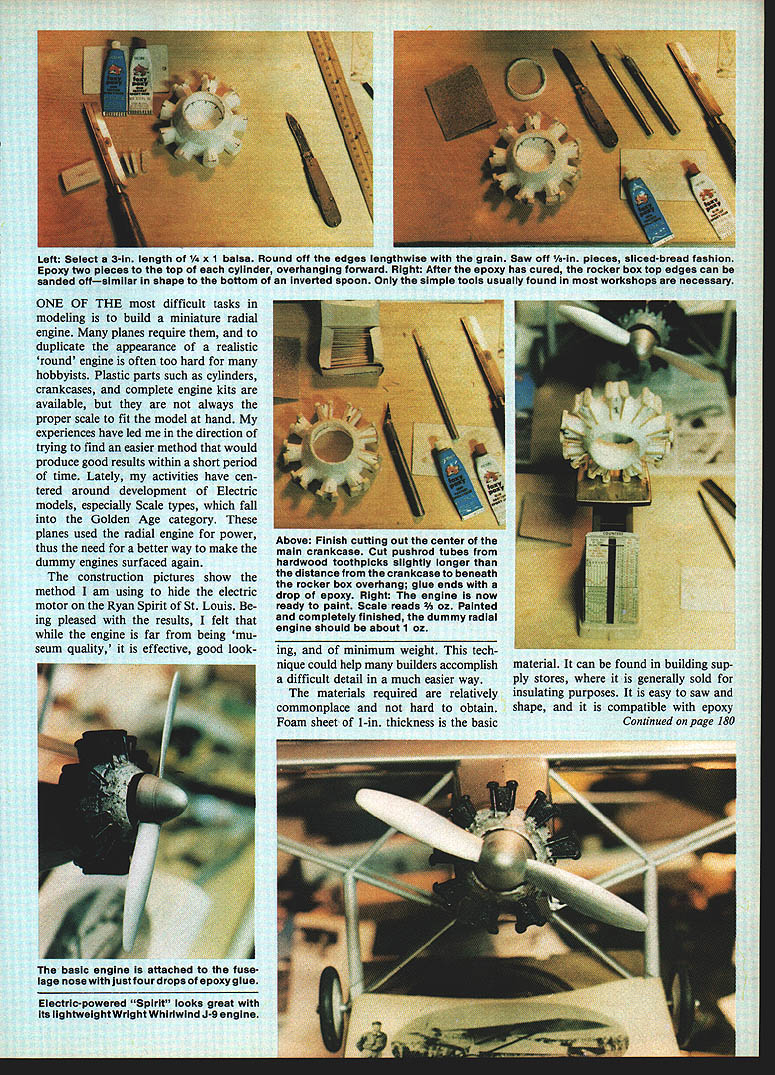
The construction pictures on this page show the method I am using to hide the electric motor on my Ryan Spirit of St. Louis look-alike. I'm pleased with the results. While the engine is far from museum quality, it is effective and looks good.
The materials used can be found at building-supply stores, are generally sold for insulating purposes, are easy to saw and shape, and are compatible with epoxy. Lightweight and of minimum weight, this technique could help many builders accomplish a difficult detail in a much easier way.
Take care when the time comes to paint the finished engine; test the paint first on some scrap material. Only paints that will not attack the foam can be used. Sig Plasti-Namel works very well, and Testor's Pla enamel is also suitable. I think latex paints are OK, but since I haven't personally used any, I urge you to test first.
When testing, allow sufficient drying time for the paint to cure. Occasionally the eroding process is so slow that at first you might think it is not doing any harm. After a couple of hours the damage may gradually show up.
So, without further ado, follow the proper sequence, and construct a radial engine that you will be proud to fasten to the front of your new plane, with the satisfaction that it is your own handiwork.
Good luck.
Transcribed from original scans by AI. Minor OCR errors may remain.

