
The Magical Kingdom
By Don Berliner
Setting
There's a magical kingdom where the king and all his subjects worship aeroplanes.
It's a neatly mowed and wonderfully green English airfield surrounded by centuries-old homes and farms and peaceful woods that echo the very special sounds of piston engines and wooden propellers. The low-slung hangars swing open easily to reveal a living air museum, so completely different from the static and sterile collections that try to tell the story of aviation.
Every aeroplane that graces the premises of the Richard Ormonde Shuttleworth Trust is meant to fly. The people at Old Warden Aerodrome, 40 miles north of London, are convinced that museum aeroplanes belong in the air, not on the ground. As a result, the Bedfordshire airfield offers the greatest variety of aerial craft that fly from any single place in the world.
The museum is open daily, with a modest charge for admission. The hangars and workshops can be viewed at one's leisure, and the museum store sells pictures of the residents, plastic model kits and publications. So far, it sounds about like any other air museum. But on the last Sunday of every month from March to October, Old Warden comes to life for a Flying Day.
Hangars and Workshops
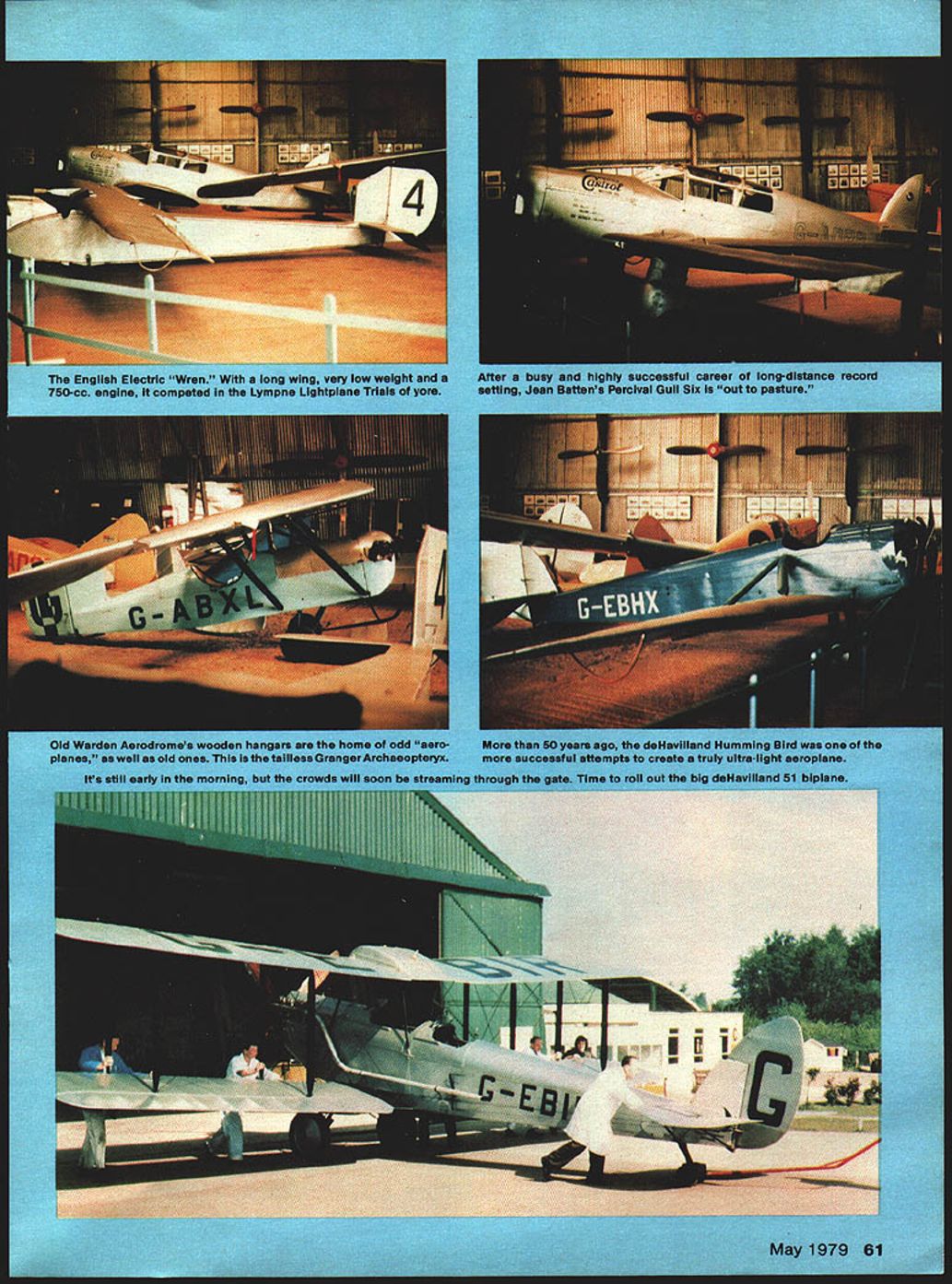
One hangar houses truly ancient craft, some of which performed their miracles of self-propelled flight in the movie Those Magnificent Men and Their Flying Machines. Another is full of lightplanes of the 1930s—Gypsy- and Hermes-powered aircraft, Tiger Moths, and some rare and speedy low-wingers. A third is packed with motorcycle-engined ultralights, some of which starred in the 1923–26 Lympne Lightplane Trials. The workshops are a special wonderland, with white-smocked technicians busily restoring rarities such as the de Havilland Comet racer, due to fly in a couple of years.
Examples of aircraft and types associated with Old Warden:
- de Havilland D.H.51 biplane ("Miss Kenya")
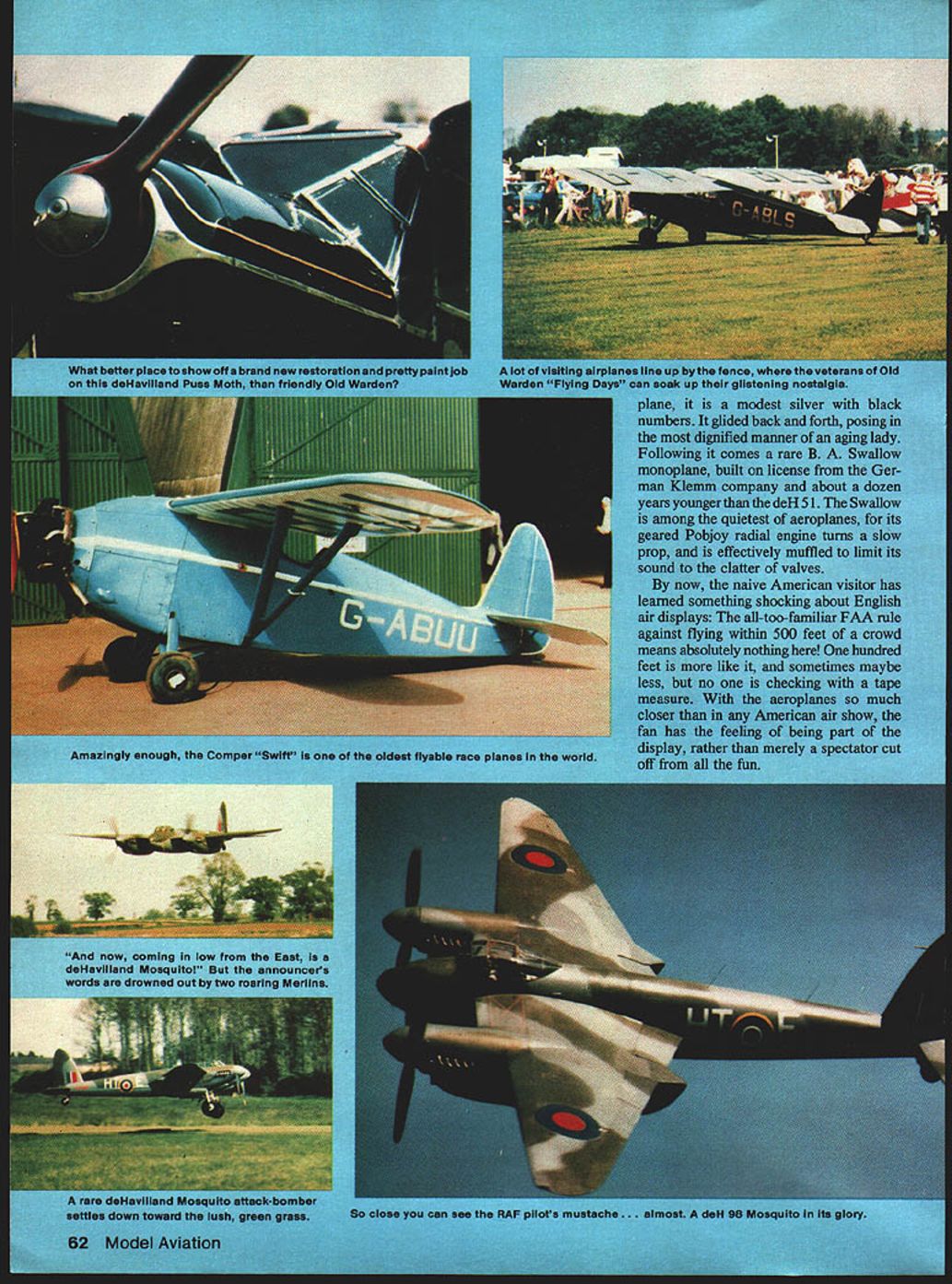
- B.A. Swallow monoplane
- Comper Swift with geared Pobjoy radial engine
- Ultra-lights like the Humming Bird and Wren
- Percival Gull and Hawk Speed Six racers
- Tailless Granger Archaeopteryx and other ancients
Flying Day
On Flying Day—eight times a year—all manner of aeroplanes take off from Old Warden Aerodrome for close-in theme displays. Doors open wide and olde aeroplanes emerge into the clear air and, often, into fog and rain. Despite rumor, it doesn't always rain in England; sometimes the visibility is even greater than the wingspan of a Tiger Moth.
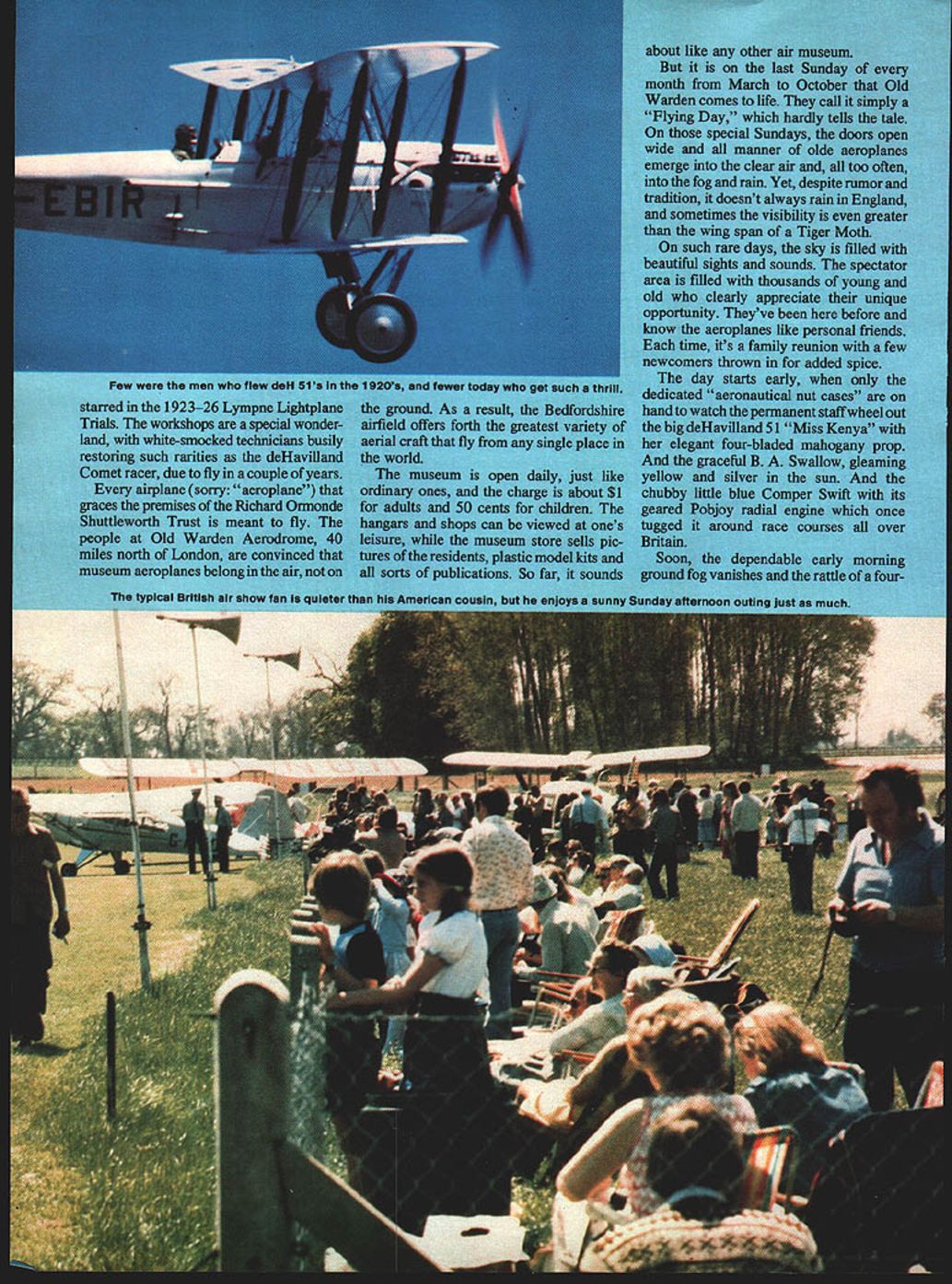
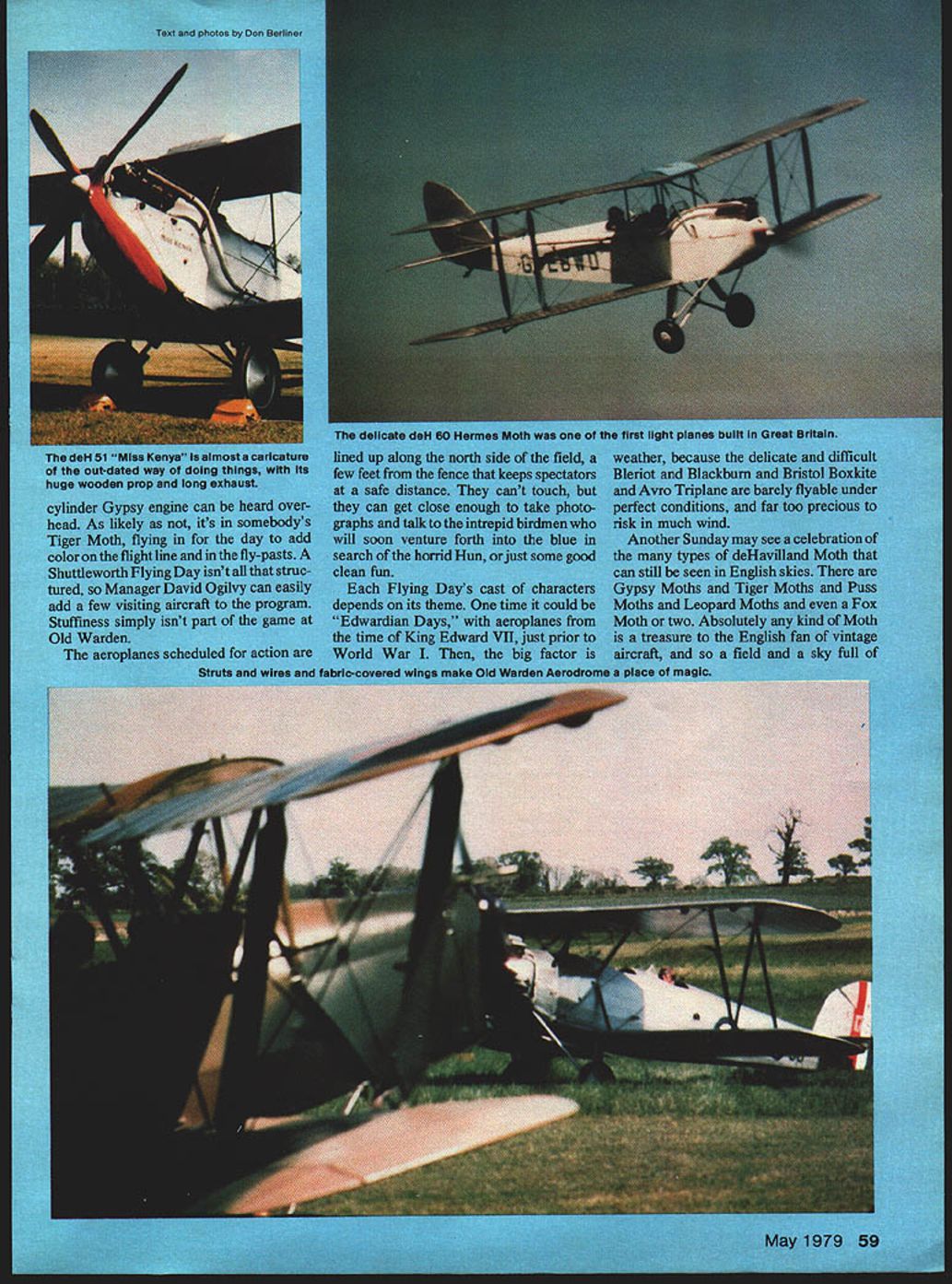
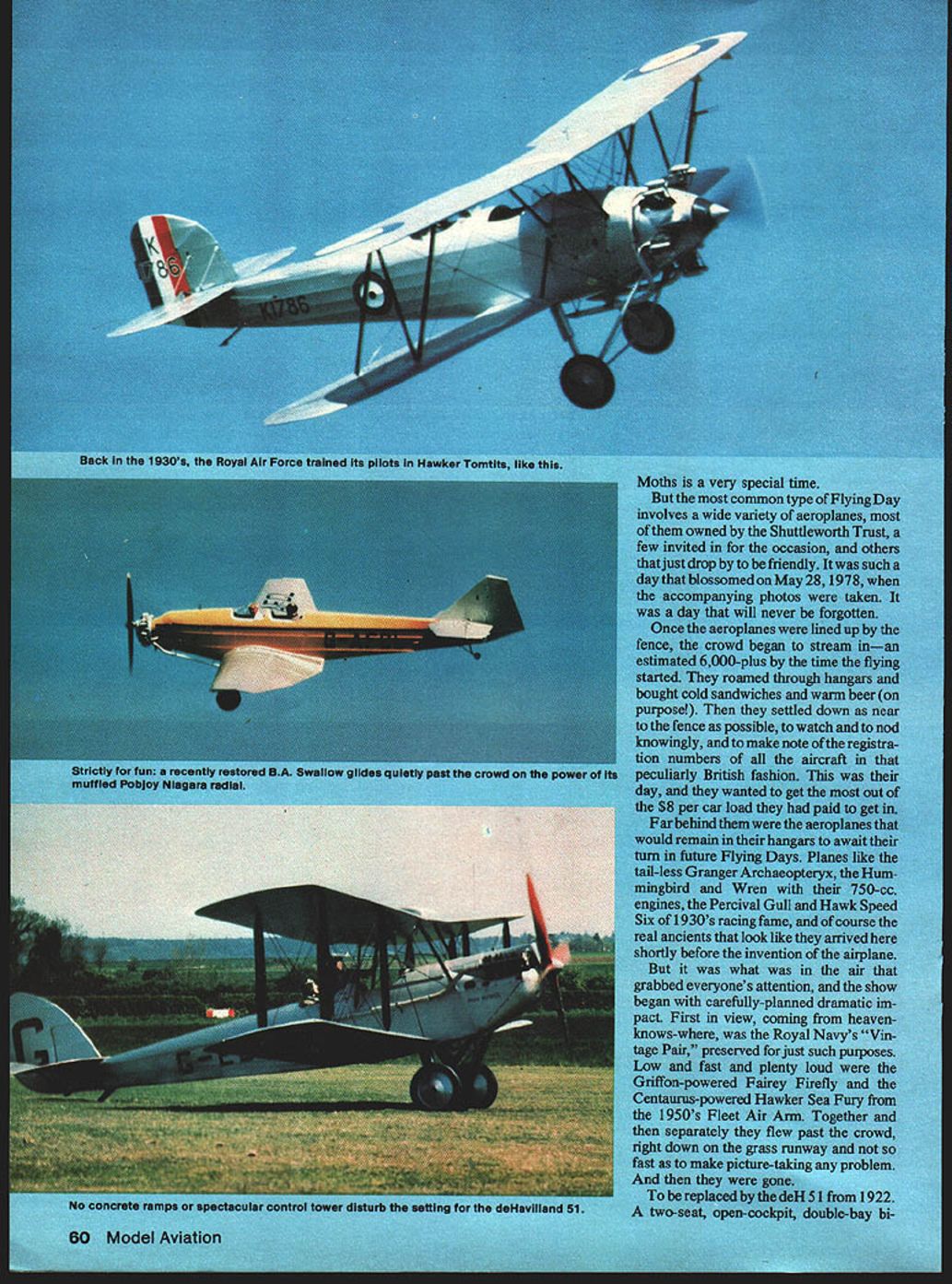
The day starts early, when only the dedicated aeronautical enthusiasts are on hand to watch the permanent staff wheel out the big de Havilland D.H.51 "Miss Kenya" with her elegant four-bladed mahogany prop, the graceful B.A. Swallow gleaming yellow and silver in the sun, and the chubby little blue Comper Swift that once tugged around race courses all over Britain.
A Shuttleworth Flying Day isn't rigidly structured, so Manager David Ogilvy can easily add visiting aircraft to the program. Stuffiness simply isn't part of the game at Old Warden.
Themes and the Cast
Each Flying Day depends on its theme. Examples include:
- Edwardian Days: aeroplanes from the time of King Edward VII, just prior to World War I (Bleriot, Blackburn, Bristol Boxkite, Avro Triplane).
- Moth Gatherings: a celebration of the many de Havilland Moths—Gypsy Moths, Tiger Moths, Puss Moths, Leopard Moths, Fox Moths and more.
- Mixed Displays: a wide variety of aeroplanes, most owned by the Shuttleworth Trust, with a few invited or visiting machines.
The crowd knows the aeroplanes like personal friends. Each Flying Day is like a family reunion, with a few newcomers thrown in for added spice. On May 28, 1978, an estimated 6,000-plus people streamed in to roam the hangars, buy sandwiches and warm beer, and settle near the fence to watch the flying and note registration numbers in that peculiarly British fashion.
Far behind them are aeroplanes that remain in their hangars awaiting future Flying Days: the tailless Granger Archaeopteryx, the Humming Bird and Wren with their 750-cc engines, the Percival Gull and Hawk Speed Six of 1930s racing fame, and, of course, the real ancients that seem to have arrived shortly before the invention of the airplane.
Highlights: The Show in the Air
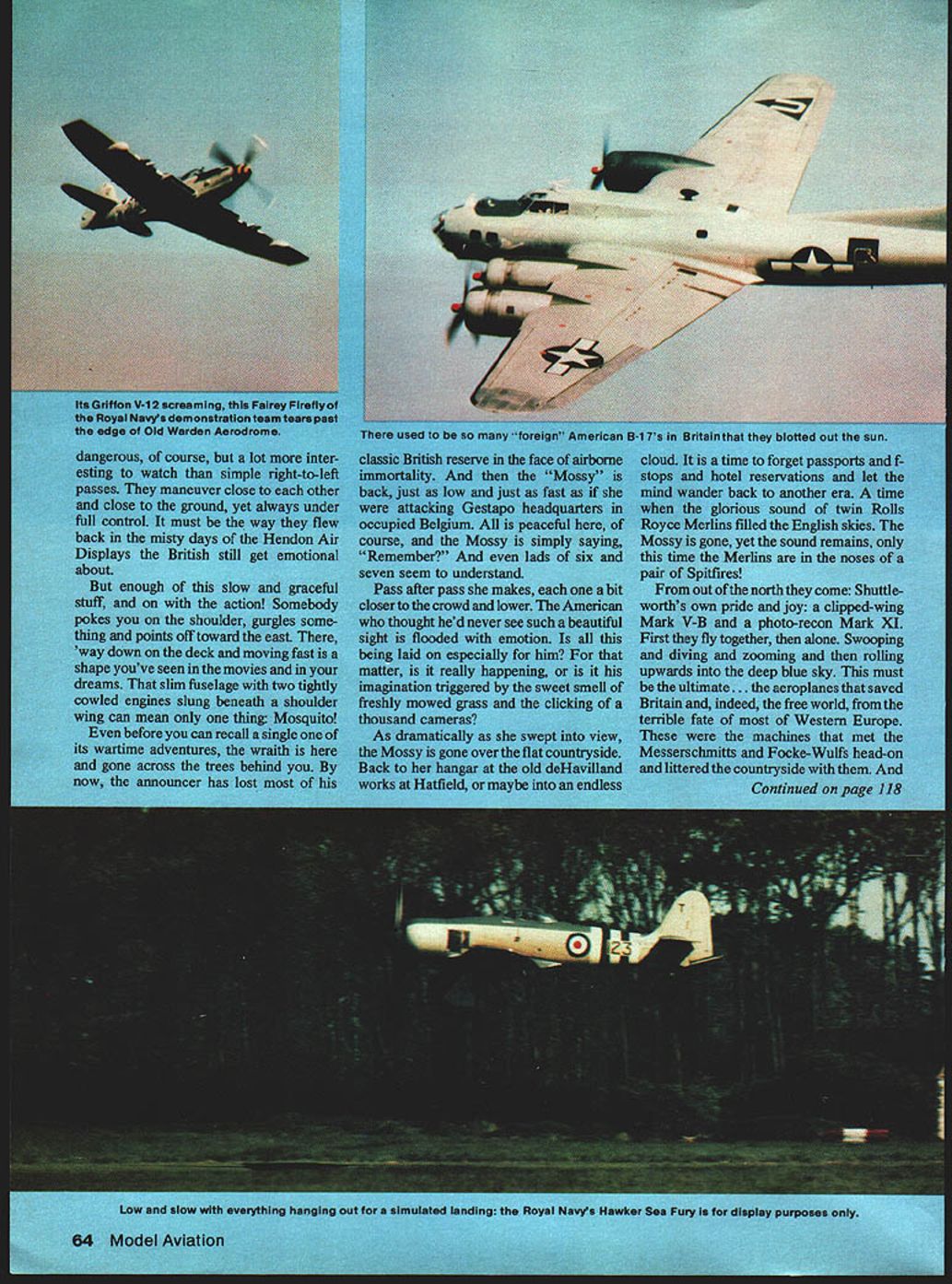
The show often begins with carefully planned dramatic impact. For example, the Royal Navy's Vintage Pair—the Griffon-powered Fairey Firefly and the Centaurus-powered Hawker Sea Fury—may thunder past low and fast, loud and impressive, then be gone.
They might be followed by much older types: the de Havilland D.H.51 from 1922, a two-seat open-cockpit double-bay biplane; the English Electric Wren, with a long wing, very low weight and a 750-cc engine that once competed in the Lympne Trials; and Jean Batten's Percival Gull Six, now "out to pasture."
The Swallow is among the quietest of aeroplanes—the geared Pobjoy radial engine turns a slow prop and is effectively muffled to limit sound to the clatter of valves.
The flying at Old Warden is intimate. Aeroplanes routinely pass within a much closer distance to spectators than would be allowed at many other displays, giving fans the feeling of being part of the display rather than remote observers. Manager David Ogilvy once told the authorities that he knew more about putting on air displays than they did, and he has continued to run interesting, fun and safe events.
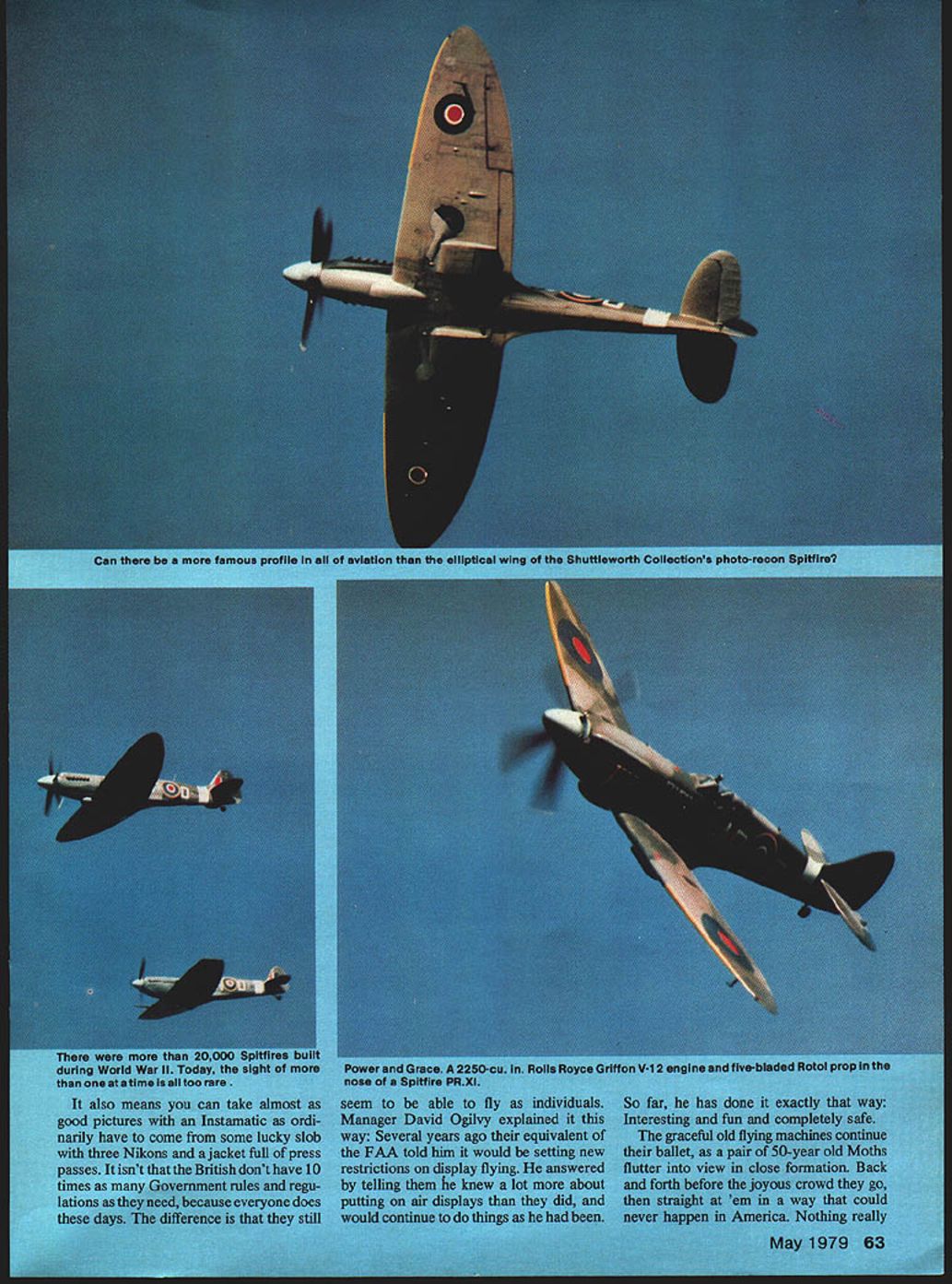
Pairs of 50-year-old Moths may flutter into view in close formation, performing back-and-forth passes and straight-at-the-crowd approaches that are more exciting than simple lateral passes. They maneuver close to each other and close to the ground, always under control—just as they flew in the misty days of the Hendon Air Displays.
Mosquito
A slim fuselage with two tightly cowled engines slung beneath a shoulder wing can mean only one thing: the de Havilland Mosquito. The "Mossy" appears, makes pass after pass at low altitude and high speed, and leaves the crowd flooded with emotion and memories of wartime exploits. Even young children seem to understand the significance of the sound and sight.
Spitfires
Shortly after the Mosquito, Shuttleworth's own pride and joy may appear: clipped-wing Mark V-B and a photo-recon Mark XI Spitfire. First they fly together, then alone—swooping, diving, zooming and rolling. These are the aeroplanes that helped save Britain during the Battle of Britain; now they return for thousands to tip their hats in respect.
Bristol Fighter
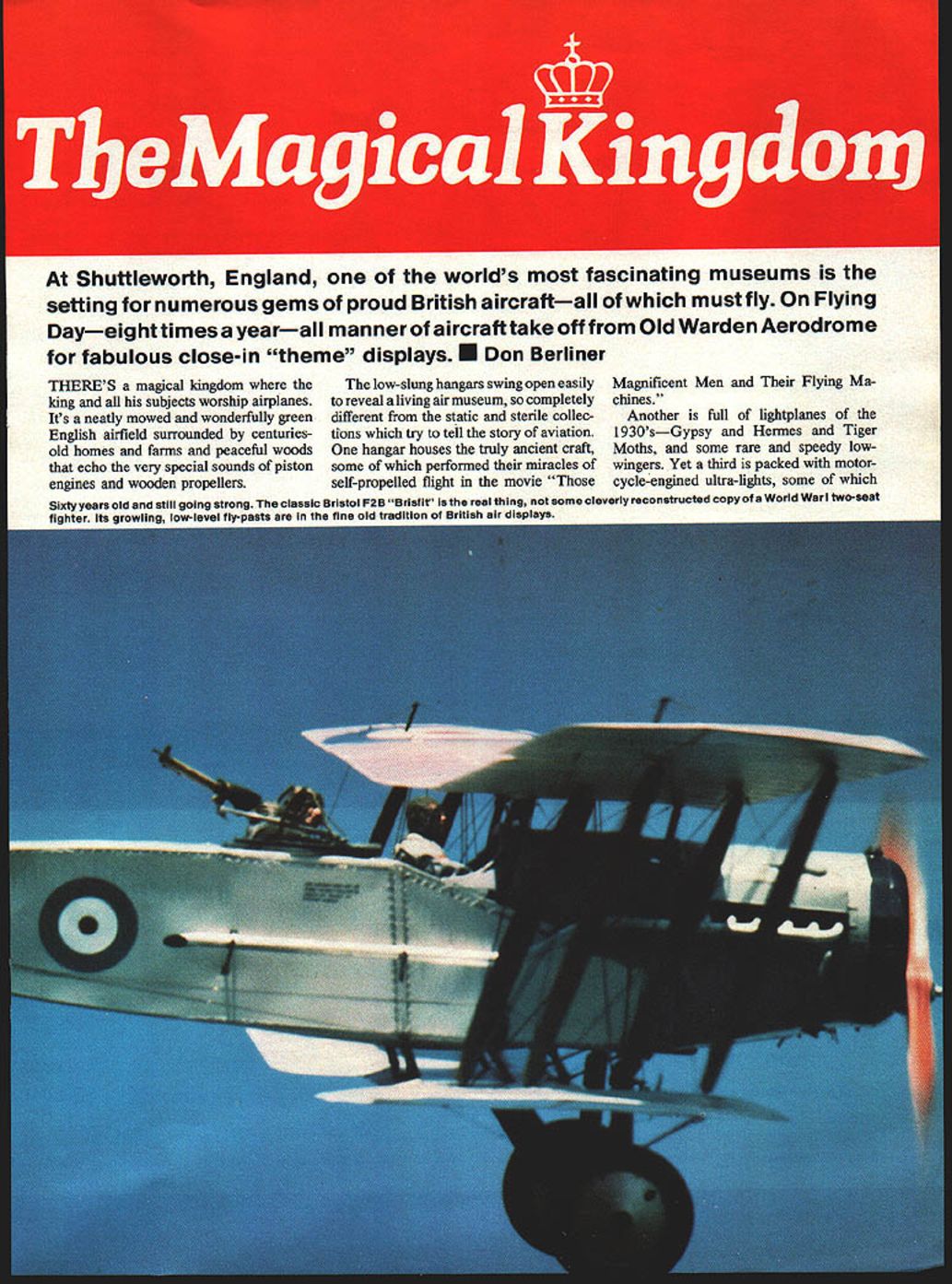
The roar of an older Rolls-Royce V-12 announces the genuine Bristol F.2B Fighter from World War I—the only remaining F2B of hundreds that once roamed the Western Front. This is not a replica but the real thing, complete with twin, ring-mounted machine guns for the rear gunner. It shows off angular, businesslike lines to a purring crowd.
Flying Fortress (B-17)
From out of the past can come the unmistakable contours of a Boeing B-17 Flying Fortress—the bombers that once massed over central England before missions into occupied Europe. Painted in authentic 8th Air Force colors and markings, a B-17 can come so low over the crowd that it seems to blot out the sun. Its passes are met with a storm of camera clicks and deep feeling.
The Feeling Left Behind
After the Mossy, the Spitfires, the Bristol and the B-17 have passed, Old Warden is left with an airfield full of feeling—memories that will last for years. Each aeroplane at Old Warden has more personality than a thousand modern lightplanes. They will return from their many homes to again turn the aerodrome into a magical kingdom: the same aeroplanes and yet different, the weather sometimes better and sometimes worse. Marginal weather has never stopped the English from flying, in wartime or peace.
There is nothing more magical than the sight of a Spitfire materializing out of a damp, dismal layer of low cloud to beat up an airfield and terrify the neighbors' cows. The magic, and the love of flight, endure.
Transcribed from original scans by AI. Minor OCR errors may remain.

