
Model Aviation in the Smithsonian
New display at the National Air & Space Museum aided by AMA Headquarters and members
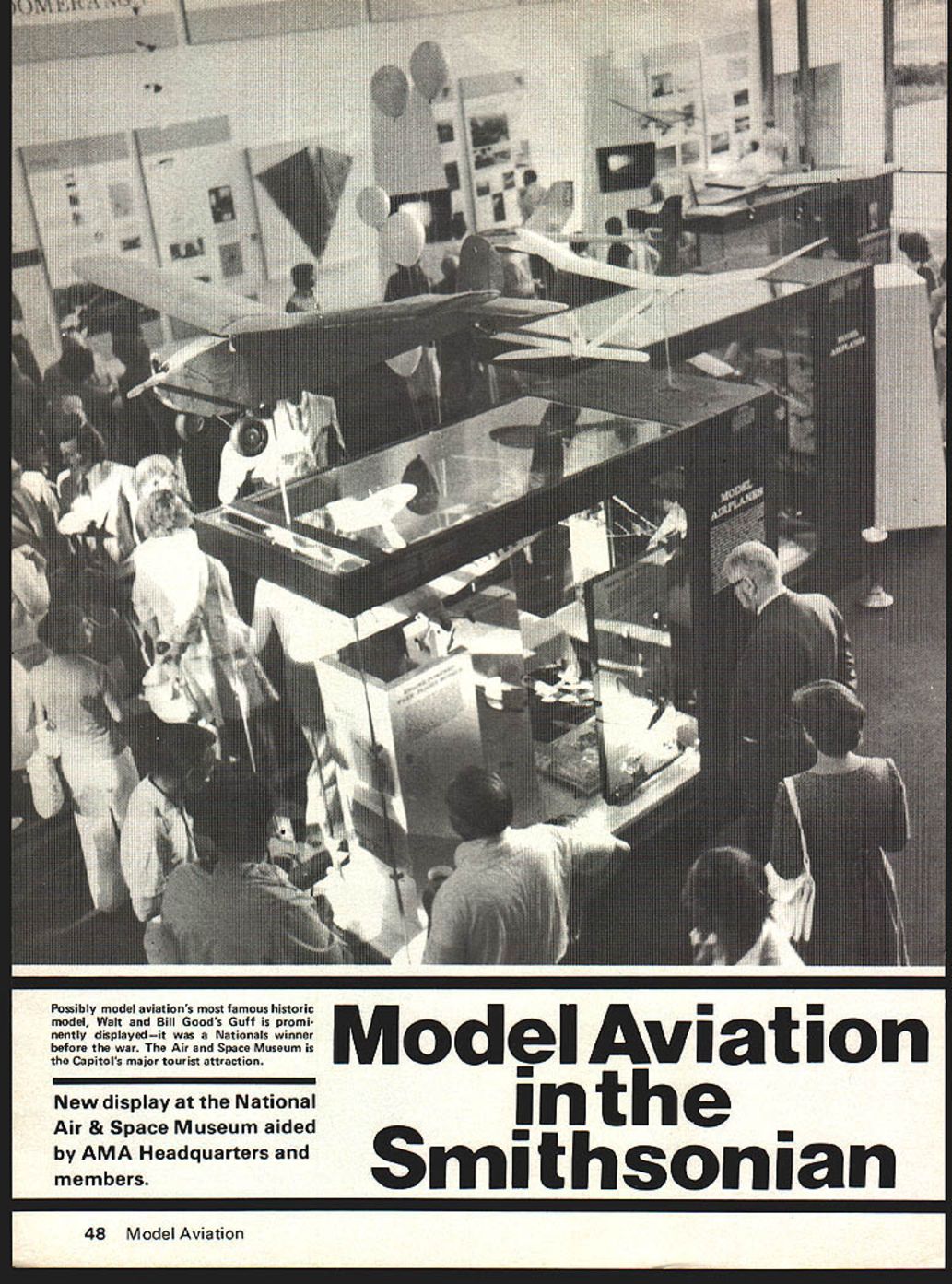
When the new National Air and Space Museum building of the Smithsonian Institution opened in Washington, D.C., it was an instant success. Since 1976, 20 million visitors have been through the museum, and it is rated as the top tourist attraction in the city.
For several years the Academy of Model Aeronautics has been working behind the scenes to have model aircraft added to the displays—something more than the typical static display models of full-scale aircraft. Finally, as of June 30, a special display of flying models was included as part of the Smithsonian's new Flying for Fun gallery.
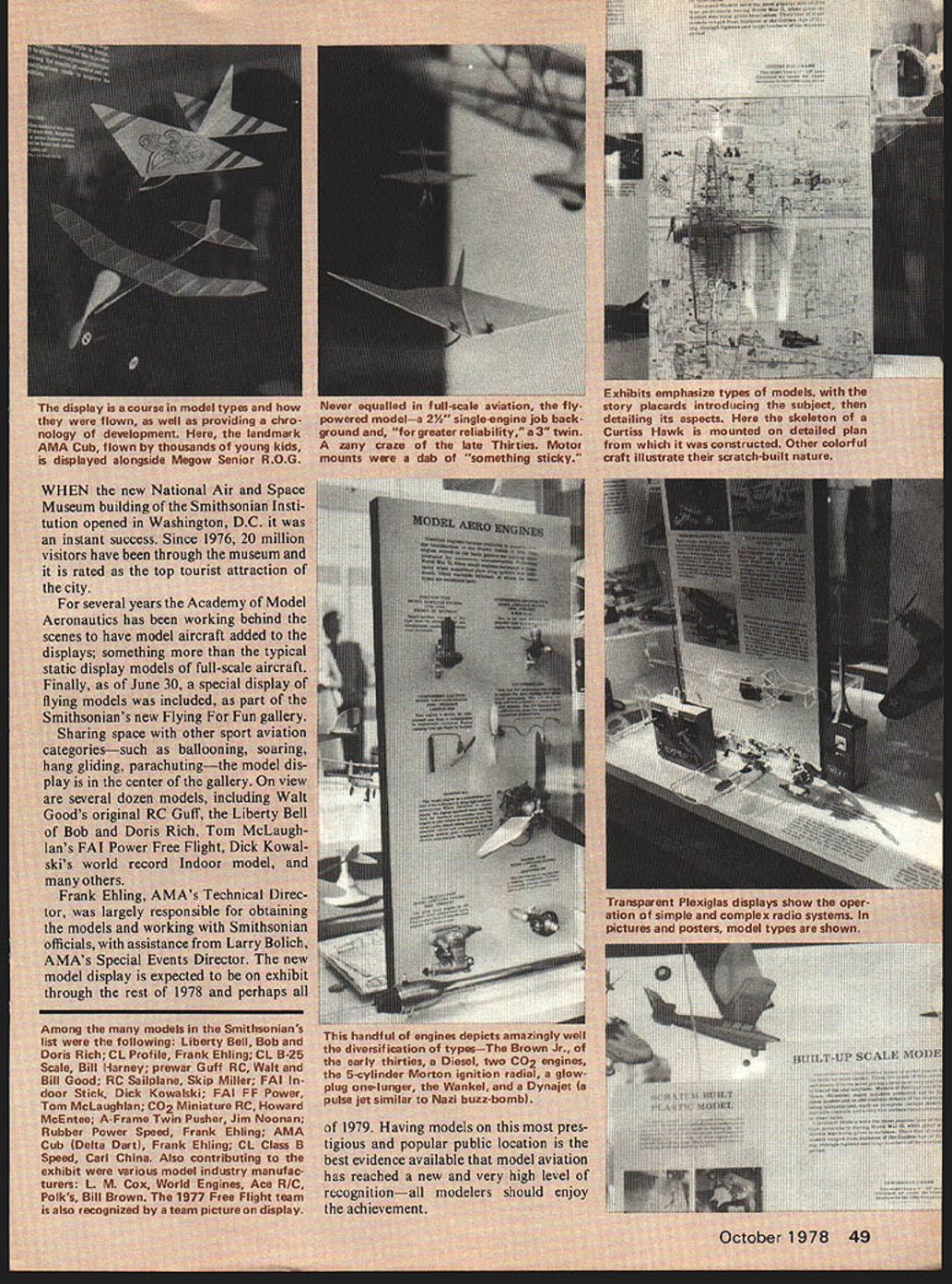
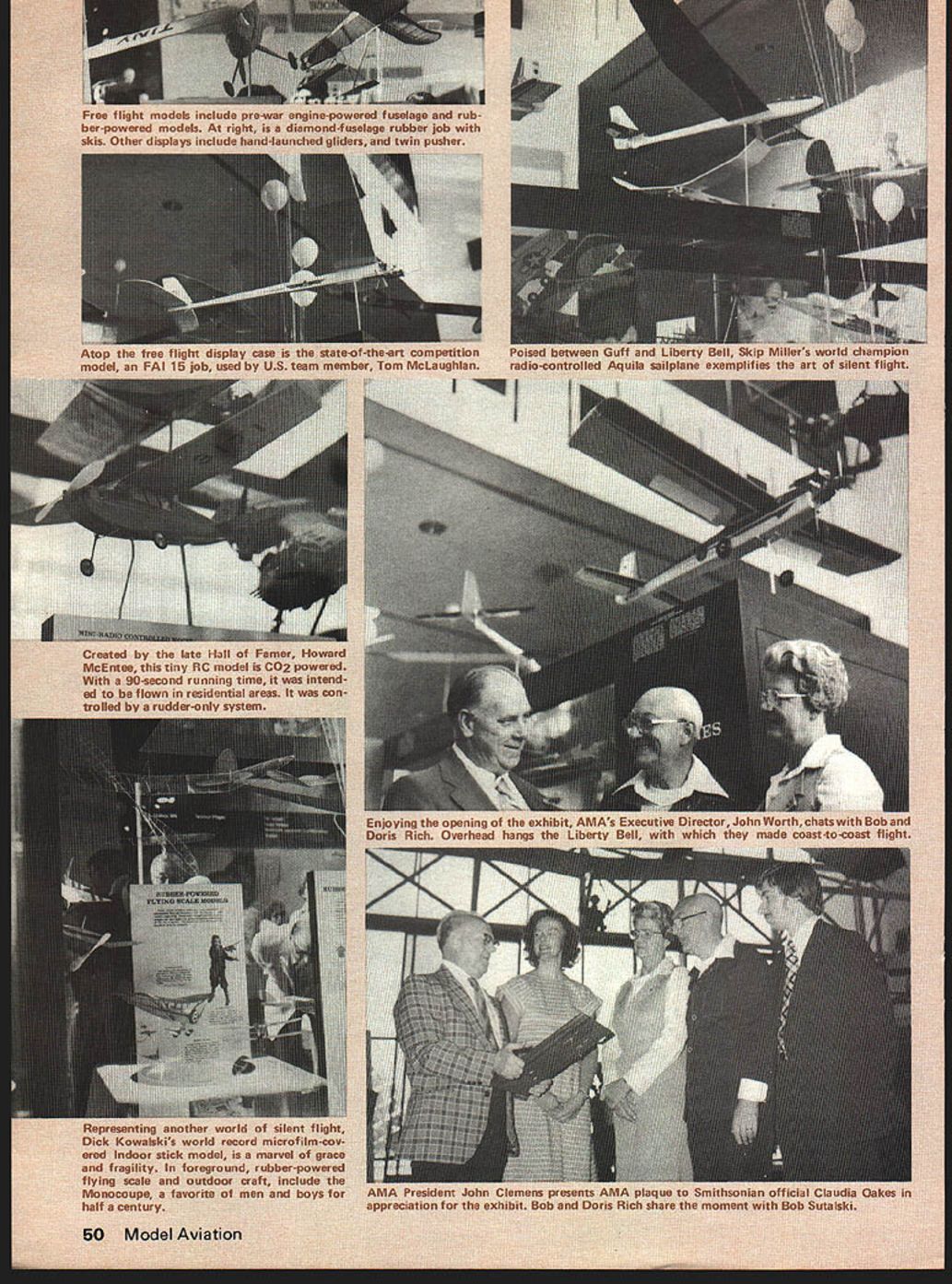
Sharing space with other sport aviation categories—such as ballooning, soaring, hang gliding, and parachuting—the model display is in the center of the gallery. On view are several dozen models, including Walt Good's original RC Gull, the Liberty Bell of Bob and Doris Rich, Tom McLaughlan's FAI Power Free Flight, Dick Kowalski's world-record indoor model, and many others.
Frank Ehling, AMA's Technical Director, was largely responsible for obtaining the models and working with Smithsonian officials, with assistance from Larry Bolich, AMA's Special Events Director. The new model display was expected to be on exhibit through the rest of 1978 and perhaps all of 1979.
Featured models on display
- Liberty Bell — Bob and Doris Rich
- CL Profile — Frank Ehling
- CL B-25 Scale — Bill Tarney
- Prewar Gull RC — Walt and Bill Good
- RC Sailplane — Skip Miller
- FAI Indoor Stick — Dick Kowalski
- FAI Power Free Flight — Tom McLaughlan
- CO2 Miniature RC — Howard McEntee
- A-Frame Twin Pusher — Jim Mooney
- Rubber Power Speed — Frank Ehling
- AMA Cub (Delta Dart) — Frank Ehling
- CL B Class Speed — Carl China
The 1977 Free Flight team is also recognized by a team picture on display.
Contributing manufacturers
- L. M. Cox
- World Engines
- Accu-RC
- Polk's
- Bill Brown
Engines represented
This handful of engines illustrates the diversification of types: the Brown Jr. of the early thirties, a Diesel, two CO2 engines, the 5-cylinder Morton ignition radial, a glow-plug one-lunger, the Wankel, and a Dynajet (a pulse jet similar to the World War II German "buzz bomb").
Having models in this most prestigious and popular public location is strong evidence that model aviation has reached a new and very high level of recognition—an achievement all modelers should enjoy.
The scanned page consists solely of photographs with captions and contains no additional body text for the article.
Transcribed from original scans by AI. Minor OCR errors may remain.

