
Musee de l'Air
Ranking with the Smithsonian's National Air & Space Museum, the Musée de l'Air is one of the world's finest and oldest aeronautical collections. Founded in 1919 and housed in a building dedicated in 1921, the museum is unique in that the French display nearly everything they own. The collection is split between two sites around Paris — Chalais-Meudon to the southwest and Le Bourget to the northeast — each with its own character and highlights.
Overview
- Two sites: Chalais-Meudon (older aircraft, historic estate) and Le Bourget (larger hangars, modern and experimental aircraft).
- Founded: 1919. Main building dedicated: 1921.
- Collection spans lighter-than-air craft, early experimenters, World War I and II types, interwar racers and record planes, postwar jets, and rare prototypes.
- Prototype Concorde 001 is on display outside the Bourget hangars.
Chalais-Meudon — The Antique Collection
Chalais-Meudon is a wooded estate with an aeronautical past stretching back nearly two centuries. In 1784 a balloon piloted by the Duke of Chartres landed there; in 1884 Renard and Krebs' dirigible La France made a notable powered round trip nearby. The site includes an old full-scale wind tunnel and early aeronautical laboratories.
Entering the hangar gives the impression of a cluttered, ancient workshop: airplanes, parts and artifacts arranged in tight spaces, many covered with translucent fabric. The atmosphere is intimate and exploratory — ideal for discovering early aviation treasures.
Highlights at Chalais-Meudon
- Santos-Dumont Demoiselle (1908) — one of the earliest serious European attempts at flight.
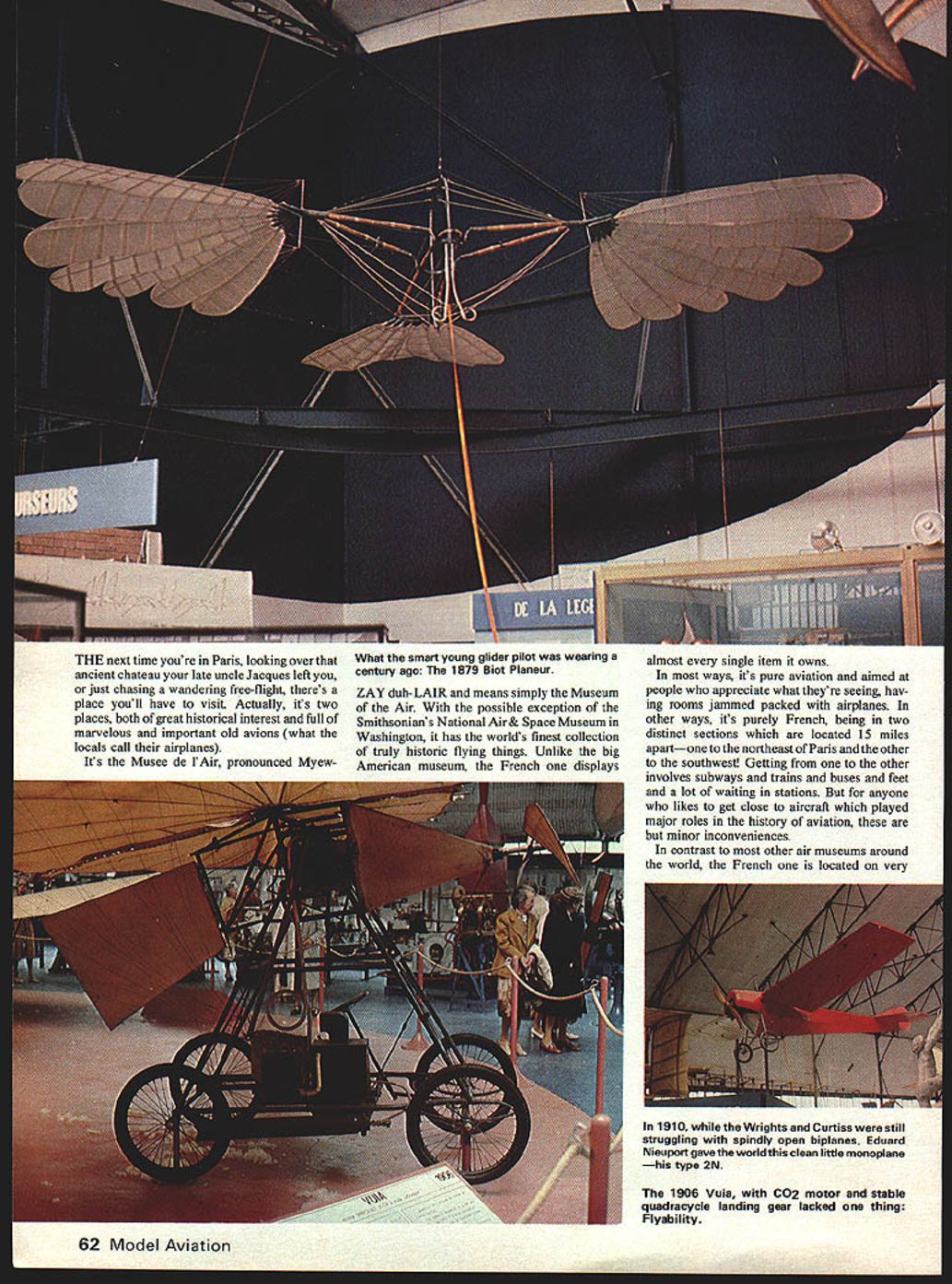
- Vuia's spindly craft (circa 1906) — early hops by the Romanian inventor.
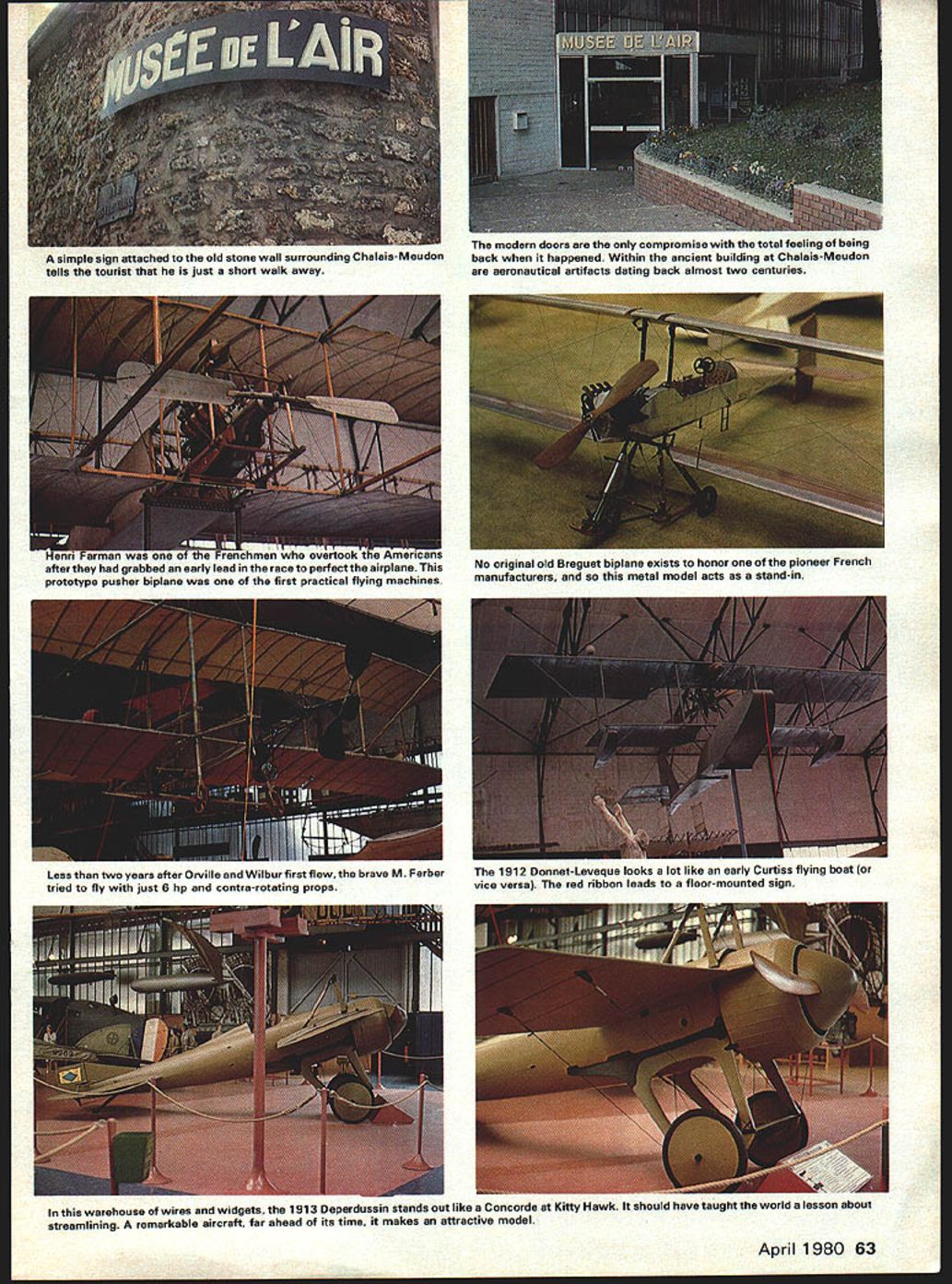
- Deperdussin (1913) — highly streamlined racer; first airplane to exceed 200 km/h in a straight line.
- Henri Farman biplanes — early successful Farman designs.
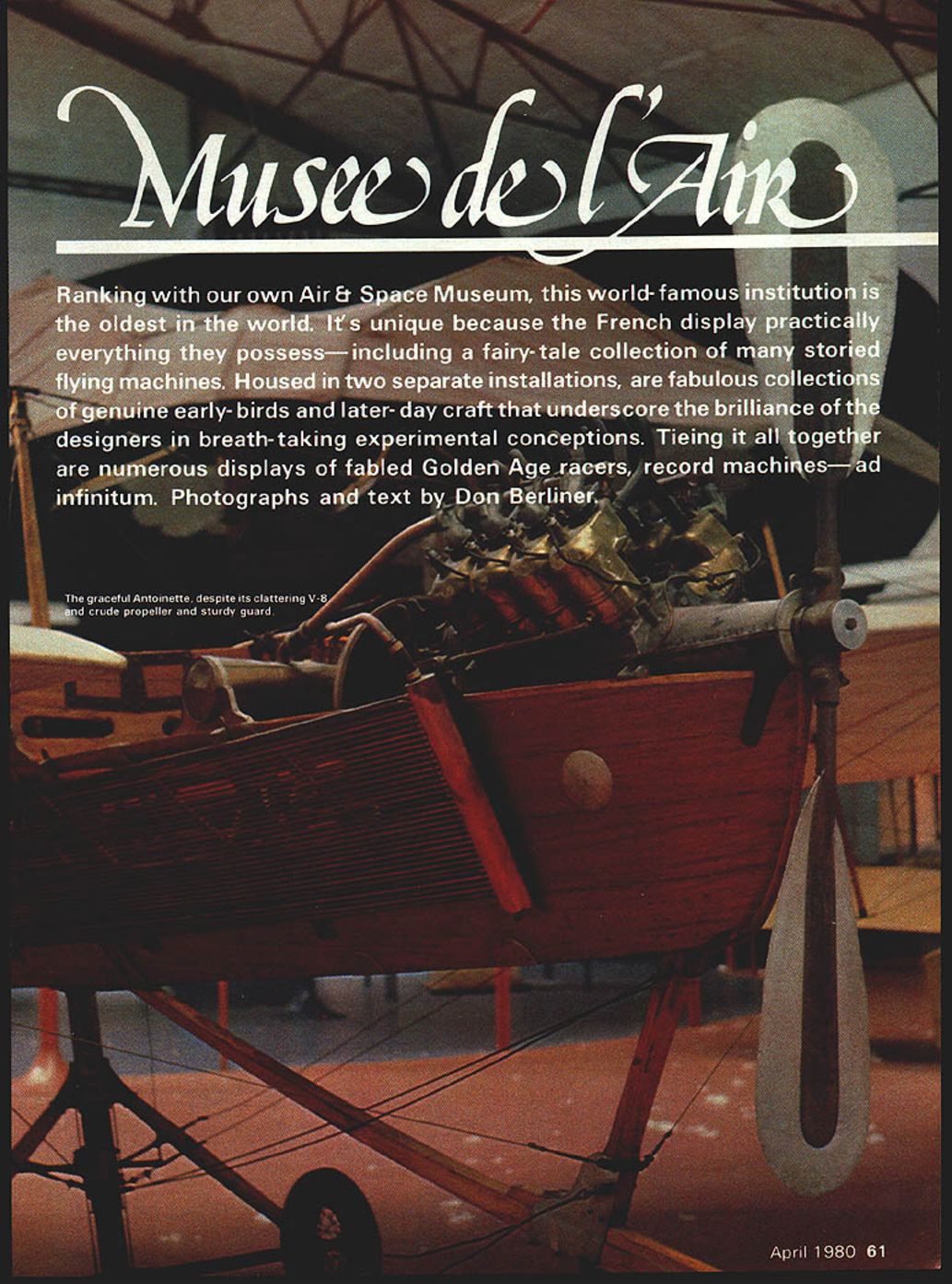
- Antoinette monoplanes (1909 and 1911 model) — influential, advanced designs for their time.
- Henri Fabre Hydravion (1910) — first airplane to take off from water and land back on it (an early seaplane).
- Ferber (1905) — biplane with contra-rotating propellers (limited success with a 6 hp engine).
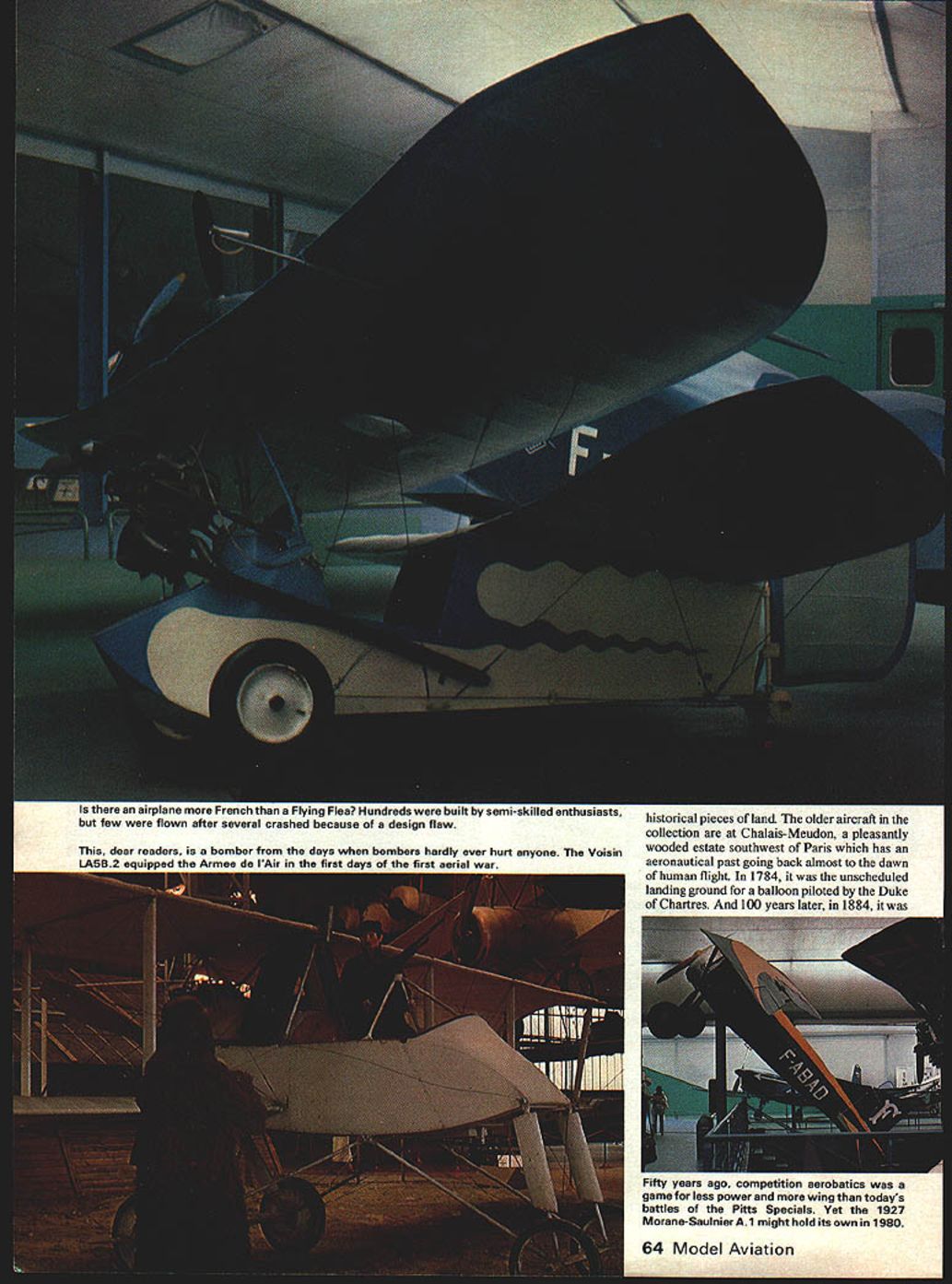
- Voisin L-5, Nieuport-Delage XI "Bébé", Nieuport 2N — representative World War I types.
- Packard-LePere III — one of only about 30 built for the U.S. Army Air Service; fitted with an American Liberty V-8.
- Gondola from the La France dirigible and a basket from a 1870 siege balloon.
- Historic gliders: Blot planeur (1879), reproduction of an 1895 Lilienthal, 1904 Chanute glider.
- Pegoud's Bleriot — personal airplane of Adolphe Pégoud, used for early aerobatics and parachute jumps.
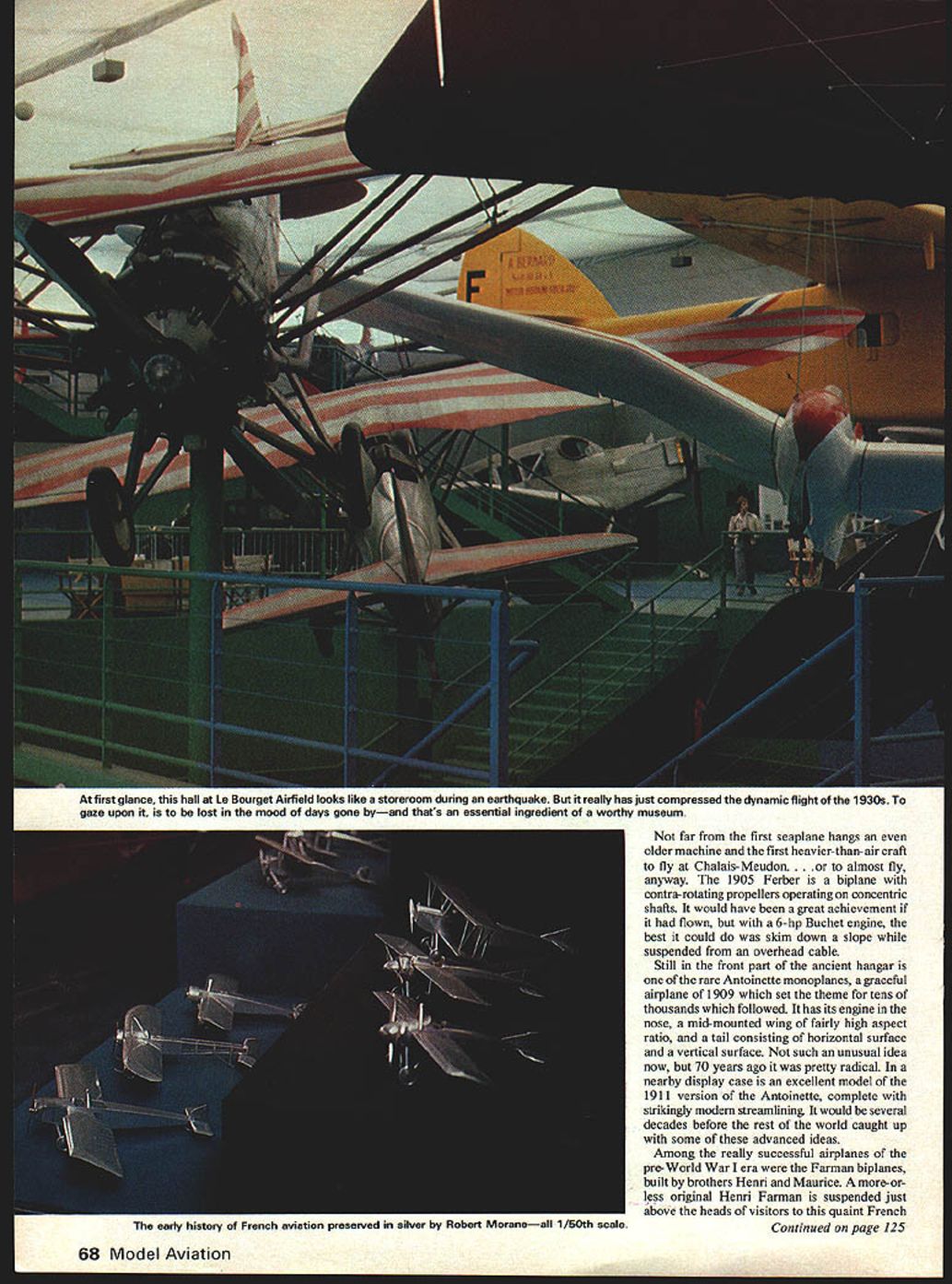
- Robert Morane model collection — 37 silver-molded 1/5-scale models of mostly older French aircraft.
Le Bourget — The Modern Hangars
Le Bourget Airport, once Paris' main air terminal and the site of Lindbergh's 1927 landing, houses the other half of the museum in four connected hangars. Each hangar groups aircraft by theme or period, and includes many prototypes and experimental types left over from France's prolific design culture.
Getting there (from central Paris)
- Take Metro/rail: Line 13 (northbound) to St. Denis/Port de Paris, then bus to the airport area. (Note: local transit routes vary; check current schedules.)
Hangar themes and highlights
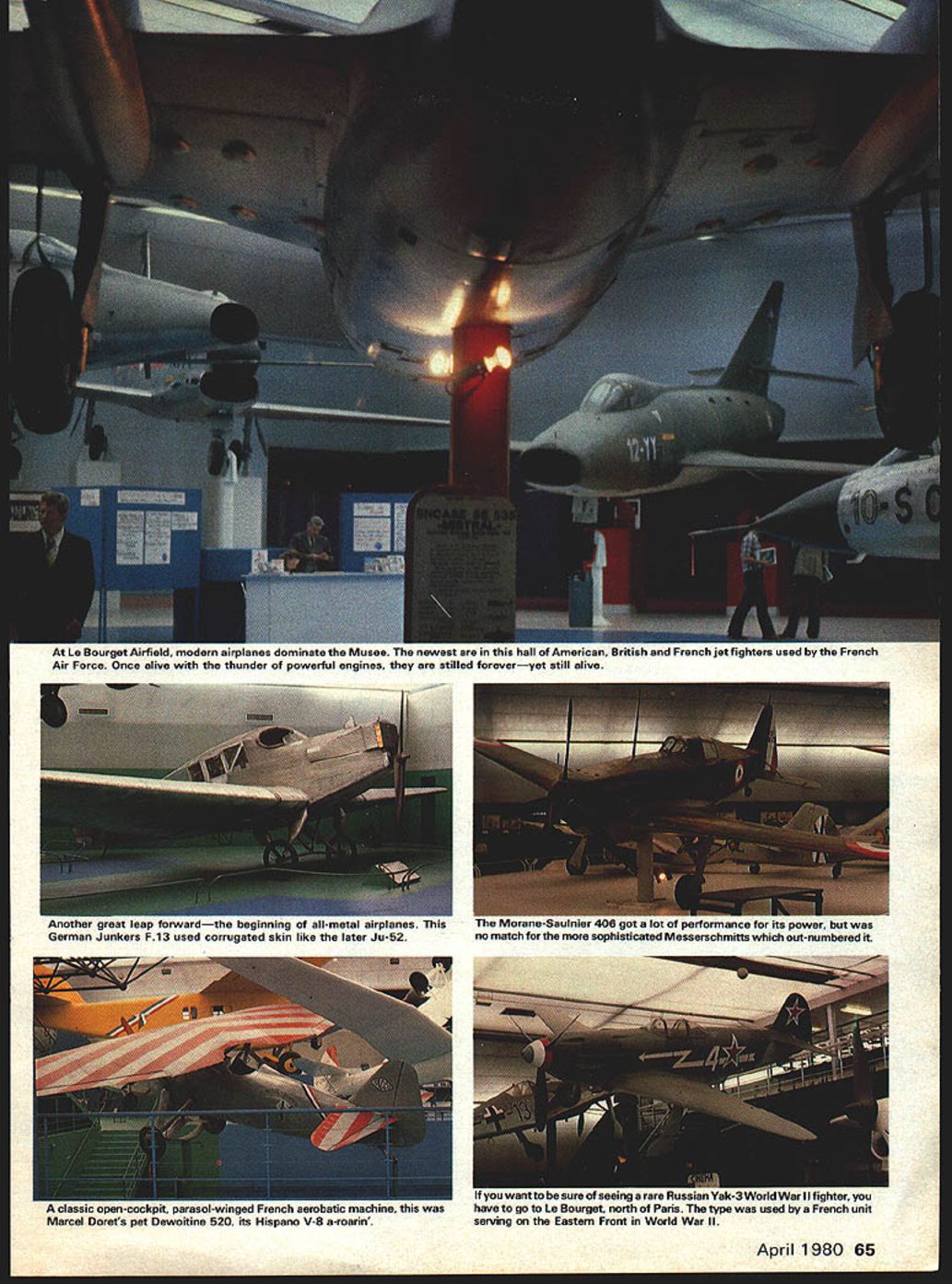
- Post–World War II jets and common museum types
- Mystère IV, early Mirage delta-wing jets, and a prototype Mirage III‑V VTOL (with multiple vertically mounted lift engines).
- American contributions on display: F-86 Sabre, F-100 Super Sabre, AT-6 Texan.
- De Havilland Vampire.
- Research, development and prototypes
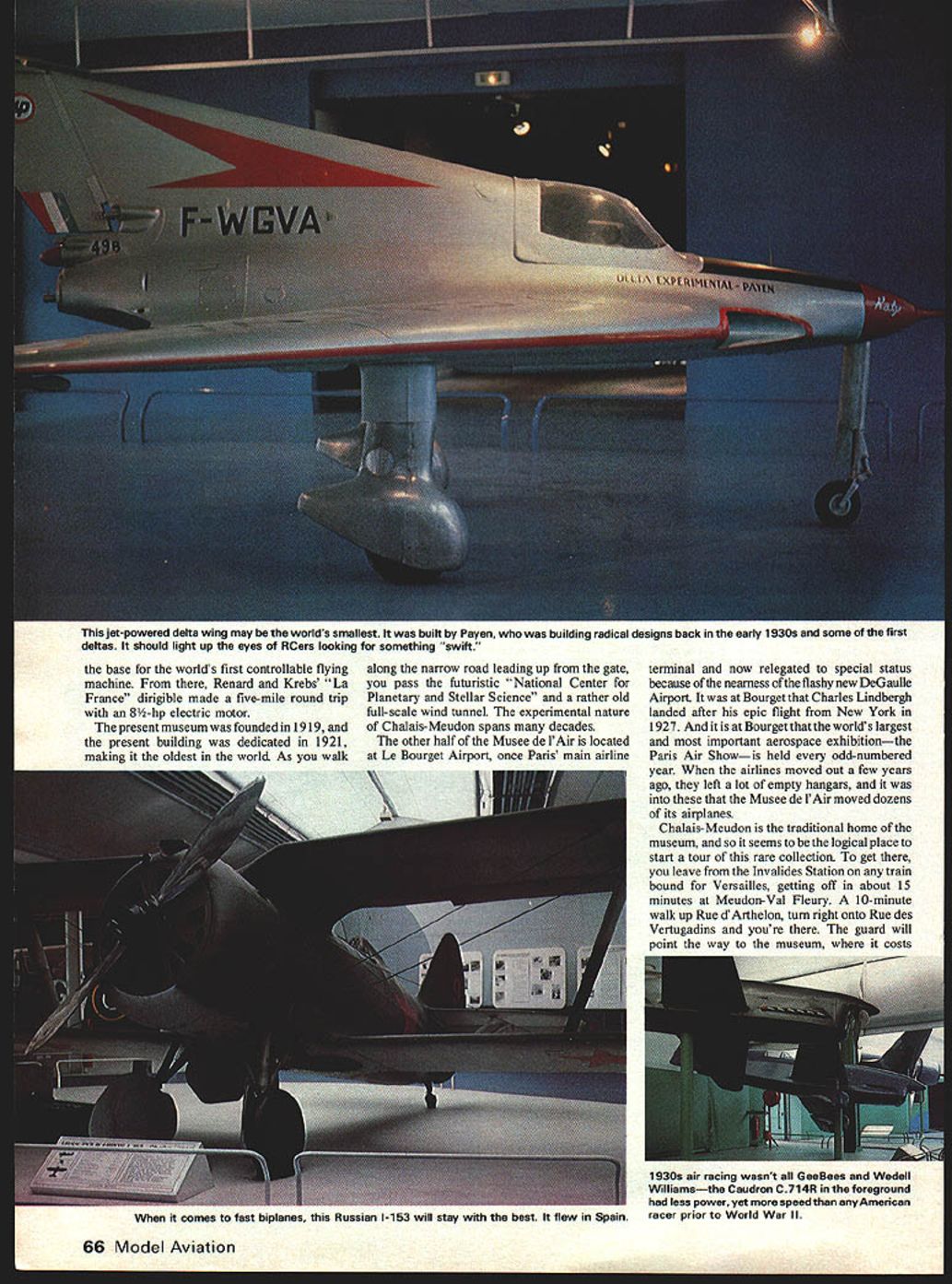
- Trident 9000, various Nord types, Payen experimental designs.
- Payen 49 Delta — small jet-powered delta reaching high speeds.
- Jodel D.9 "Bébé" — original homebuilt that launched the postwar French amateur-construction movement.
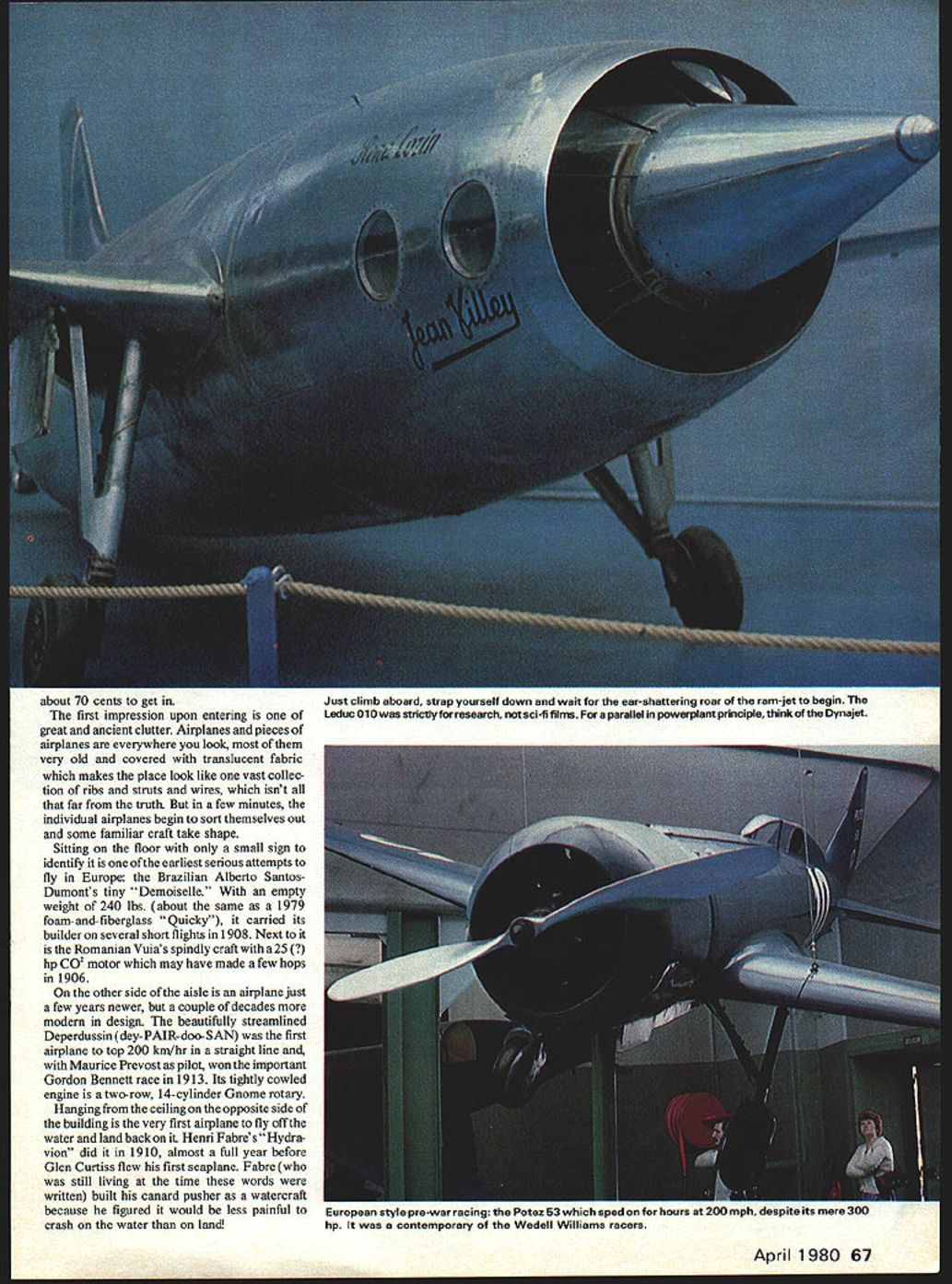
- Leduc 010 — flying ramjet with pilot in a tubular cockpit.
- Griffon (turbo/ramjet) and other rare experimental types.
- World War II fighters and allied types
- P-51 Mustang, P-47 Thunderbolt, Supermarine Spitfire Mk IX, Spanish-built Messerschmitt Bf 109, Focke-Wulf 190.
- French fighters: Morane-Saulnier 406, Dewoitine D.520 (Dewoitine pronounced DEH-wuh-TEEN).
- Rare Soviet types present in the West: Polikarpov I-153 "Chaika" and the only Western Yak-3 — presented to the French government in recognition of Free French units on the Eastern Front.
- Interwar racers and long-distance record planes
- Potez 53 — winner of the 1933 Coupe Deutsch, high speed on modest power.
- Caudron racers: a C.366 (or a very convincing postwar movie-era taxi replica) and the genuine Caudron C.714 R intended for a world speed attempt.
- Record-breaking long-distance types: Breguet XIX (Costes and Le Brix), Bernard 191 (Assolant, Lefevre and Lotti), Breguet Super Bidon "Question Mark" (Costes and Bellonte) — notable for long-range and transatlantic accomplishments.
- Jean Casale's SPAD-Herbemont 52 and Nieuport-Delage 29 C.1 (altitude record machine).
- Morane Saulnier A.I and Dewoitine 530 — favorites of famous demonstration pilots such as Marcel Doret.
The Experience
- Chalais-Meudon is antiquarian and atmospheric: narrow aisles, older hangar lighting, and a sense of discovery.
- Le Bourget is spacious and functional, showcasing prototypes, wartime fighters and experimental designs in clearer thematic groupings.
- Together the two sites form possibly the finest national collection of historic aircraft assembled anywhere — not merely representative examples, but many of the actual machines that made aviation history.
- The Musée de l'Air's holdings bridge the earliest lighter-than-air experiments through the age of streamlining and record-breaking racers to postwar prototypes and even Concorde.
Practical notes
- Chalais-Meudon: traditional starting point; access involves suburban train from Invalides (train toward Versailles), alight Meudon-Val Fleury, then a short walk up Rue d'Arthelon and Rue des Vertugadins. (Historic admission noted as about 70 cents; check current fares.)
- Le Bourget: reachable by metro and bus; hangars are easier to walk through and are grouped by period/theme.
- Allow from one hour to a full day at Chalais-Meudon depending on interest in very early aircraft; allow several hours at Le Bourget to see hangars and prototypes.
Conclusion
Between Chalais-Meudon and Le Bourget, the Musée de l'Air presents an unusually complete, sometimes idiosyncratic, and always fascinating portrait of aviation history. From lighter-than-air craft and early experimenters to rare wartime fighters, record setters, and radical prototypes, the collection rewards both casual visitors and devoted enthusiasts.
Transcribed from original scans by AI. Minor OCR errors may remain.

