
NATS CL Scale - Dick Perry
SCALE MODELS have always attracted a lot of attention at the Nats, and this year was no exception. The Scale cage in the headquarters hangar was seldom without its collection of casual viewers, admirers, and self-appointed judges. The static display invariably raises interest in the flying which is to come. This year, the static display could hardly be called static since Sport Scale entries were being constantly shuffled in and out. Even after daily checking the cage throughout the week, one could still see a few new models on the Sport Scale flight line.
The Scale events were particularly interesting to many of us this year because the U.S. Scale Team was to be selected from among the AMA Scale entries in RC and CL. There was some concern early in the week that there might not be enough participants in the Scale Team program to fill all three CL slots. As the flying drew near, however, more modelers stepped forward, and the CL Scale Team entries were sufficient to make up a complete team.
There were a total of 29 entries which were about equally divided between Sport and AMA Scale. Both events were flown with all ages combined this year which seemed to put the younger modelers at a disadvantage, although separate Junior and Senior awards were provided for combined events. The Junior and Senior modelers accounted for over 40% of the total entries, enough to warrant encouraging further participation by providing a separate Junior-Senior age category in the future.
The flying activities started with AMA Scale on Saturday morning with Sport Scale scheduled for the afternoon. The wind was calm for the first round, and increased gradually through the morning, but not to the point that it created any significant problems for the AMA Scale entries.
At the completion of static judging, Don Hollfelder held the top score with his Great Lakes 2T1A biplane. Ray Smith's Bf 109E-4 and Joe Kirn's B-25N (a Junior) were each within 10 points of Don with still others close behind. With such a close spread in static points among the top models, flying scores became very important, and models with limited flight options were at a disadvantage. Retracting gear, operating flaps, and droppable stores were used to advantage on the more complex models, and the standings after the first round had changed.
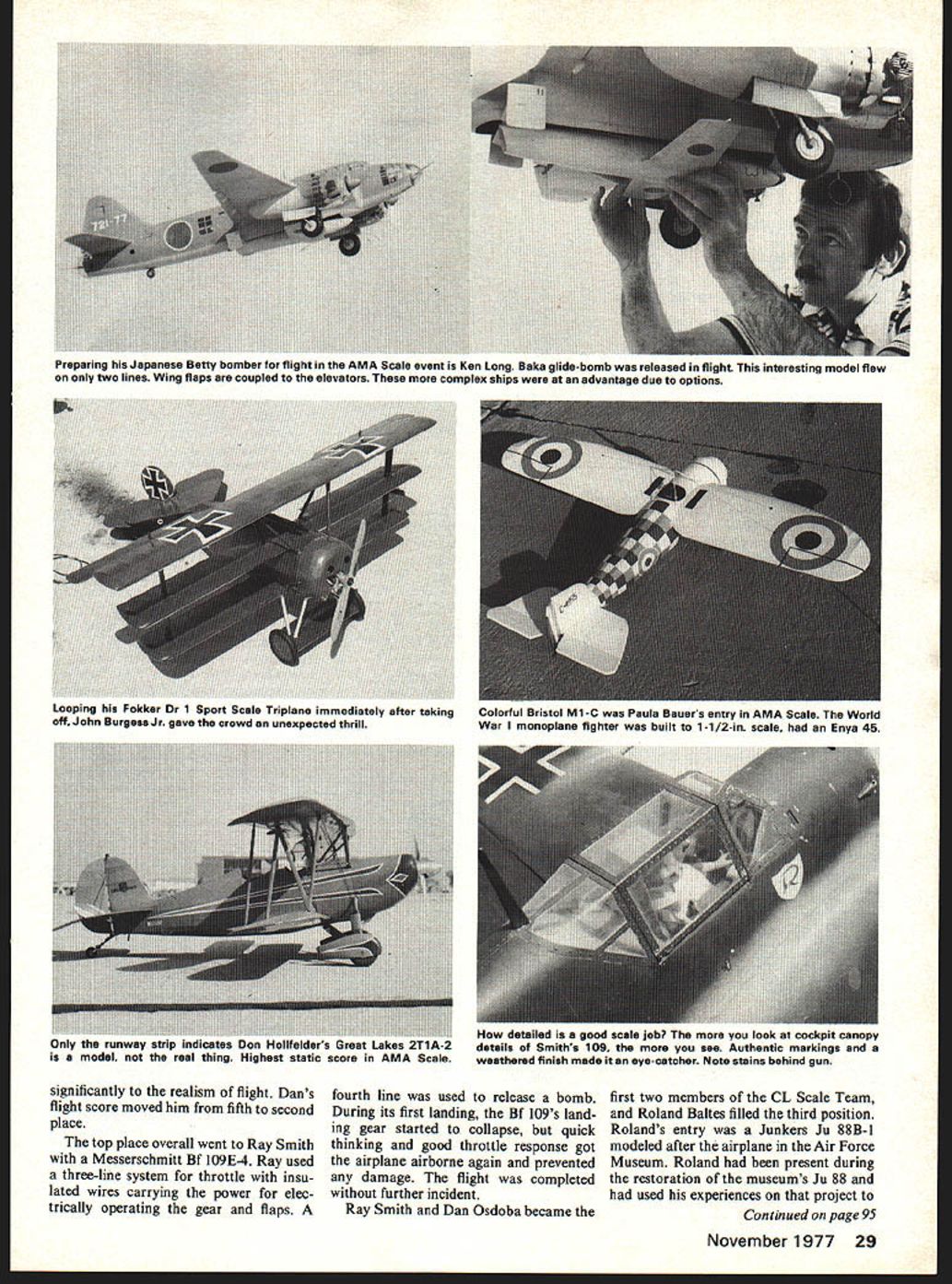
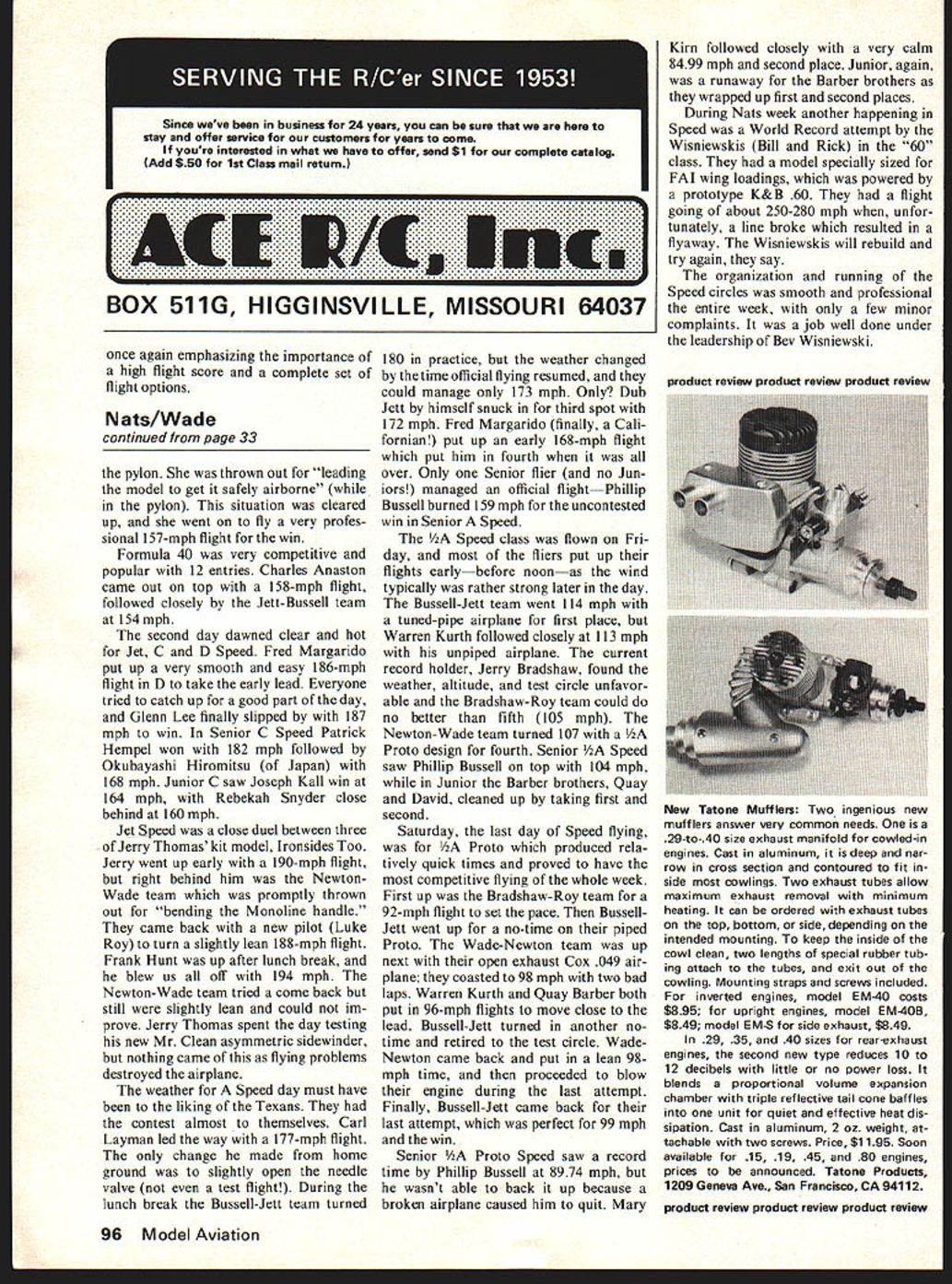
The best flight score went to a Senior, Dan Osdoba. He flew a Zlin Z526A, based on the Sig kit, through a very smooth flight routine. The completely independent operation of gear and flaps, made possible by a digital electronic control system, added significantly to the realism. Dan's flight score moved him into second place; top place overall went to Ray Smith's Messerschmitt Bf 109E-4. Ray used a three-line system: throttle and insulated wires carried power for electrically operated gear and flaps, and a fourth line was used for a bomb release. During its first landing the Bf 109's landing gear started to collapse; quick thinking and good throttle response got the airplane airborne again and prevented damage. The flight was completed with no further incident.
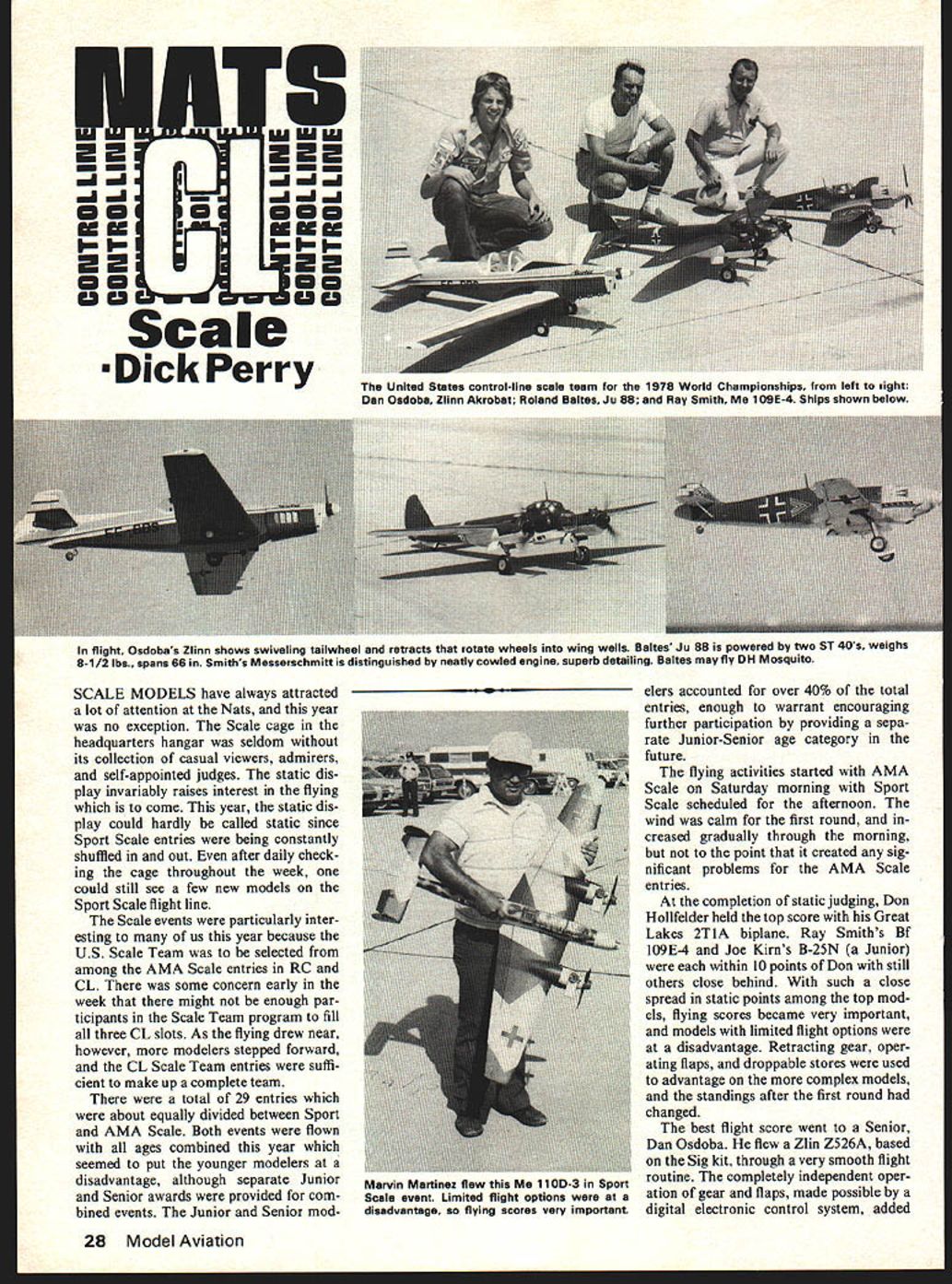
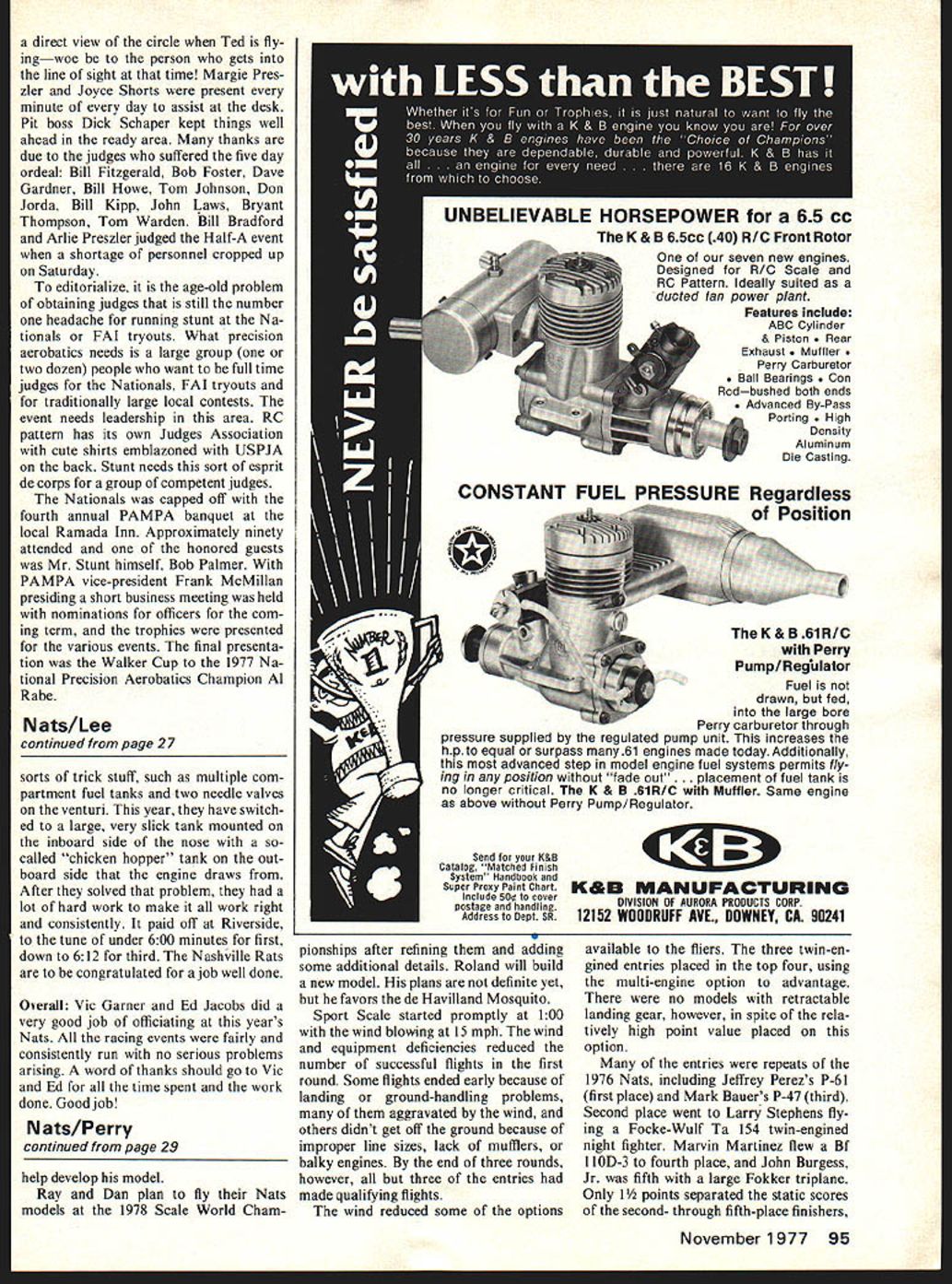
Ray Smith and Dan Osdoba became the first two members of the CL Scale Team. Roland Baltes filled the third position. Roland's entry, a Junkers Ju 88B-1, was modeled after the airplane at the Air Force Museum. Roland was present during the restoration and used his experiences from that project on his entry. No additional primary-article text appears on this page beyond the portion already given in the prior-page context. Ray and Dan plan to fly their Nats models at the 1978 Scale World Championships after refining them and adding some additional details. Roland will build a new model. His plans are not definite yet, but he favors the de Havilland Mosquito.
Sport Scale started promptly at 1:00 with the wind blowing at 15 mph. The wind and equipment deficiencies reduced the number of successful flights in the first round. Some flights ended early because of landing or ground-handling problems, many of them aggravated by the wind, and others didn't get off the ground because of improper line sizes, lack of mufflers, or balky engines. By the end of three rounds, however, all but three of the entries had made qualifying flights.
The wind reduced some of the options available to the fliers. The three twin-engined entries placed in the top four, using the multi-engine option to advantage. There were no models with retractable landing gear, however, in spite of the relatively high point value placed on this option.
Many of the entries were repeats of the 1976 Nats, including Jeffrey Perez's P-61 (first place) and Mark Bauer's P-47 (third). Second place went to Larry Stephens flying a Focke-Wulf Ta 154 twin-engined night fighter. Marvin Martinez flew a Bf 110D-3 to fourth place, and John Burgess Jr. was fifth with a large Fokker triplane. Only 1 1/2 points separated the static scores of the second- through fifth-place finishers.
Nats CL: Scale
Scale models have always attracted a lot of attention at the Nats; this year was no exception. The Scale cage (headquarters in the hangar) seldom fails to draw its collection of casual viewers, admirers, and self-appointed judges. The static display invariably raises interest, but when flying comes around the static display could hardly be called static since Sport Scale entries were being constantly shuffled out after daily checking in the cage. Throughout the week one could still see a few new models.
Sport Scale flight line and Scale events were particularly interesting this year because the U.S. Scale Team was selected among AMA Scale entries (RC and CL). There was some concern early in the week that there might not be enough participants to fill the three CL slots in the Scale Team program. As flying drew near, however, modelers stepped forward and CL Scale Team entries were sufficient to make up a complete team. The total was 29 entries, about equally divided between Sport and AMA Scale.
Both events were flown as combined-age events this year, which seemed to put younger modelers at a disadvantage although separate Junior and Senior awards were provided. Combined-event Junior and Senior modelers accounted for over 40% of the total entries — enough to warrant encouraging further participation by providing a separate Junior-Senior age category for future flying activities.
AMA Scale started Saturday morning and Sport Scale was scheduled for the afternoon. The wind was calm for the first round but increased gradually through the morning, which created significant problems for AMA Scale entries trying to complete static judging. Don Hollfelder held the top static score with a Great Lakes 2T-1A biplane. Ray Smith's Bf 109E-4 and Joe Kim's B-25N (Junior) were within 10 points; Don and others were close behind. With such a close spread of static points among the top models, flying scores became very important. Models with limited flight options were at a disadvantage; retracting gear, operating flaps, and droppable stores were used to advantage by the more complex models.
Standings after the first round changed when the best flight score went to Senior Dan Osdoba, who flew a Zlin Z-526A (based on a Sig kit) through a very smooth flight routine. Completely independent operation of gear and flaps was made possible by a digital electronic control system Dan had added. Dan's flight score moved him from fifth to second place overall.
Top place overall went to Ray Smith with his Messerschmitt Bf 109E-4. Ray used a three-line system with throttle-insulated wires carrying power to electrically operate the gear and flaps; the fourth line was used to release a bomb. During its first landing the Bf 109's landing gear began to collapse, but quick thinking and good throttle response got the airplane airborne again and prevented damage. The flight was completed without further incident.
Ray Smith and Dan Osdoba became the first two members named to the CL Scale Team; Roland Baltes filled the third position. Roland's entry was a Junkers Ju 88B-1 modeled after the airplane in the Air Force Museum. Roland was present during the museum restoration, and the museum's Ju 88 experience was used in his project.
Marvin Martinez flew a large B-3 (Bf-3?) Sport Scale entry. Limited flight options again proved a disadvantage, making flying scores very important as realism in flight was a significant judging factor.
Colorful entries and good scale jobs drew attention on the static line. Ray Smith's 109, with authentic markings and a weathered finish, was an eye-catcher. The combination of detailed cockpits, canopy details, and neatly cowled engines on several entries showed superb modeling and finishing work.
Transcribed from original scans by AI. Minor OCR errors may remain.

