
Radio Control: Giant Scale
Byline
- Bob Beckman
Event overview
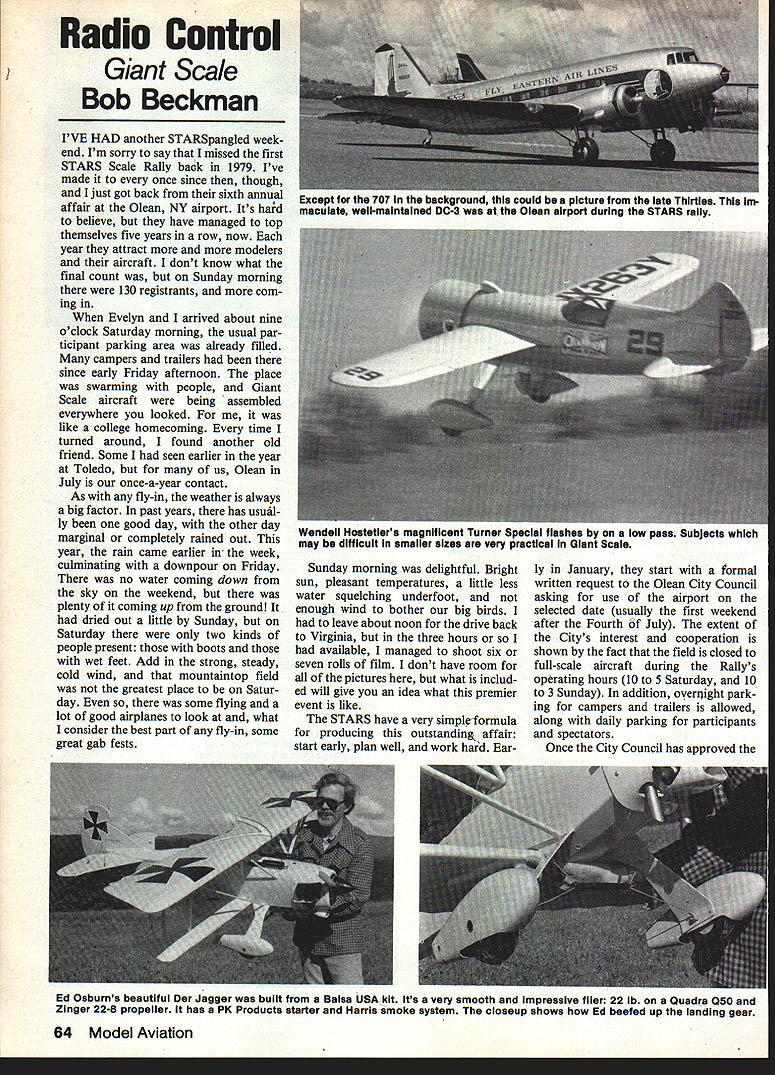
I've had another STARS‑spangled weekend. I missed the first STARS Scale Rally in 1979, but I've made it to every one since, and I just returned from their sixth annual affair at the Olean, N.Y., airport. It's hard to believe, but they have managed to top themselves five years in a row. Each year they attract more modelers and more aircraft. I don't know the final count, but on Sunday morning there were about 130 registrants, with more arriving.
When Evelyn and I arrived about nine o'clock Saturday morning, the usual participant parking area was already filled. Many campers and trailers had been there since early Friday afternoon. The field was swarming with people, and Giant Scale aircraft were being assembled everywhere you looked. For me, it was like a college homecoming — every time I turned around I ran into another old friend. Some I had seen earlier in the year at Toledo, but for many of us, Olean in July is our once‑a‑year contact.
Weather and flying
As with any fly‑in, the weather is always a big factor. In past years there has usually been one good day and another marginal or completely rained out. This year the rain came earlier in the week, culminating in a downpour on Friday. There was no rain over the weekend, but there was plenty of water coming up from the ground. It dried out a little by Sunday, but on Saturday there were only two kinds of people present: those with boots and those with wet feet. Add in a strong, steady, cold wind, and that mountaintop field was not the greatest place to be on Saturday. Even so, there was some flying and a lot of great airplanes to look at, and — what I consider the best part of any fly‑in — some excellent gab fests.
Sunday morning was delightful: bright sun, pleasant temperatures, less squelching underfoot, and not enough wind to bother the big birds. I had to leave about noon for the drive back to Virginia, but in the three hours I had available I managed to shoot six or seven rolls of film. I don't have room for all the pictures here, but what is included will give an idea what this premier event is like.
Organization and planning
The STARS have a very simple formula for producing this outstanding affair: start early, plan well, and work hard.
- Early in January they submit a formal written request to the Olean City Council asking for use of the airport on the selected date (usually the first weekend after the Fourth of July). The city's cooperation is evident: the field is closed to full‑scale aircraft during the rally's operating hours (10:00–5:00 Saturday, 10:00–3:00 Sunday). Overnight parking for campers and trailers is allowed, along with daily parking for participants and spectators.
- Once the City Council approves, the STARS apply for AMA and IMAA sanctions and begin serious rally work.
- Flyers are printed and mailed widely. Everyone who attended the previous year's rally receives one, as do those on the STARS newsletter mailing list. That mailing, plus the success of previous rallies, helps ensure a large turnout.
- Well in advance, arrangements are finalized with local fire and rescue organizations. These groups provide on‑site emergency medical facilities during the rally, operate the concession stand, and handle spectator parking. Revenue from concessions and parking is split with the STARS, and sponsorship from Model Airplane News makes the rally entirely self‑supporting.
Site setup (typical week-of activities)
- An estimated half‑mile (or more) of rope barriers is set up to separate spectator and pit areas.
- An extensive public address system is installed and tested.
- Tents are erected for registration, frequency/flight control, and transmitter impound.
- A concession tent is erected and stocked.
Much of this work must be finished before Friday, because participants start arriving as early as Friday noon.
What participants find
When participants arrive they find:
- Adequate parking at no charge (spectators pay a modest parking fee).
- Extensive pit areas laid out so spectators can see without touching, and so aircraft can be moved easily to the flight line.
- Simple registration: provide information about the aircraft and turn transmitters in to the impound (registration carries a ticket for one of Chicken Charlie Neill's famous barbecued chicken dinners).
- A required safety check for each aircraft before flying.
- A vast, level grass area with two flight lines well separated from the pit/spectator area; if needed, a nearby paved taxi strip provides a hard‑surface runway.
- Best of all, a hundred or more friends and fellow modelers to help enjoy one of the best weekends of the year.
Trends and notable aircraft
Each year I come away from Olean with impressions about where the hobby is heading. The rally has been a big indicator of the growth of Giant Scale. While the event is open to scale models of any size, from the start it has been dominated by Giant Scale aircraft. This year I saw only one or two models that couldn't be considered big birds — Giant Scale is still growing.
The trend toward more sophisticated aircraft continues. Wash Martin's Skyraider is a good example, with operating flaps, retractable main gear and tailwheel, and even a radio‑operated sliding pilot's canopy. The aircraft flies as well as it looks. Even though it is only 3/4‑scale, its 106‑inch wingspan certainly puts it in the Giant Scale class. This is a Nick Ziroli design; plans will be available later this year.
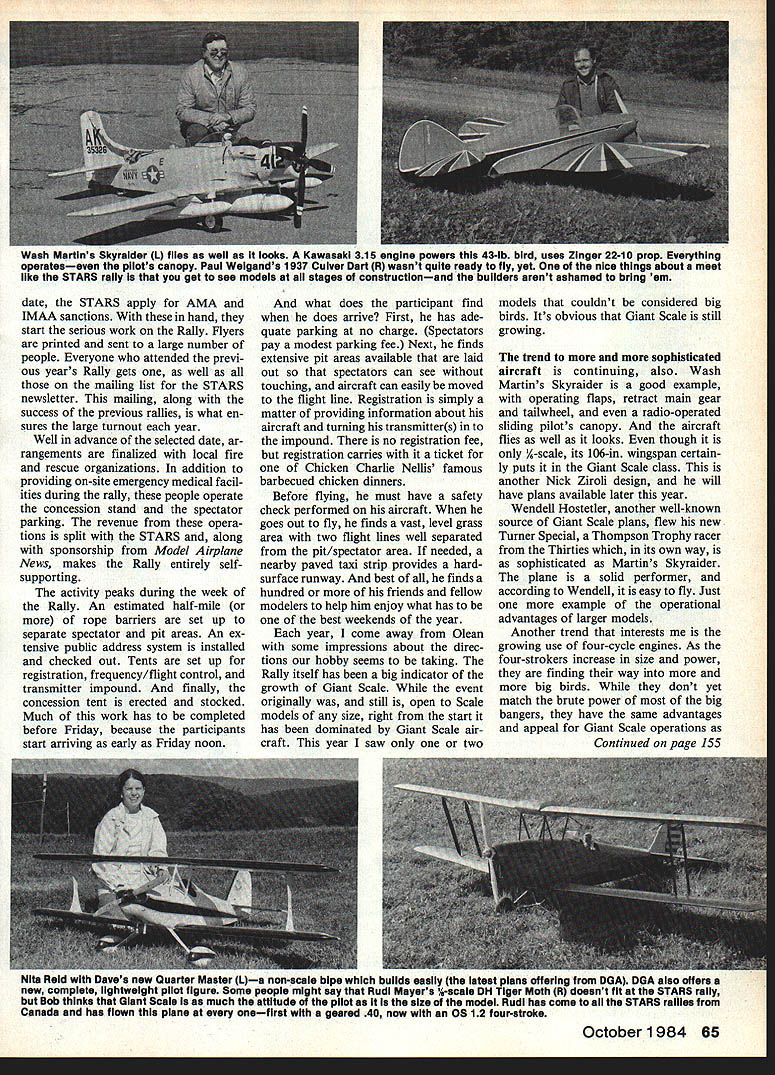
Wendell Hostetler flew his new Turner Special, a Thompson Trophy racer from the Thirties which, in its own way, is as sophisticated as the Skyraider. The plane is a solid performer and, according to Wendell, is easy to fly — another example of the operational advantages of larger models.
Another trend is the growing use of four‑cycle engines. As four‑strokers increase in size and power, they are appearing in more big birds. While they don't yet match the brute power of the largest two‑stroke "bangers," they offer the same advantages and appeal for Giant Scale operations as they do for smaller models. A prime example at Olean was Sam Frey's Enya 1.2‑powered Laser 200. This 84‑inch span model weighed in at 14 lb., and its performance was amazing — Sam must have learned to fly in a gymnasium.
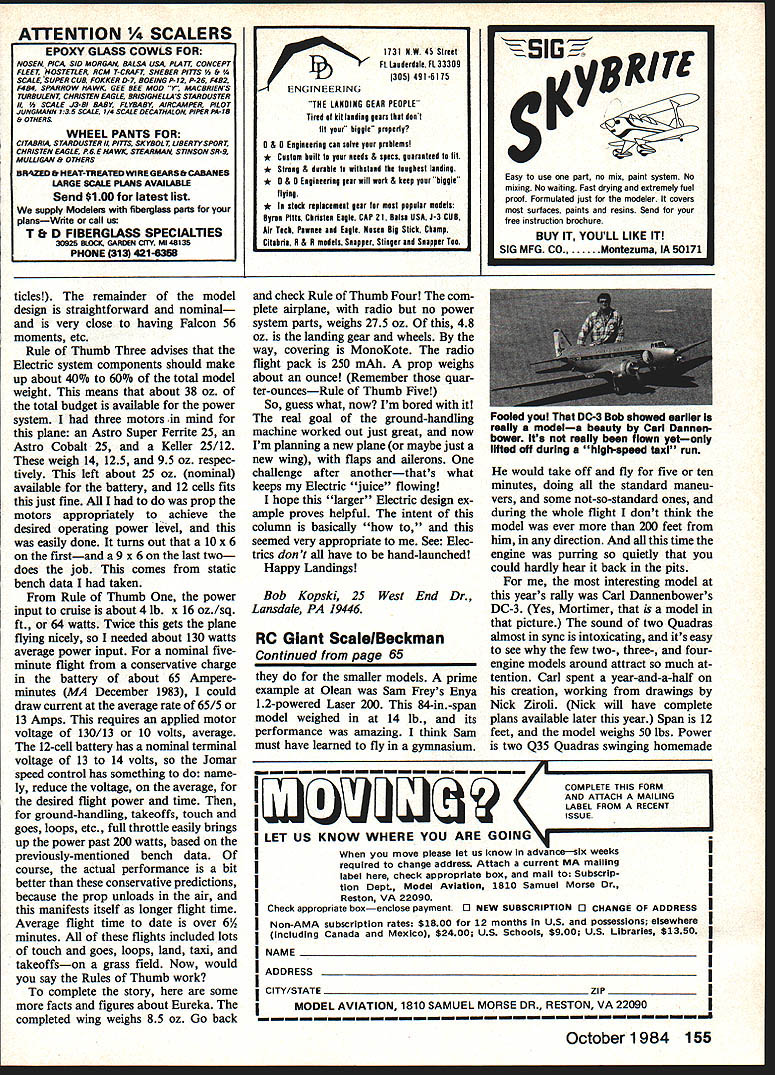
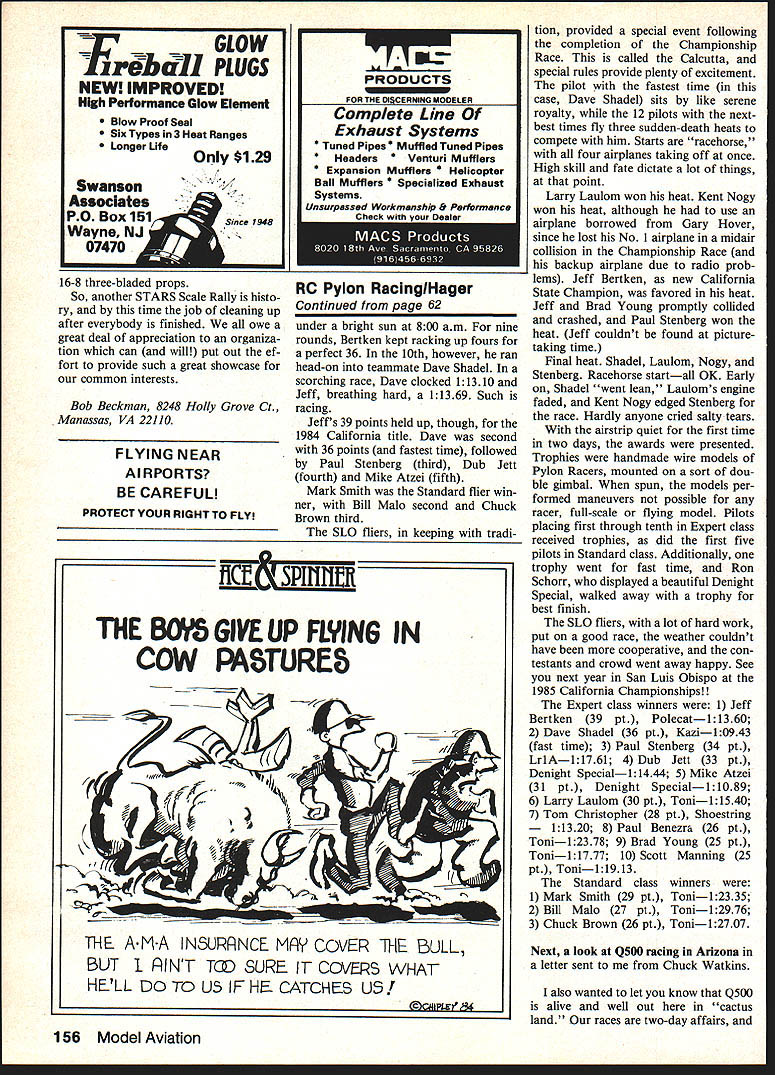
Ed Osburn's beautiful Der Jagger, built from a Balsa USA kit, was on display. It's a very smooth, impressive flier — 22 lb., Quadra .050, Zinger 22‑8 propeller, with PK Products starter and Harris smoke system. Closeups show Ed beefed up the landing gear.
Conclusion
So another STARS Scale Rally is history, and by this time the job of cleaning up after everybody is finished. We all owe a great deal of appreciation to an organization that can — and will — put out the effort to provide such a great showcase for our common interests.
Bob Beckman 8248 Holly Grove Ct. Manassas, VA 22110
Transcribed from original scans by AI. Minor OCR errors may remain.

