
Radio Control: Helicopters
Larry Jolly 15781 Empire Ln. Westminster, CA 92683
Finishing the Kalt Cyclone II
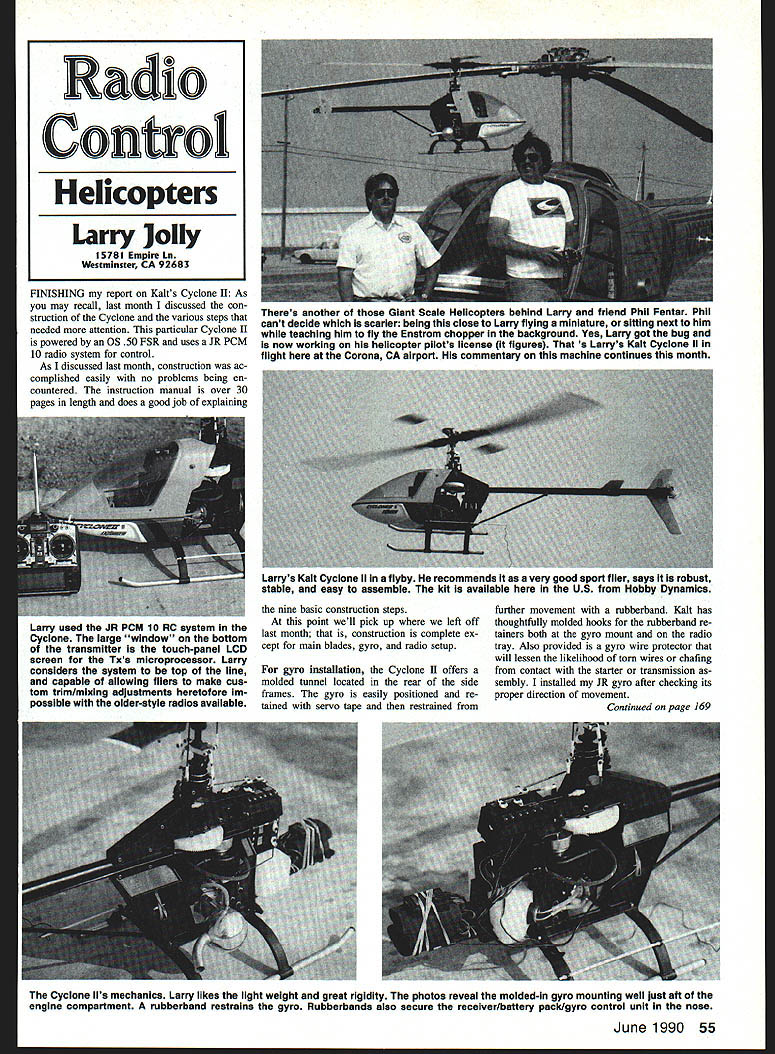
As you may recall, last month I discussed construction of Kalt's Cyclone II and the various steps needing attention. This Cyclone II is powered by an OS .50 FSR and uses the JR PCM-10 radio system for control. Construction was accomplished easily with no problems encountered. The instruction manual, over 30 pages in length, does a good job explaining the build.
At the point I left off, construction was complete except for three items:
- main blades
- gyro
- radio setup
Gyro installation
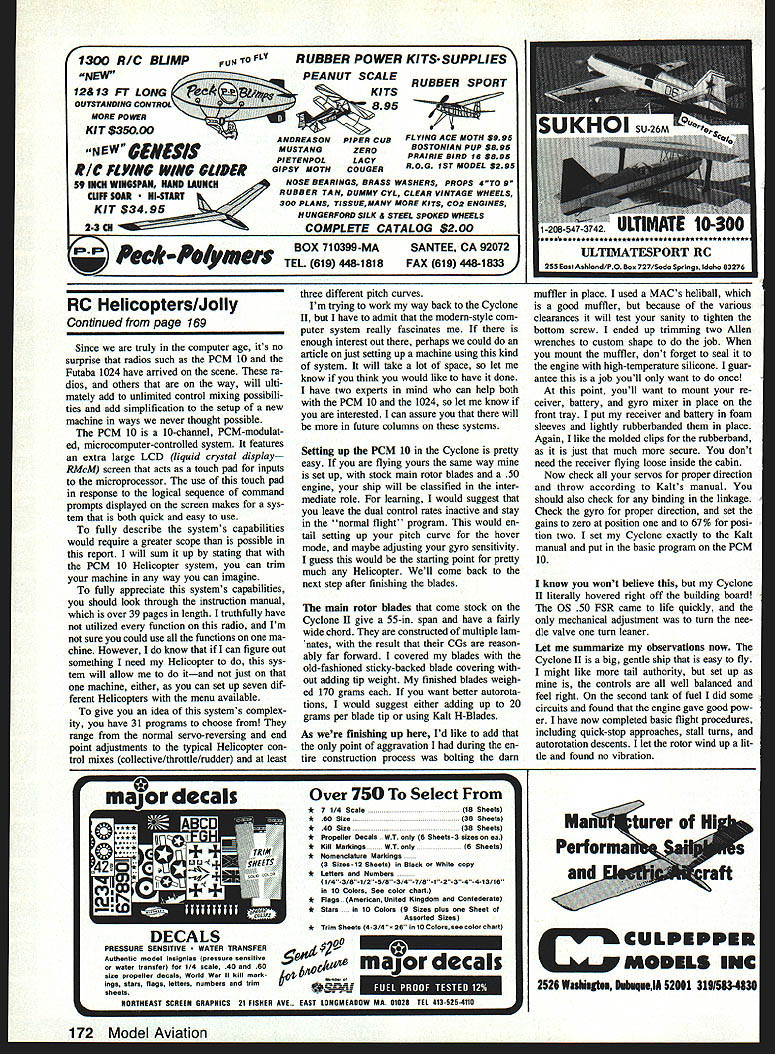
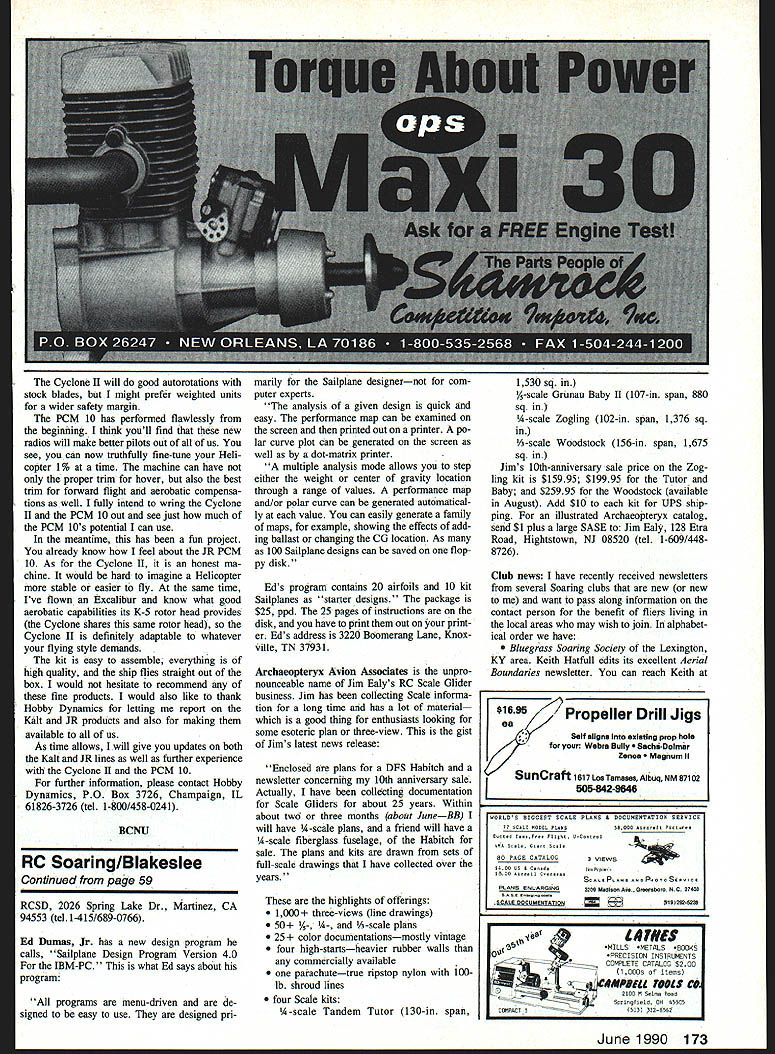
The Cyclone II offers a molded tunnel located in the rear of the side frames for gyro installation. The gyro can be positioned and retained with servo tape and then restrained from further movement with rubber bands. Kalt has molded hooks for the rubber band retainers both at the gyro mount and on the radio tray. Also provided is a gyro wire protector to lessen the likelihood of torn wires from chafing or contact with the starter or transmission assembly.
I installed my JR gyro after checking its proper direction of movement. In practice that step wasn't strictly necessary, as the JR gyro is foolproof in direction — gyro direction can be reversed by rotating the connector 180° in its socket. The JR gyro I used is a two-position, adjustable-gain type and is simple to set up.
Radio: JR PCM-10
I used the JR PCM-10 RC system in the Cyclone. The transmitter features a large window on the bottom that is a touch-panel LCD screen tied to the Tx's microprocessor. The PCM-10 represents state-of-the-art in heli radios and is extremely sophisticated.
Notable capabilities and features:
- Custom trim and mixing adjustments previously impossible on older-style radios
- Fine-tuning ability for hover, forward flight, and aerobatic compensations
- Touch-panel LCD for intuitive setup
My system came with JR NCS 4031 servos. These double-ball-bearing, zero-backlash servos are very strong and durable — they are impressively tough and responsive.
The PCM-10 performed flawlessly from the beginning. These radios make precise trimming practical; you can now tune the machine in very small increments to get optimal performance.
Mechanics and flight impressions
I like the Cyclone II's light weight and rigidity. Photos show the molded-in gyro mounting well just aft of the engine compartment. Rubber bands restrain the gyro and also secure the receiver, battery pack, and gyro control unit in the nose.
Flight notes:
- The Cyclone II will do good autorotations with stock blades, though I might prefer weighted blades for a wider safety margin.
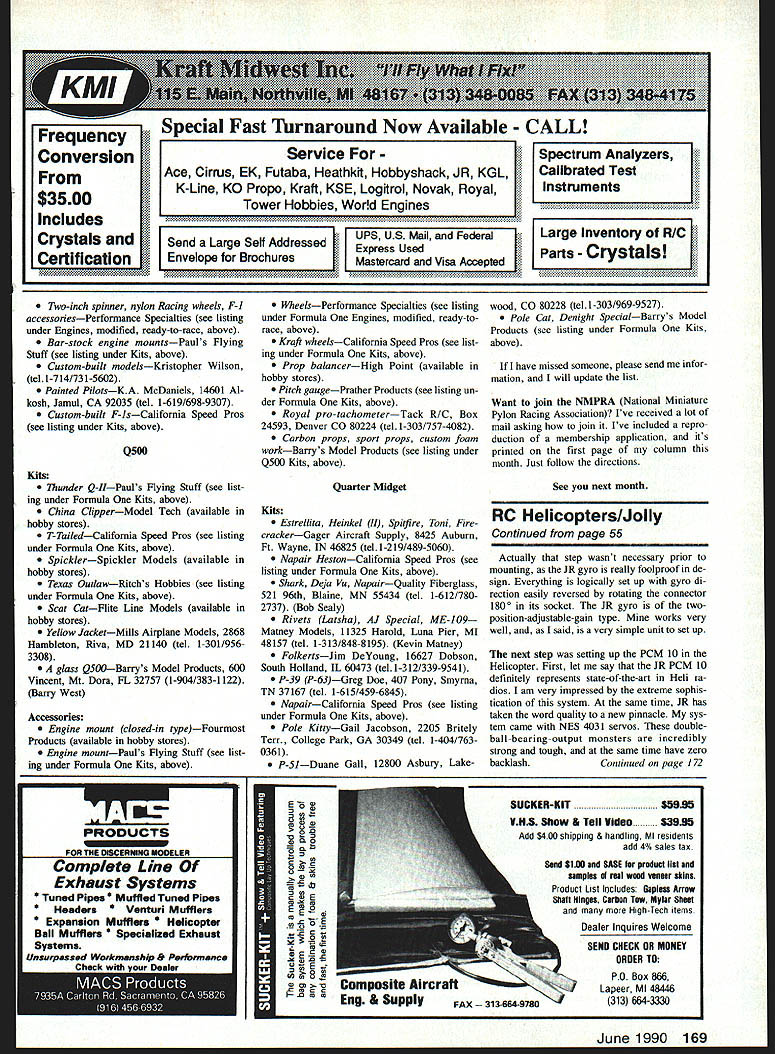
- The Cyclone shares the K-5 rotor head with the Excalibur, which provides good aerobatic capability. The Cyclone II is therefore adaptable to both stable, easy flying and more aggressive aerobatics depending on setup.
The kit is easy to assemble, everything is high quality, and the ship flies straight out of the box. I would not hesitate to recommend the products I used.
Conclusion and follow-up
This has been a fun project. I intend to continue wringing out the Cyclone II and the PCM-10 to explore how much of the PCM-10's potential I can use. As time allows, I will provide updates on both the Kalt and JR product lines and further experience with this combination.
For further information, contact: Hobby Dynamics P.O. Box 3726 Champaign, IL 61826-3726 Tel: 1-800-548-0241
See you next month.
Transcribed from original scans by AI. Minor OCR errors may remain.

