
Radio Control: Helicopters
Paul Tradelius 6704 Santiago, Ft. Worth, TX 76133
Overview
Muncie, Indiana hosted a superb Nationals for helicopter fliers: great competitors and their helicopters, sunny days with light winds, and temperatures in the mid-70s. If you didn't attend the 1996 Nats, you missed a memorable event.
I was only able to spend one day at this year's championships because of work, but that one day whetted my appetite to come back and made me appreciate the excellent flying site AMA has at Muncie. Located in the American heartland, Muncie is easy to reach from either coast; flying into Indianapolis offered the best connections, and a short rental-car drive brought me to the field.
Travel and Facilities
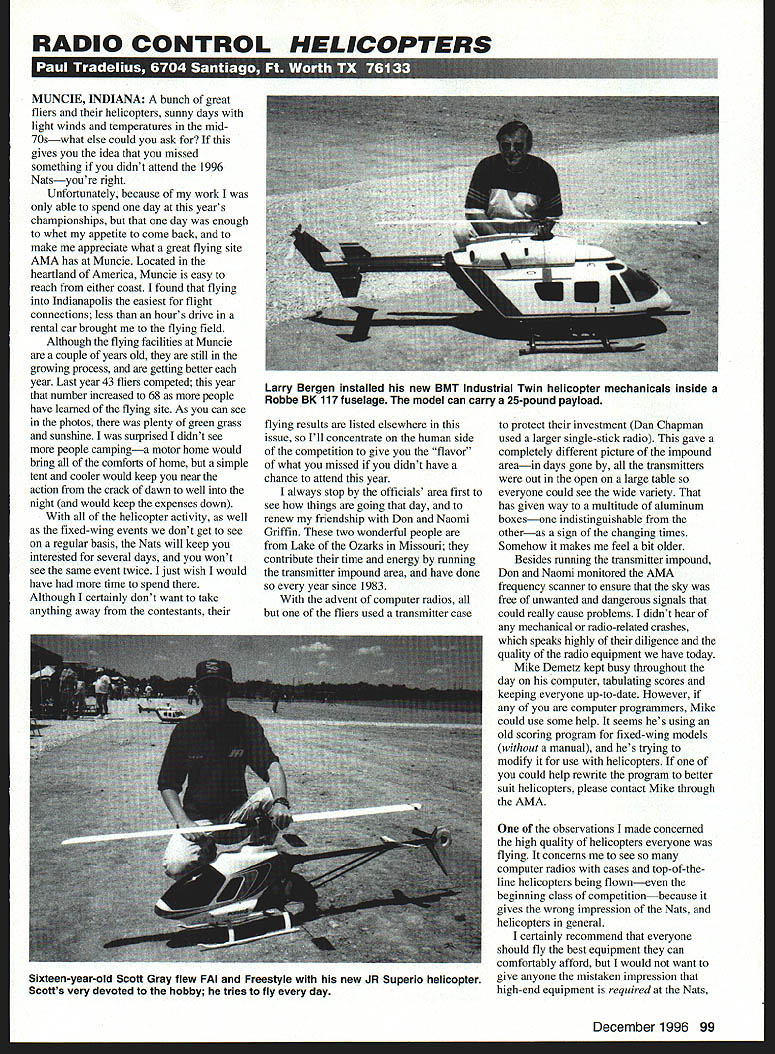
Although the flying facilities at Muncie are only a couple of years old, they are still improving each year. Last year 43 fliers competed; this year that number increased to 68 as more people discovered the site. There was plenty of green grass and sunshine. I was surprised not to see more people camping—while an RV brings full comforts, a simple tent and cooler keep you near the action from dawn well into the night and help keep expenses down.
With the variety of helicopter activity and the fixed-wing events that we don't see regularly, the Nats will keep you interested for several days; you won't see the same event twice.
Officials and the Transmitter Impound
I always stop by the officials' area first to see how things are going and to renew friendships. Don and Naomi Griffin from the Lake of the Ozarks, Missouri, have run the transmitter impound area every year since 1983. They also monitor the AMA frequency scanner to ensure the air is free of unwanted or dangerous signals. I didn't hear of any mechanical- or radio-related crashes, which speaks well of their diligence and of the quality of today's radio equipment.
With the advent of computer radios, most fliers now use transmitter cases to protect their investment (Dan Chapman was an exception with a larger single-stick radio). That has changed the look of the impound area—from an open table displaying a wide variety of transmitters to a row of similar aluminum cases—another sign of the changing times.
Scoring and Volunteers
Mike Demetz kept busy all day, tabulating scores on his computer and keeping everyone up to date. He is adapting an older fixed-wing scoring program for helicopter use and could use help from any computer programmers willing to rewrite or improve the scoring software—contact Mike through the AMA if you can assist.
On everyone's behalf, thanks go to Shaun Ettinger and his team of workers and judges for an excellent helicopter Nats. Shaun said the Nats is 10% competition and 90% people, and I certainly agree.
Equipment and Perceptions
One notable observation was the high quality of helicopters and radios even in beginner classes. While I certainly recommend flying the best equipment you can comfortably afford, I do not want anyone to get the mistaken impression that high-end gear is required at the Nats or at local contests. The Nationals are competitive, but meeting other fliers, sharing techniques, and enjoying camaraderie are equally rewarding.
A couple of stories illustrate the supportive spirit of the event:
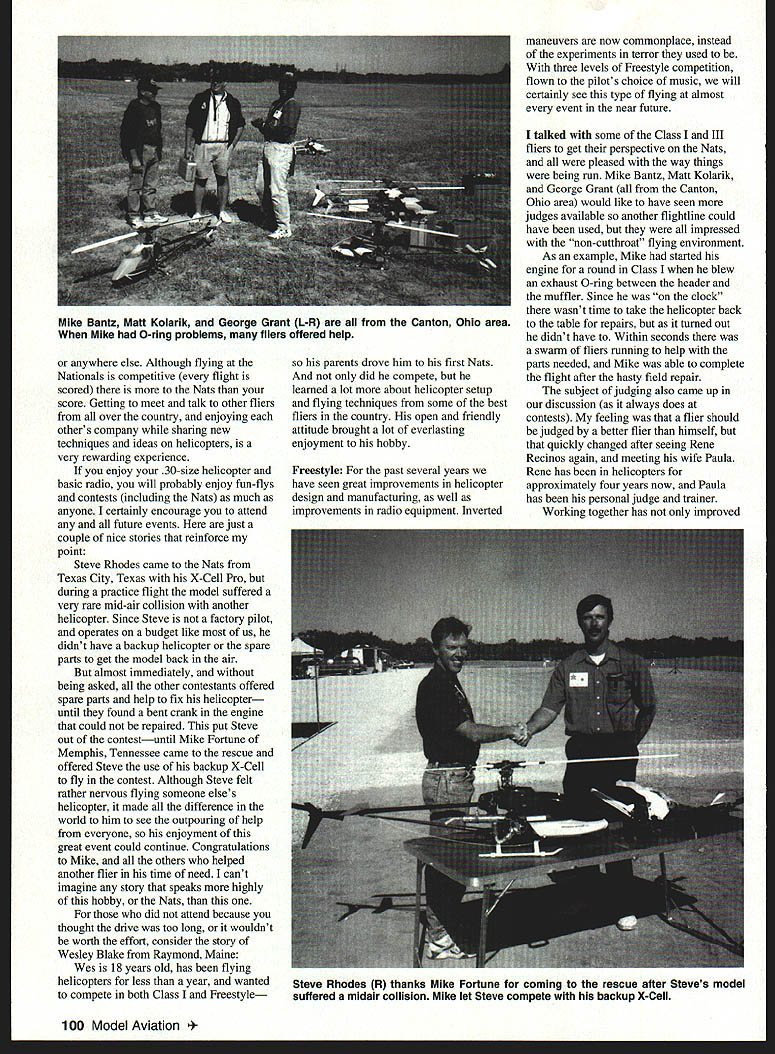
- Steve Rhodes (Texas City, Texas) flew an X-Cell Pro. During practice his model suffered a very rare mid-air collision and he lacked the spare parts or a backup helicopter to continue. Other contestants immediately offered parts and help; when a bent crankshaft was discovered and repairs were impossible, Mike Fortune of Memphis, Tennessee, generously loaned Steve his backup X-Cell so Steve could compete. Although nervous flying someone else's helicopter, Steve greatly appreciated the assistance and the chance to continue—an example that speaks highly of the hobby and the Nats.
- Wesley Blake (Raymond, Maine), age 18, had been flying helicopters less than a year but competed in both Class I and Freestyle. His parents drove him to his first Nats. He learned a great deal about setup and flying techniques from top fliers and his open, friendly attitude exemplified how rewarding the event can be.
Freestyle and Maneuvers
Freestyle has advanced rapidly in recent years. Improvements in helicopter design and radio equipment have made inverted maneuvers common rather than experimental. With three levels of Freestyle competition flown to the pilot's choice of music, Freestyle flying is likely to appear at most events in the near future.
Judging and Training
I spoke with several Class I and III fliers—Mike Bantz, Matt Kolarik, and George Grant (all from the Canton, Ohio area)—who were pleased with how things were run but would have liked more judges so another flight line could be used. They appreciated the non-cutthroat environment.
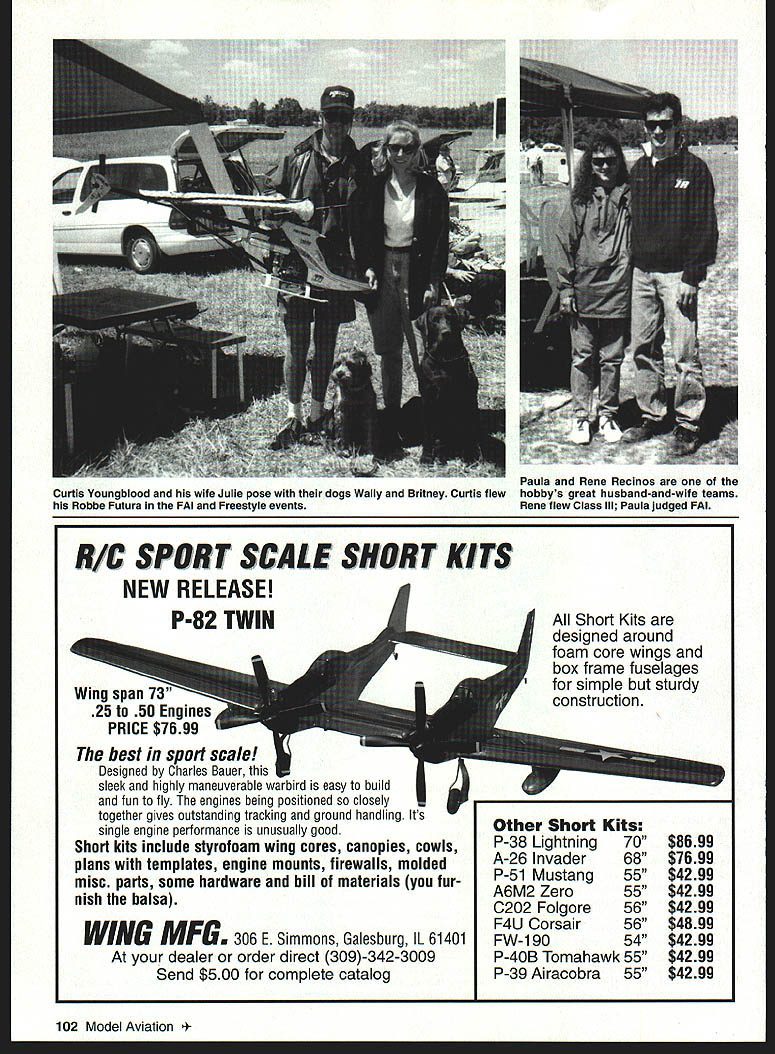
Judging is often a topic of discussion. I believe a flier should be judged by someone better than himself, but the presence of people like Rene Recinos and his wife Paula shows other effective models. Rene has been flying helicopters about four years; Paula has been his personal judge and trainer. Her involvement has improved his flying and made the hobby more of a family activity. Paula, unfamiliar with the pilots personally, feels she has less bias and has been doing an excellent job judging FAI—an encouragement for other spouses or friends to get involved.
Young Fliers
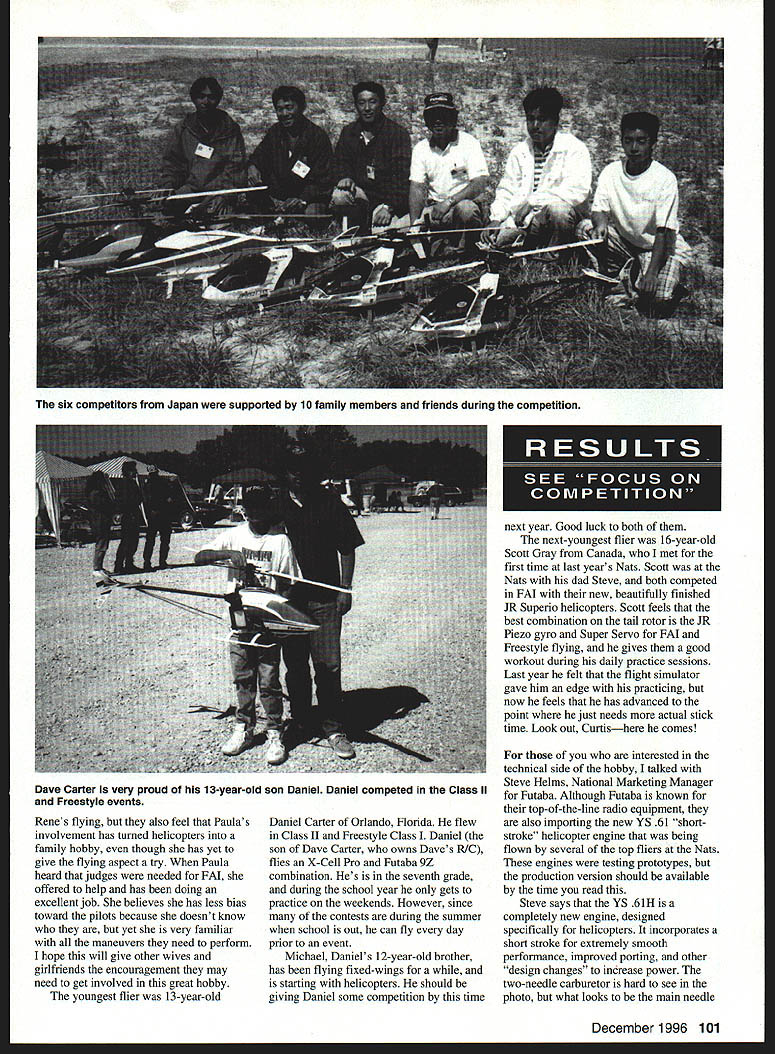
- Daniel Carter (13, Orlando, Florida) flew in Class II and Freestyle Class I. He is the son of Dave Carter (Dave's R/C), flies an X-Cell Pro with a Futaba 9Z, and practices on weekends during the school year. With summer contests, he can increase his practice time.
- Michael Carter (12) has been flying fixed-wings and is starting with helicopters; he should provide competition for Daniel in the near future.
- Scott Gray (16, Canada) competed in FAI with a beautifully finished JR Superio. He and his father Steve both competed in FAI. Scott praised the JR piezo gyro and Super Servo combination for tail control in FAI and Freestyle and attributes part of his progress to flight-simulator practice, although he now prefers more actual stick time.
Technical Notes and Manufacturers
I spoke with Steve Helms, National Marketing Manager for Futaba. In addition to their radio equipment, Futaba is importing the new YS .61 "short-stroke" helicopter engine that several top fliers were testing at the Nats. These engines were prototypes; production versions should be available soon.
The YS .61H is designed specifically for helicopters, featuring a short stroke for very smooth performance, improved porting, and other design changes to increase power. It uses a two-needle carburetor. Production details and finer control elements should be evident when the engines are released.
I also talked with Mr. Hatori, designer and manufacturer of Hatori mufflers. He develops designs on a test bench using a propeller to simulate the rotor system. His design priorities are power and a quiet engine; the 666 muffler undergoes continual refinement. His latest 666 design is optimized for use with the YS .61H using 25% nitromethane and all-synthetic oil.
International Visitors
I was pleased to see six fliers from Japan, many with family members and friends combining the trip with vacation. Three were factory pilots for Hirobo and Kyosho; the other three flew a TSK MyStar 60, a JR Superio, and an X-Cell Custom Graphite. Because of limited land area and high population density in Japan, helicopters are popular there for requiring less space and being mechanically interesting to build and repair.
Japanese visitors pointed out that helicopters cost more in Japan. They showed an advertisement for a Hirobo Eagle priced at 265,000 yen—about $2,650 (at 100 yen to the dollar)—not including engine and radio. Everyday costs are higher there as well (for example, coffee and fuel), so when Japanese fliers invest in a helicopter they take great lengths to care for it.
Thanks and Closing
Many people contributed to making this Nats successful. While I can't mention everyone, the inner satisfaction of the volunteers and judges is evident. If you couldn't make this year's Nats, please put next year's on your calendar. If I have the chance, I'll bring a tent and sleeping bag to get the most from this unique event. See you there next year!
Transcribed from original scans by AI. Minor OCR errors may remain.

