
Radio Control: Pylon Racing
Bill Hager
Club 500 racing is quite popular across the country. One reason is the event's simplicity: the planes are inexpensive, easy to build, and make fine sport models. Club 500 has worked best when kept simple — one type of plane, one type of engine, and an easy-to-follow set of rules.
Keep it simple
As in most types of racing, the goal is to go faster than the next competitor. In areas where any type of engine, fuel, or prop is allowed, these planes are reaching speeds that rival what Formula Ones were doing a few years ago. I think those areas will see a decline in participation. The intent of this class was to provide a way for new racers to get started. As speeds increase, it becomes harder for potential newcomers to get involved.
Before you write me a nasty note, stop and think about this. Those of you who have been racing Club 500 for several years may not notice the change because you have grown with the event. For those who want to go faster, it's time to move to another class, such as Formula One or Quarter Midget. Don't try to change the slower events — we need them for beginners.
Some of us remember when Quarter Midget started. It was a fun, simple, and easy event that almost anyone could fly in. Now it is as competitive as Formula One. Think about it.
Advice for new organizers
For those who would like to start racing in your area but have never done it, here are a few pointers.
A pylon race is fun for both contestants and workers if it is run correctly. When short of help, you can even have the fliers take turns at the pylons or timing.
Officials and staffing
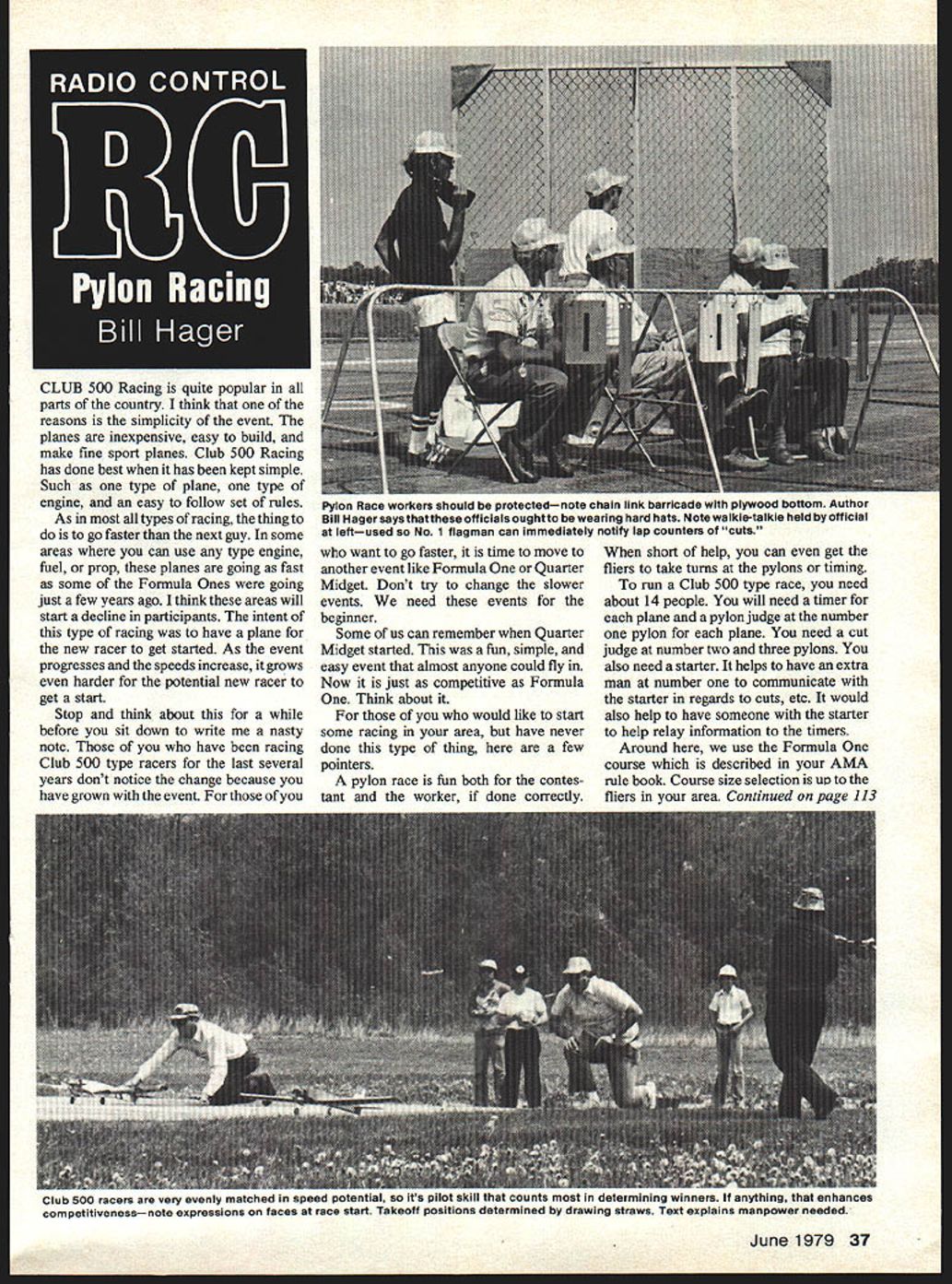
To run a Club 500-type race you need about 14 people. Typical roles include:
- A timer for each plane.
- A pylon judge at pylon number one for each plane.
- Cut judges at pylons number two and three.
- A starter.
- An extra person at pylon number one to communicate with the starter regarding cuts and other issues.
- Someone with the starter to help relay information to the timers.
Course selection
Around here we use the Formula One course described in the AMA rule book. Course size selection is up to the fliers in your area.
Transcribed from original scans by AI. Minor OCR errors may remain.

