
Radio Control Scale
Bob and Dolly Wischer S-221 Lapham Peak Rd. Delafield, WI 53018
Anatomy of Scale
What would motivate a model builder to enter the field of RC Scale? There are several reasons.
Motivations
- Love of real aircraft and the desire to surround oneself with attractive, realistic scale models. Since we cannot own every aircraft we admire, models satisfy that urge. Scale modeling often leads to building many models rather than just one.
- Search for realism, especially realistic flight quality. Seeing a scale aircraft perform is a powerful visual experience for fliers and spectators alike; large audiences attend scale events and remain engaged.
- Recognition and pride: many modelers enjoy having their craftsmanship and piloting admired. A disciplined, scale-like flight and accurate simulation of prototype maneuvers bring satisfaction and attention.
Ingredients of a Scale Modeler
There are four basic elements in a scale modeler's makeup:
- Patience
- Skill
- Knowledge (this accrues over time and experience)
- Desire
Patience and skill can be learned relatively quickly; knowledge usually comes with extended experience. If someone truly wants a scale model, the desire will drive acquisition of the other three.
Research, Design, and Construction
Three requisites for producing a quality scale model are research, design, and construction.
Research
- Visit full-size aircraft whenever possible; gather photos and actual dimensions.
- If the prototype is unavailable, consult archives, libraries, manufacturers, magazines, and books. Purveyors of scale data often advertise in model magazines.
- Sport-scale models may require less research depending on the level of detail desired. Conversely, some sport-scale models could very well qualify for precision scale competition — the dividing line between classes is not always clear.
Design
- Scratch-builders rely heavily on three-view drawings, photos, or measurements taken directly from the prototype.
- Many modelers use kits or published construction drawings that provide most necessary information.
- You do not need to be a master craftsman to enjoy scale modeling; modelers may stop at any stage of finishing and detailing according to preference.
Construction
- Building top-quality scale often requires extensive research and supplemental data, especially for complex prototypes.
Competitive Spirit vs. Personal Choice
- Contest-oriented modelers may select prototypes primarily for winning potential and may spend a year or more on a model even if the prototype is not personally appealing.
- Other modelers choose subjects based on personal interest. Time generally limits how many desirable subjects one can build.
Scratch-Building and Obscure Subjects
- Some modelers deliberately choose obscure or seldom-modeled aircraft, accepting the challenge of limited documentation.
- These projects can be long-term: starting from a single photo, years of research may be needed before construction drawings can be developed. Patience is essential.
- Extremely complex prototypes (multi-engined, multi-wing, lots of external detail) demand exceptional motivation; kits for such types are rare and supplementary research is often required.
Where to See Super-Scale Aircraft
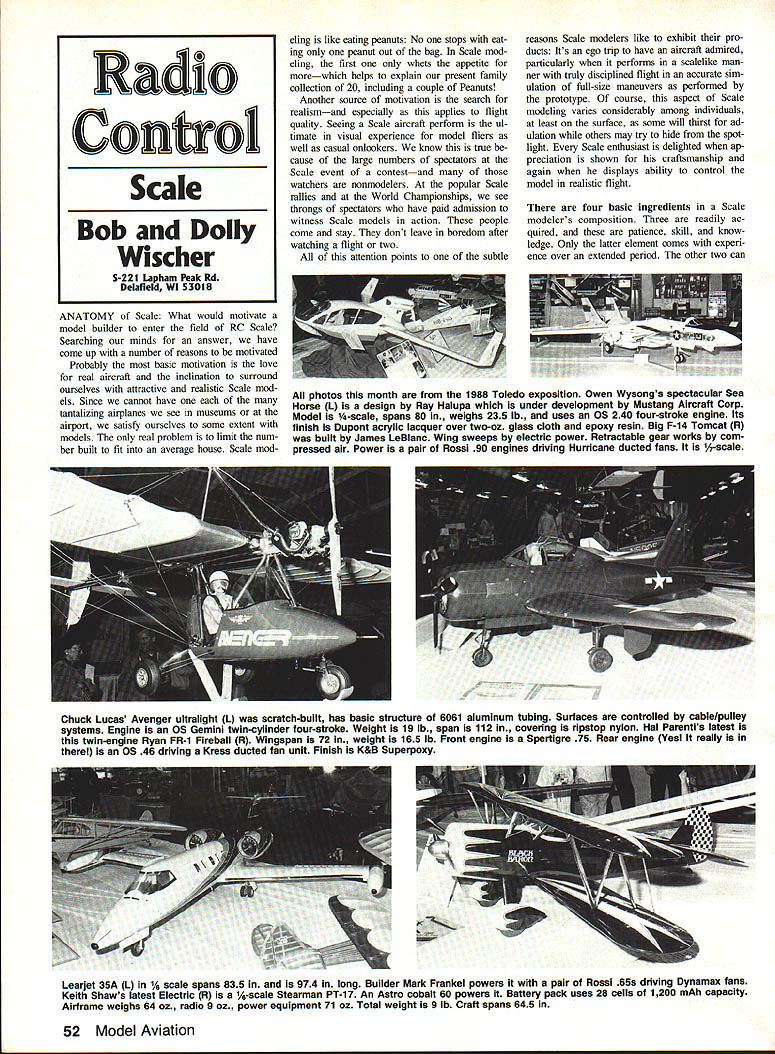
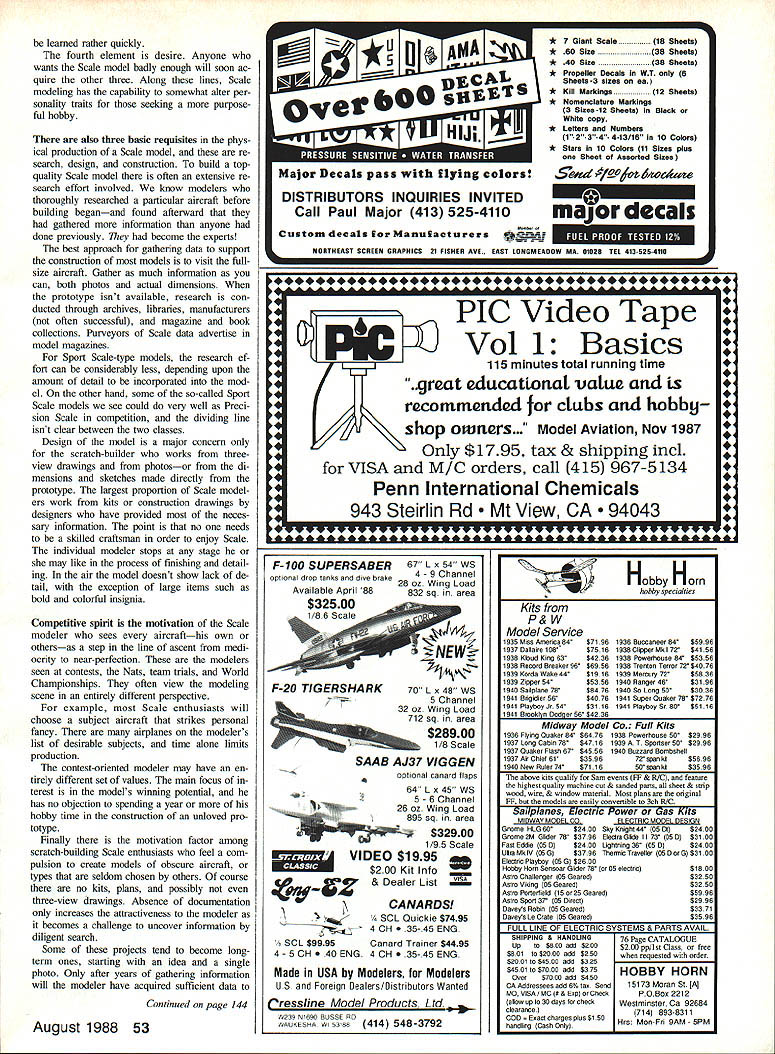
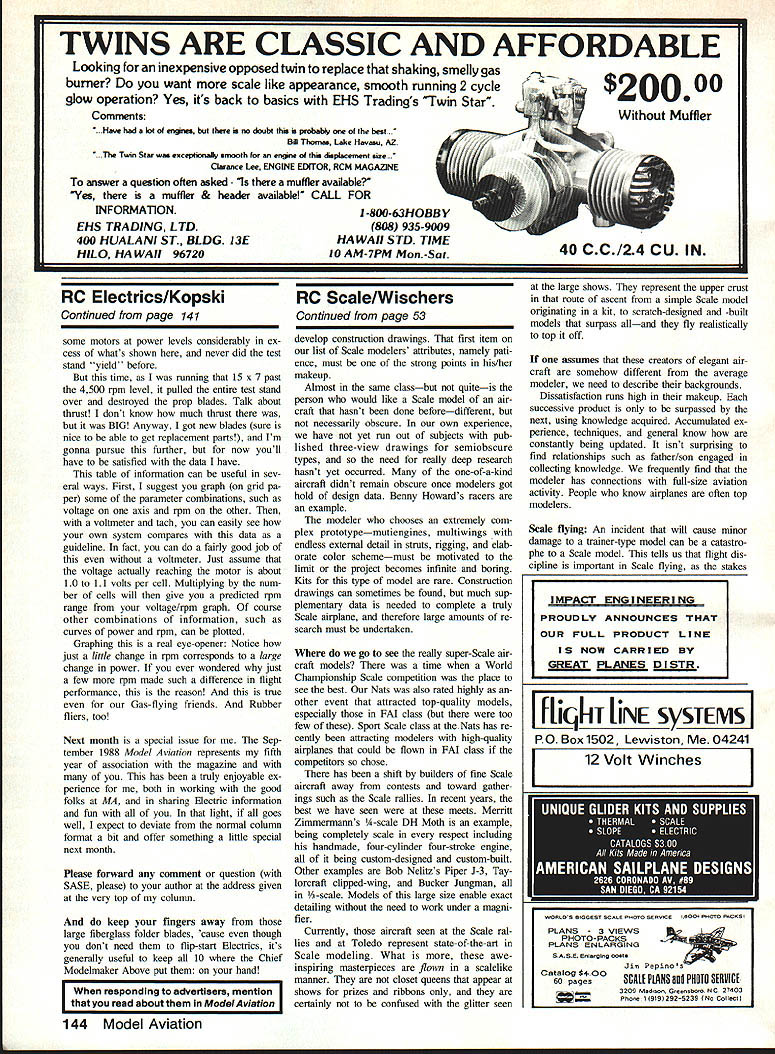
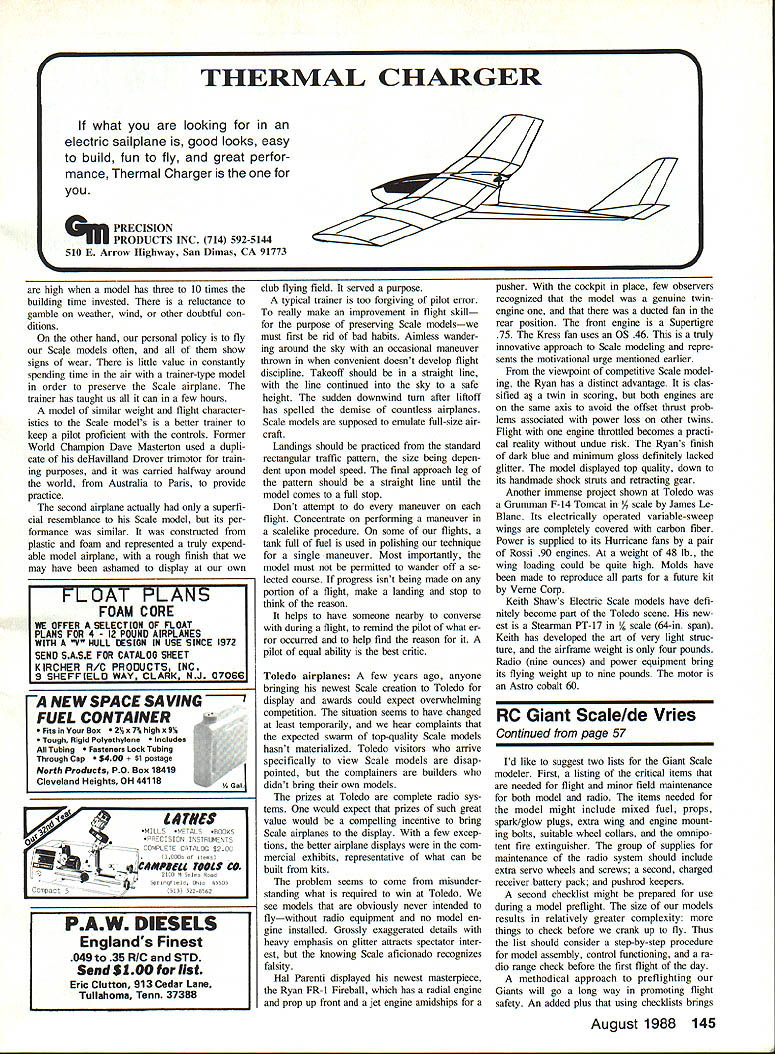
There was a time when World Championship scale competitions and the Nats were the best places to see top-quality models. Recently, however, scale rallies have attracted many of the finest examples. Models at rallies and events such as Toledo often represent the state of the art: inspiring masterpieces that are both exquisitely detailed and flown in a scale-like manner.
Examples of outstanding models seen at rallies:
- Merritt Zimmerman’s 1/5-scale DH Moth — completely scale, including a handmade, four-cylinder four-stroke engine.
- Bob Neltz’s 1/3-scale Piper J-3, Taylorcraft clip-wing, and Bücker Jungmann — large, detailed models that can be worked on without magnification.
Characteristics of Top Builders
Top builders often share certain traits:
- Dissatisfaction with the status quo; each project seeks to surpass the last.
- Continuous accumulation of experience, techniques, and know-how.
- Family relationships and connections to full-size aviation are common among high-caliber modelers.
Scale Flying
Flight discipline is crucial in scale flying. Minor damage that a trainer could survive may be catastrophic to a scale model that has taken three to ten times longer to build.
Training and practice
- Fly scale models often enough to keep them functional, but use dedicated trainers to practice and preserve the scale airplane.
- A trainer with similar weight and flight characteristics is ideal. Some champions use rough, expendable duplicates for practice.
- Avoid indefinite, aimless flying. Practice should focus on developing flight discipline and eliminating bad habits.
Recommended procedures
- Takeoffs: use a straight takeoff line, continuing straight into the sky to a safe height; avoid sudden downwind turns after liftoff.
- Landings: practice from a standard rectangular traffic pattern sized to the model’s speed; final approach should be a straight line until the model comes to a stop.
- Maneuver practice: concentrate on one maneuver per flight and polish technique. If progress is not being made, land and analyze the problem.
- Use a knowledgeable observer or an equal-ability pilot to provide in-flight reminders and constructive criticism.
Toledo Airplanes
A few years ago, Toledo displays featured a swarm of top-quality scale models. Recently some visitors have been disappointed by fewer high-quality entries. Prizes at Toledo are often complete radio systems, which should be compelling incentives, yet several factors reduce true contest entries:
- Some displays clearly show models never intended to fly (no radio gear or engine installed).
- Excessive emphasis on glitter and exaggerated detail attracts casual interest but is recognized as falsified by scale aficionados.
Final Thoughts
Building a top-quality scale model often requires extensive research, careful design, and meticulous construction. Visit full-size aircraft when possible, gather photos and dimensions, and consult archives, manufacturers, and published sources. Sport-scale models may demand less research, but for truly authentic—and flyable—scale models, thorough preparation and disciplined flying are indispensable.
Transcribed from original scans by AI. Minor OCR errors may remain.

