
Radio Control: Scale
Bob Hanft 26681 County Rd. 32 Elberta, AL 36530
Realism in Flight
How important realism in flight is to scoring in competition with Scale RC aircraft! The AMA Competition Regulations book spells out the "RC Scale Flight Judging Guide." If you want a high-place finish, you should read and reread this portion of the rule book. It tells the judges what they are looking for and what you are expected to do.
Think about the flight plan as soon as you decide what kind of model to build—or even before that, depending on how you like to fly and the flying site you use. Each airplane has unique flying qualities that will dictate the style of program you fly.
Types of models include:
- Antiques
- World War I
- Golden Oldies
- World War II
- World-class aerobatic
- High-speed modern jets
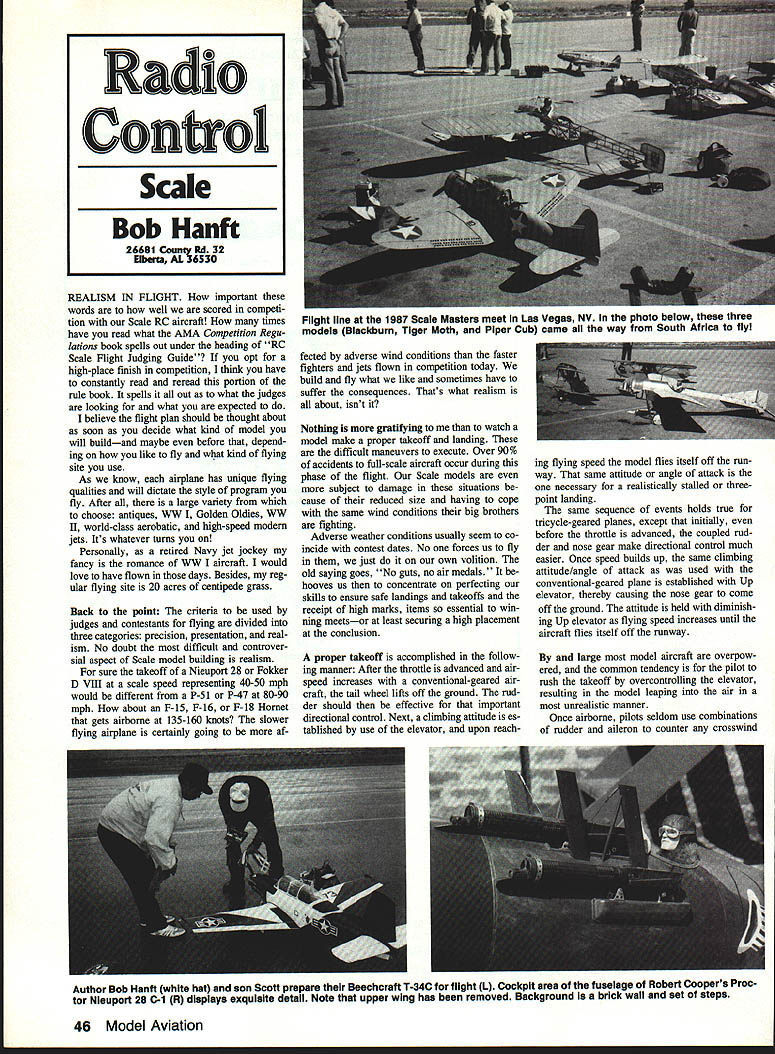
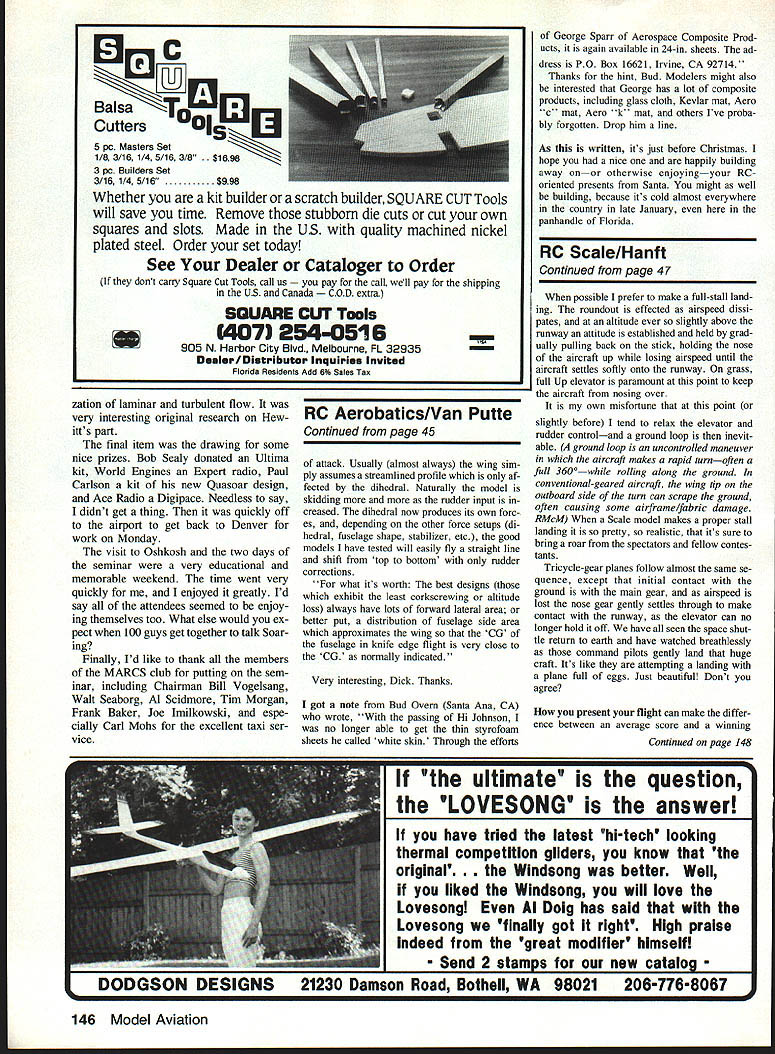
Personally, as a retired Navy jet pilot, I favor the romance of World War II aircraft. My regular flying site is 20 acres of centipede grass.
Judging Criteria
The criteria used by judges and contestants for flying are divided into three categories:
- Precision
- Presentation
- Realism
Realism is often the most difficult and controversial aspect of Scale model building.
Takeoff
Takeoff characteristics vary widely by type:
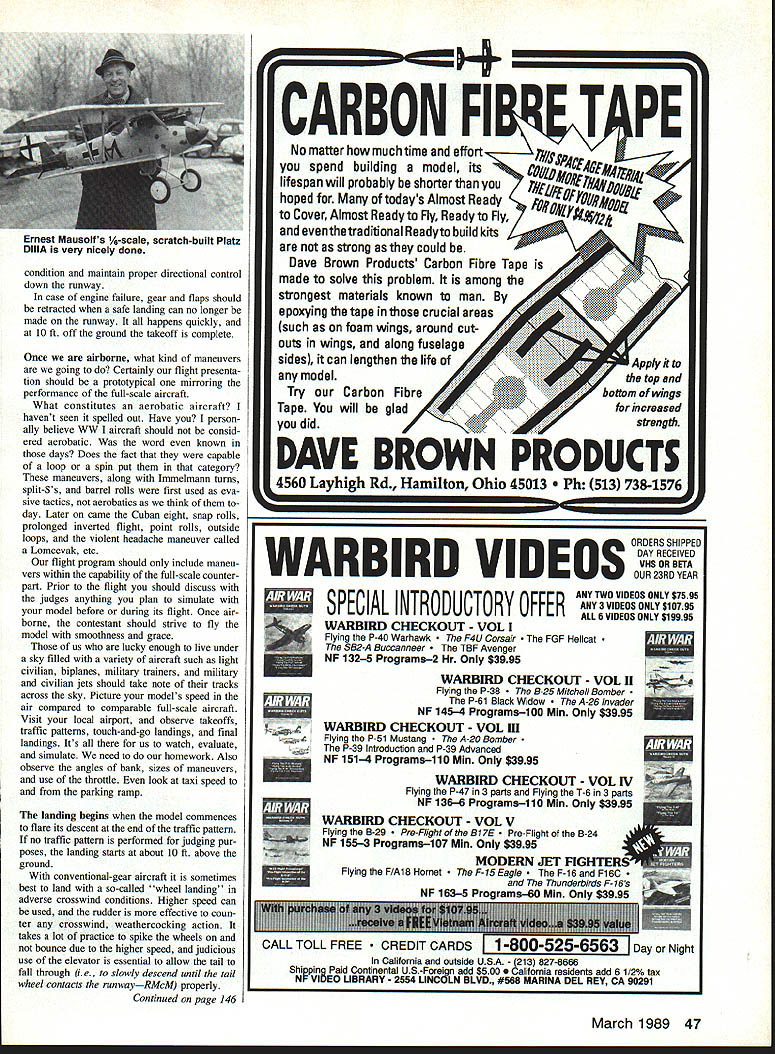
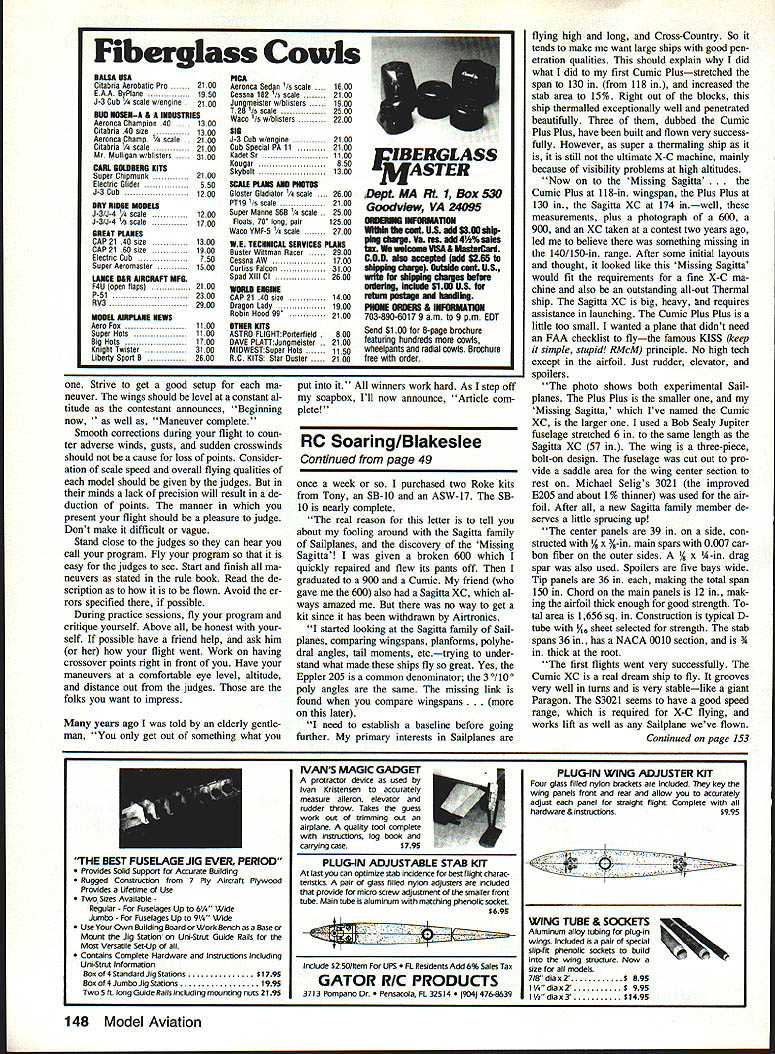
- A Nieuport 28 or Fokker D.VIII at scale speed (40–50 mph) will behave very differently from a P-51 or P-47 at 80–90 mph.
- Modern fighters and jets (F-15, F-16, F-18) get airborne at much higher speeds (135–160 knots) and are less affected by wind.
A proper takeoff sequence for a conventional-geared aircraft:
- Advance throttle and allow airspeed to increase.
- Tailwheel lifts, and rudder becomes effective for directional control.
- Establish a climbing attitude using the elevator.
- Upon reaching flying speed, the model flies itself off the runway.
For tricycle-geared aircraft:
- Before throttle advance, the coupled rudder and nose gear make directional control easier.
- As speed builds, use up elevator to establish the same climbing attitude, allowing the nose gear to come off.
- Maintain attitude with diminishing elevator as flying speed increases until the aircraft flies off the runway.
Common problems:
- Many models are overpowered. Pilots often rush takeoff by overcontrolling the elevator, causing the model to leap into the air unrealistically.
- Once airborne, pilots seldom use combinations of rudder and aileron to counter crosswind.
If an engine failure occurs during takeoff, retract gear and flaps to help maintain directional control and allow for a safer landing. If a safe landing cannot be made and this becomes apparent at about 10 ft off the ground, the takeoff is effectively complete.
Flight Maneuvers and Aerobatics
Your flight presentation should be prototypical, mirroring the performance of the full-scale aircraft. Include only maneuvers within the capability of the full-scale counterpart.
On aerobatics:
- I do not believe World War I aircraft should be considered aerobatic in the modern sense. Early maneuvers (loops, spins, Immelmanns, split-S, barrel rolls) were used as evasive tactics rather than aerobatics as we define them today.
- Later aerobatic maneuvers include Cuban eight, snap rolls, prolonged inverted flight, point rolls, outside loops, Lomcevack, etc.
Before flight, discuss with the judges anything you plan to simulate. Once airborne, strive to fly with smoothness and grace, using appropriate throttle and control inputs for the model’s scale speed.
Study full-scale aircraft:
- Visit local airports and observe takeoffs, traffic patterns, touch-and-goes, final landings, angles of bank, maneuver sizes, throttle usage, and taxi speeds.
- Picture your model’s speed relative to comparable full-scale aircraft.
Landing
The landing begins when the model commences its flare at the end of the traffic pattern. If no traffic pattern is performed for judging, the landing starts at 10 ft above the ground.
Conventional-gear aircraft:
- In crosswinds, a so-called "wheel landing" may be best. Higher speed keeps the rudder effective against weathercocking.
- Practice is required to set the wheels down without bouncing. Judicious elevator use allows the tail to descend slowly until the tailwheel contacts the runway.
- When possible I prefer a full-stall landing: as airspeed dissipates, establish and hold an attitude slightly above the runway by gradually pulling back on the stick, holding the nose up while losing airspeed until the aircraft settles softly onto the runway. On grass, full up elevator at touchdown helps prevent nosing over.
Be careful: relaxing elevator or rudder control too early often leads to a ground loop—an uncontrolled turn while rolling on the ground, which can cause wingtip scraping and damage. When a Scale model makes a proper stall landing it is very realistic and attracts strong spectator reaction.
Tricycle-gear aircraft:
- Initial contact is with the main gear; as airspeed is lost the nose gear gently settles onto the runway as the elevator can no longer hold it off.
Think of the space shuttle’s gentle landings—command pilots bring a huge machine down as if carrying a crate of eggs. Beautiful precision.
Presentation and Judging
How you present your flight can make the difference between an average score and a winning one. Strive for a good setup for each maneuver:
- Wings level at a constant altitude when announcing "Beginning now" and "Maneuver complete."
- Smooth corrections for winds and gusts should not be penalized unduly; consider scale speed and the model’s flying qualities.
- Lack of precision, however, will result in point deductions.
Make it easy for the judges:
- Stand close enough for judges to hear your calls.
- Fly so judges can score easily.
- Start and finish maneuvers as described in the rule book and avoid listed errors.
Practice and Preparation
During practice:
- Fly your program and critique yourself honestly.
- If possible, have a friend help and give feedback.
- Arrange crossover points and maneuvers at a comfortable eye level, altitude, and distance from the judges.
Remember: "You only get out of something what you put into it." Winners work hard.
Article complete.
Transcribed from original scans by AI. Minor OCR errors may remain.

