
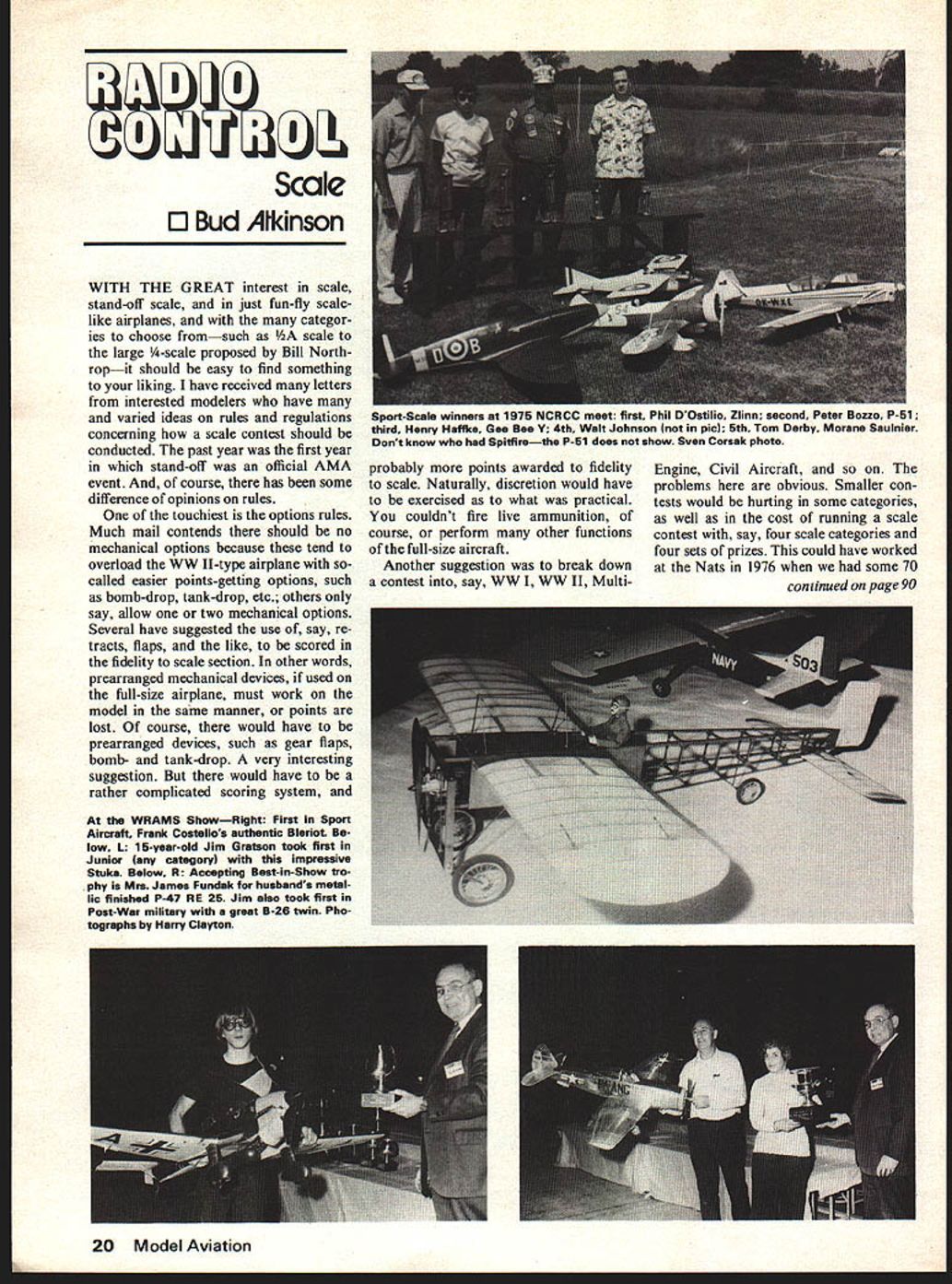
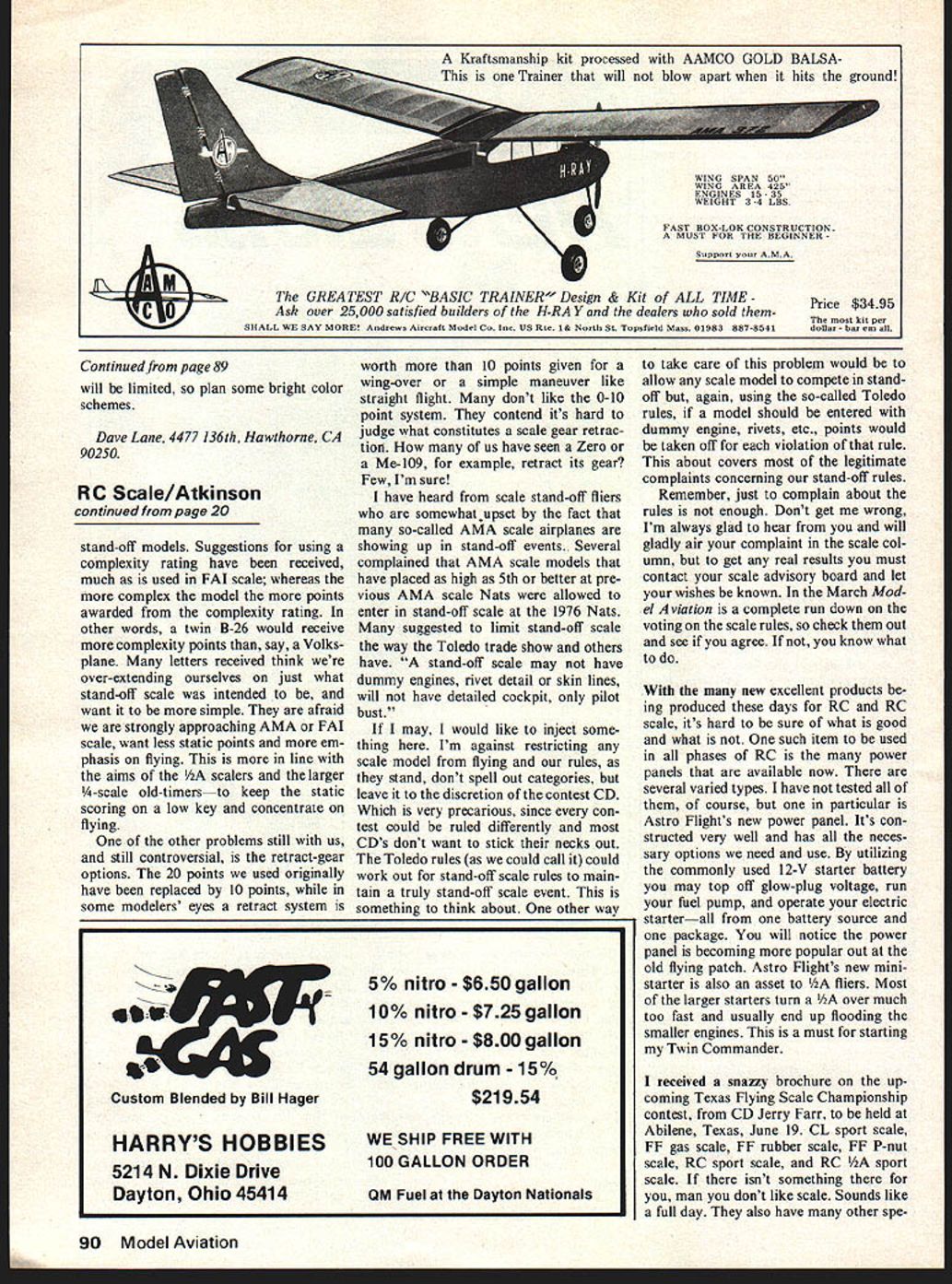
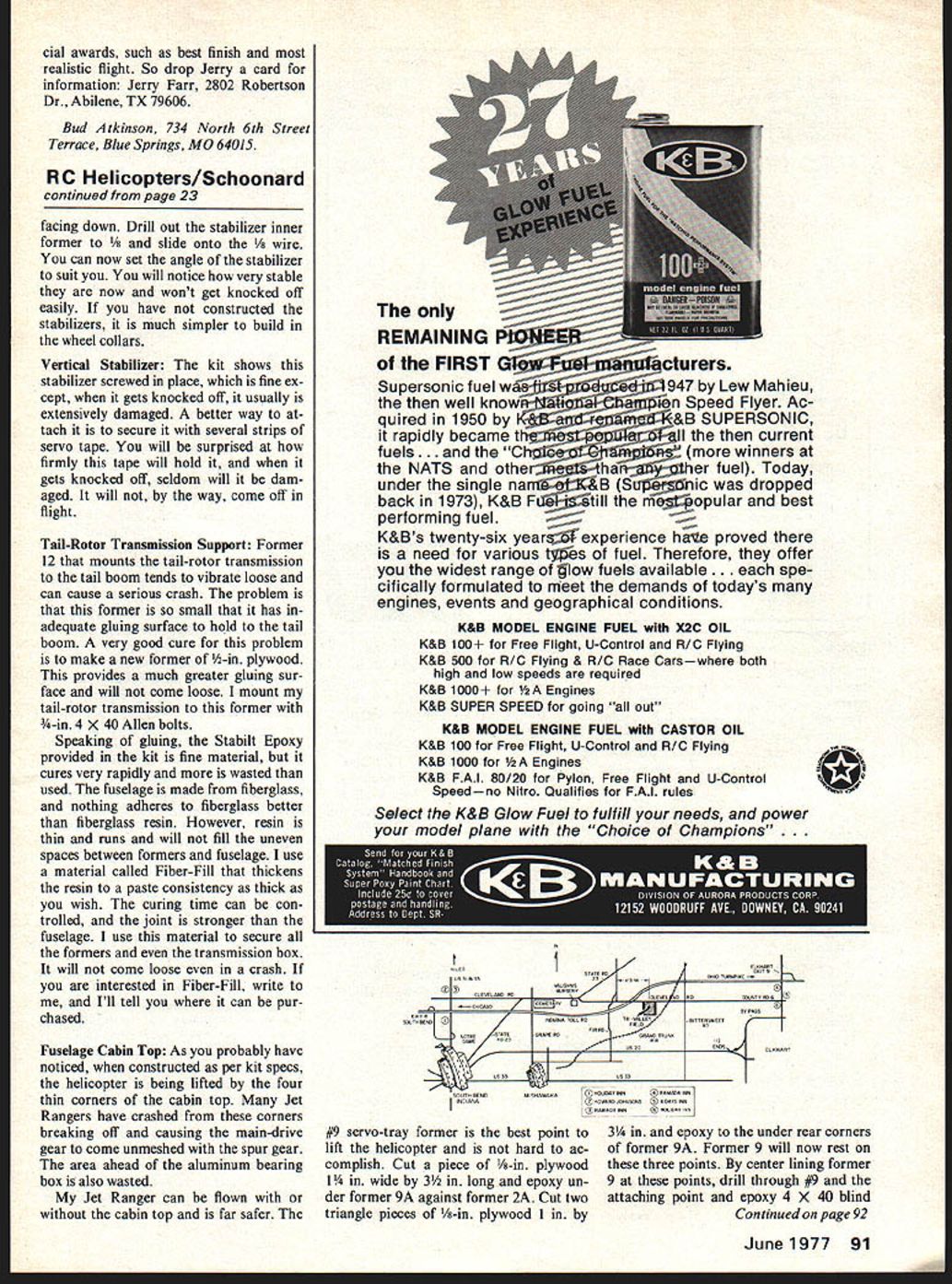
Radio Control: Scale
Bud Atkinson
WITH THE GREAT interest in scale, stand-off scale, and in just fun-fly scale-like airplanes, and with the many categories to choose from—such as 1/2A scale to the large 1/4-scale proposed by Bill Northrop—it should be easy to find something to your liking. I have received many letters from interested modelers who have many and varied ideas on rules and regulations concerning how a scale contest should be conducted. The past year was the first year in which stand-off was an official AMA event. And, of course, there has been some difference of opinions on rules.
One of the touchiest is the options rules. Much mail contends there should be no mechanical options because these tend to overload the WW II-type airplane with so-called easier points-getting options, such as bomb-drop, tank-drop, etc.; others only say, allow one or two mechanical options. Several have suggested the use of, say, retracts, flaps, and the like, to be scored in the fidelity to scale section. In other words, prearranged mechanical devices, if used on the full-size airplane, must work on the model in the same manner, or points are lost. Of course, there would have to be prearranged devices, such as gear, flaps, bomb- and tank-drop. A very interesting suggestion. But there would have to be a rather complicated scoring system, and probably more points awarded to fidelity to scale. Naturally, discretion would have to be exercised as to what was practical. You couldn't fire live ammunition, of course, or perform many other functions of the full-size aircraft.
Another suggestion was to break down a contest into, say, WW I, WW II, Multi-Engine, Civil Aircraft, and so on. The problems here are obvious. Smaller contests would be hurting in some categories, as well as in the cost of running a scale contest with, say, four scale categories and four sets of prizes. This could have worked at the Nats in 1976 when we had some 70
RC Scale/Atkinson
will be limited, so plan some bright color schemes.
Dave Lane, 4477 136th, Hawthorne, CA 90250.
stand-off models. Suggestions for using a complexity rating have been received, much as is used in FAI scale; whereas the more complex the model the more points awarded from the complexity rating. In other words, a twin B-26 would receive more complexity points than, say, a Volksplane. Many letters received think we're over-extending ourselves on just what stand-off scale was intended to be, and want it to be more simple. They are afraid we are strongly approaching AMA or FAI scale, want less static points and more emphasis on flying. This is more in line with the aims of the 1/2A scalers and the larger 1/4-scale old-timers—to keep the static scoring on a low key and concentrate on flying.
One of the other problems still with us, and still controversial, is the retract-gear options. The 20 points we used originally have been replaced by 10 points, while in some modelers' eyes a retract system is worth more than 10 points given for a wing-over or a simple maneuver like straight flight. Many don't like the 0-10 point system. They contend it's hard to judge what constitutes a scale gear retraction. How many of us have seen a Zero or a Me-109, for example, retract its gear? Few, I'm sure!
I have heard from scale stand-off fliers who are somewhat upset by the fact that many so-called AMA scale airplanes are showing up in stand-off events. Several complained that AMA scale models that have placed as high as 5th or better at previous AMA scale Nats were allowed to enter in stand-off scale at the 1976 Nats. Many suggested to limit stand-off scale the way the Toledo trade show and others have. "A stand-off scale may not have dummy engines, rivet detail or skin lines, will not have detailed cockpit, only pilot bust."
If I may, I would like to inject something here. I'm against restricting any scale model from flying and our rules, as they stand, don't spell out categories, but leave it to the discretion of the contest CD. Which is very precarious, since every contest could be ruled differently and most CD's don't want to stick their necks out. The Toledo rules (as we could call it) could work out for stand-off scale rules to maintain a truly stand-off scale event. This is something to think about. One other way to take care of this problem would be to allow any scale model to compete in stand-off but, again, using the so-called Toledo rules, if a model should be entered with dummy engine, rivets, etc., points would be taken off for each violation of that rule. This about covers most of the legitimate complaints concerning our stand-off rules.
Remember, just to complain about the rules is not enough. Don't get me wrong, I'm always glad to hear from you and will gladly air your complaint in the scale column, but to get any real results you must contact your scale advisory board and let your wishes be known. In the March Model Aviation is a complete run down on the voting on the scale rules, so check them out and see if you agree. If not, you know what to do.
With the many new excellent products being produced these days for RC and RC scale, it's hard to be sure of what is good and what is not. One such item to be used in all phases of RC is the many power panels that are available now. There are several varied types. I have not tested all of them, of course, but one in particular is Astro Flight's new power panel. It's constructed very well and has all the necessary options we need and use. By utilizing the commonly used 12-V starter battery you may top off glow-plug voltage, run your glow pump, and operate your electric starter—all from one battery source and one package. You will notice the power panel is becoming more popular out at the old flying patch. Astro Flight's new mini-starter is also an asset to 1/2A fliers. Most of the larger starters turn a 1/2A over much too fast and usually end up flooding the smaller engines. This is a must for starting my Twin Commander.
I received a snazzy brochure on the upcoming Texas Flying Scale Championship contest, from CD Jerry Farr, to be held at Abilene, Texas, June 19. CL sport scale, FF gas scale, FF rubber scale, FF P-nut scale, RC sport scale, and RC 1/2A sport scale. If there isn't something there for you, man you don't like scale. Sounds like a full day. They also have many other spe-
Radio Control: Scale
With the great interest in scale stand-off events, scale just seems fun—fly scalelike airplanes. Categories to choose from are such as scale large A-scale proposed. Bill North wrote it should be easy to find something to your liking.
I have received letters from interested modelers with varied ideas on rules and regulations concerning scale contests and how they should be conducted. This past year, the first year the stand-off was an official AMA event, of course there have been some differences of opinion on the rules. The touchiest option seems to be mechanical options.
Much mail contends there should be no mechanical options because they tend to overload WW I/II-type airplanes—so-called easier, points-getting options such as bomb-drop, tank-drop, etc. Others say allow two mechanical options. Several have suggested use of, say, retracts or flaps to be scored in the fidelity/scale section. In other words, prearranged mechanical devices used on the full-size airplane must work on the model in the same manner or points would be lost. Of course, this would have prearranged devices such as gear, flaps, bomb- and tank-drop.
A very interesting suggestion would have a rather complicated scoring system with probably points awarded for fidelity to scale. Naturally discretion would have to be exercised as to what practical could be done — you couldn't fire live ammunition, of course, but perform other functions of the full-size aircraft.
Another suggestion is to break down the contest, say WW I, WW II, Multi-Engine, Civil Aircraft. The problems are obvious. Smaller contests would be hurting some categories as well as the cost of running a scale contest. Say four scale categories with four sets of prizes could have worked at the Nats in 1976.
Suggestions using a complexity rating have been received. Much used is the FAI scale, whereas complex models are awarded a complexity rating — in other words a twin B-26 would receive complexity points, say versus a Volksplane. Letters received think we're over-extending ourselves and just what stand-off scale is intended to be. We want simple — afraid of strongly approaching AMA/FAI scale. We want less static points emphasis and concentrate on flying. The line aims scalers toward larger 1/4-scale old-timers to keep static scoring low key and concentrate on flying.
Other problems still cause controversy. Retract-gear options: 20 points used originally have been replaced by 10 points. Some modelers feel retract systems are worth 10 points given a wing-over or simple maneuver like straight flight. I don't like the 0–10 point system; contenders say it's hard to judge what constitutes scale gear retraction. We have seen Zero and Me-109 examples retract their gear.
I'm sure you have heard stand-off fliers are somewhat upset at the fact so-called AMA scale airplanes are showing up in stand-off events. Several complained AMA scale models have placed as high as 5th or better in previous stand-off events. AMA scale Nats allowed entry in stand-off scale at the 1976 Nats, and it was suggested to limit stand-off scale at the Toledo trade show. Others have stand-off scale that may have dummy engines, rivet detail, skin lines, detailed cockpits, pilot busts, etc. Some would like to inject something; I'm against restricting scale model flying rules. Stand-off rules don't spell out categories but leave discretion to the contest CD, which is very precarious since contests could be ruled differently. CDs don't want to stick their necks out. Toledo rules could call for specifics and could work out stand-off scale rules to maintain a truly stand-off scale event — something to think about.
One way OM Fuel Dayton Nationals could take care of the problem would be to allow scale models to compete in stand-off again using the so-called Toledo rules. Models entered with dummy engines, rivets, etc., would have points taken off for violation of rules about covers of legitimate components.
Transcribed from original scans by AI. Minor OCR errors may remain.

