
Radio Technique
George M. Myers
RF Wand
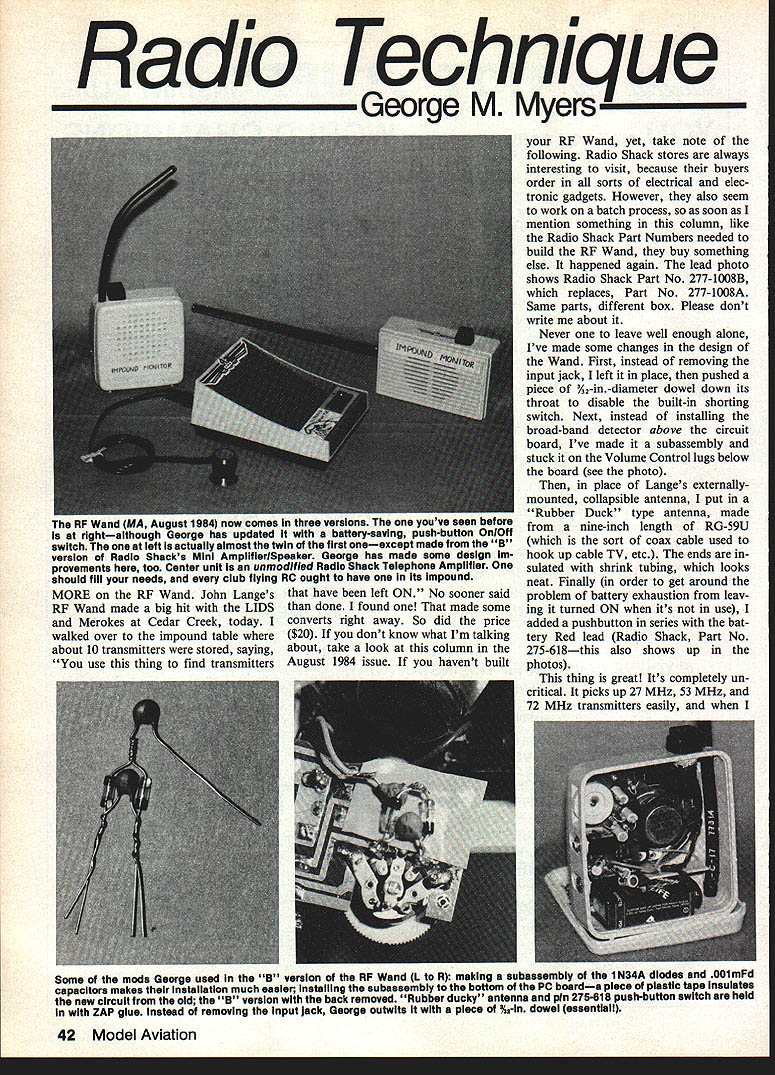
Radio Shack stores are always interesting to visit because their buyers stock all sorts of electrical and electronic gadgets. They also seem to work in a batch process: as soon as I mention something in this column (like Radio Shack part numbers needed to build the RF Wand), the inventory changes. For example, the lead photo shows Radio Shack Part No. 277-1008B replacing Part No. 277-1008A — same parts, different box.
I've made a few changes to Lange's original RF Wand design:
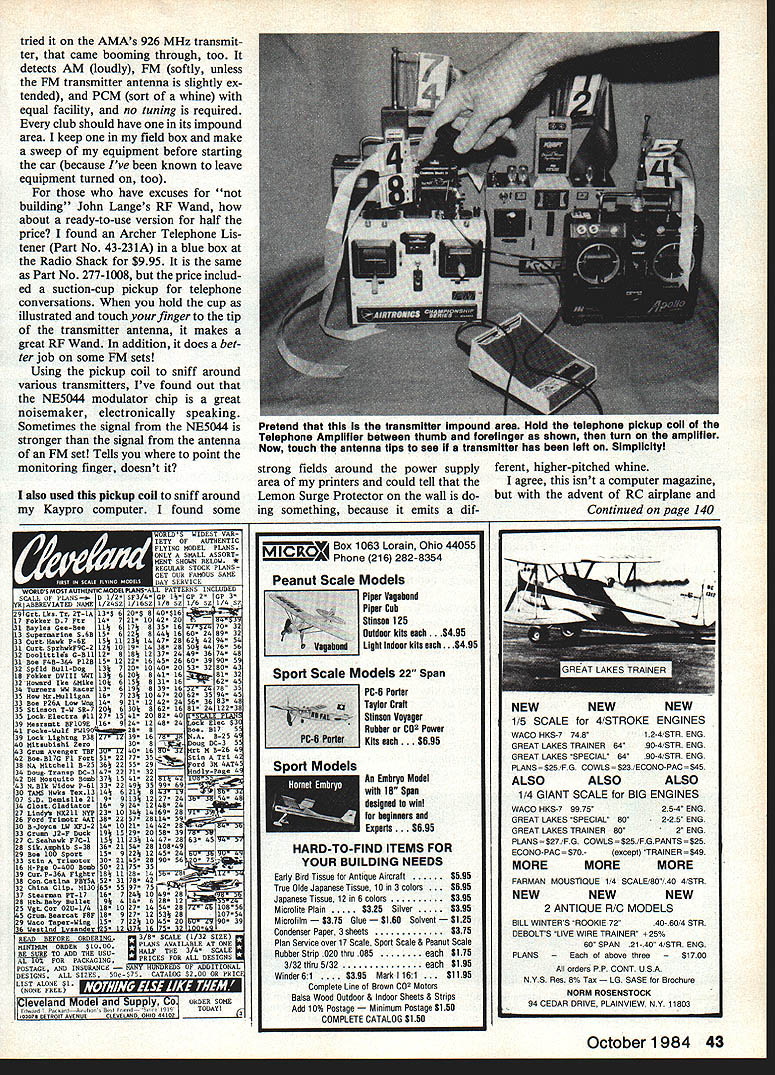
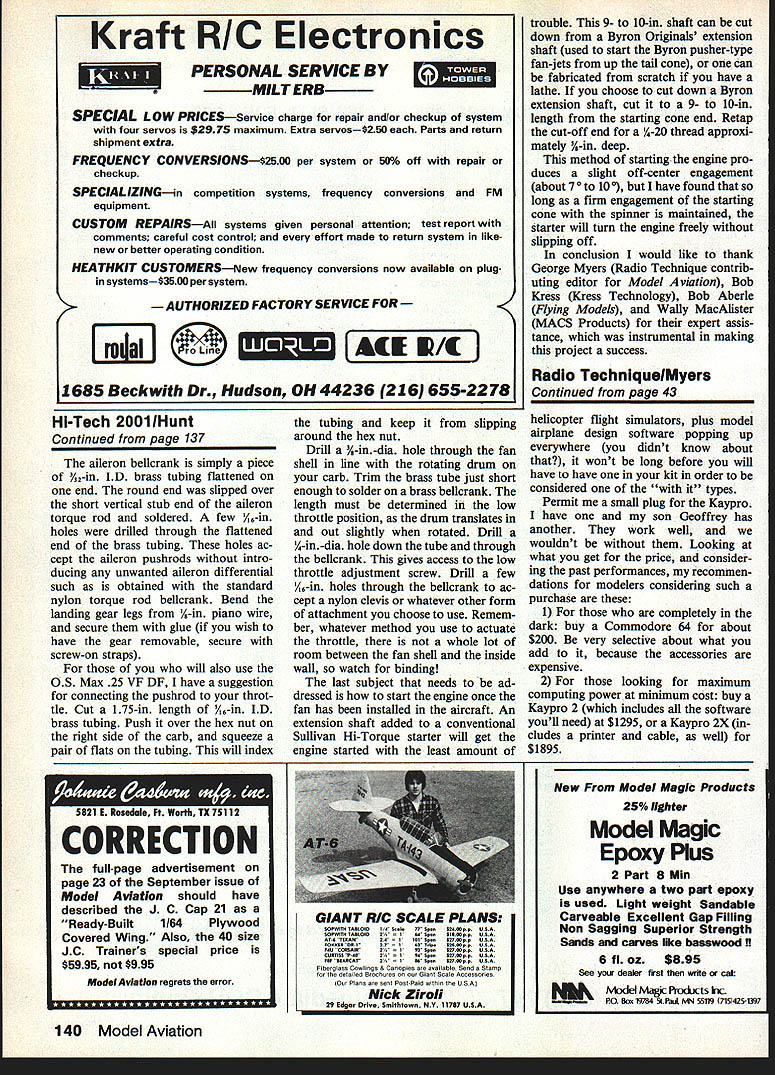
- Instead of removing the input jack, I left it in place and pushed a piece of 5/32-in.-diameter dowel down its throat to disable the built-in shorting switch.
- The broadband detector is now a small subassembly mounted on the Volume Control lugs below the circuit board rather than being installed above the board.
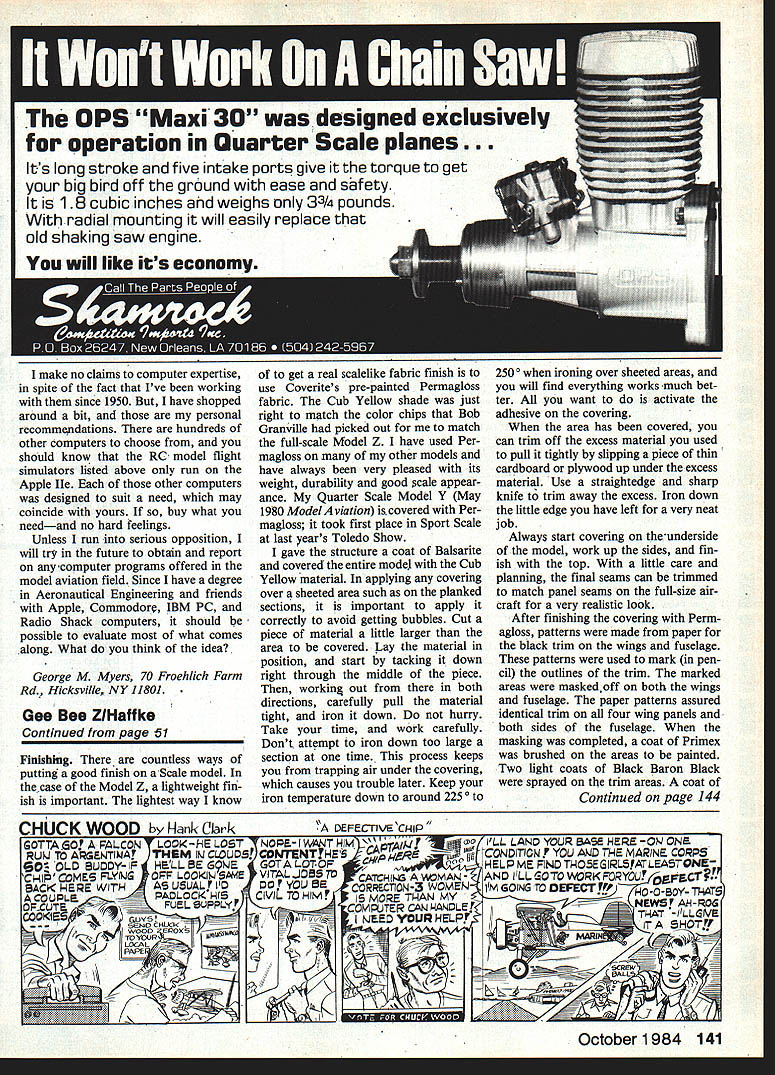
- I replaced Lange's externally mounted collapsible antenna with a "rubber duck" type antenna made from a 9-inch length of RG-59U coax. The ends are insulated with shrink tubing for a neat finish.
- To prevent battery drain when the unit is accidentally left ON, I added a pushbutton in series with the battery red lead (Radio Shack Part No. 275-618).
The modified Wand is very forgiving. It easily detects transmitters at 27 MHz, 53 MHz, and 72 MHz, and it even picked up a 926 MHz transmitter. It detects AM strongly, FM more weakly unless the FM transmitter antenna is slightly extended, and PCM as a whining sound — all without tuning.
Field use and feedback
John Lange's RF Wand was a big hit with the crowd at Cedar Creek. At the impound table (where about ten transmitters were stored) I demonstrated the Wand by saying, "You use this thing to find transmitters that have been left ON," and promptly found one. That demonstration made some converts — and the $20 price helped, too. If you haven't built one yet, see the August 1984 issue of this column for the original design and parts list.
Pickup coil observations
Using the Wand's pickup coil to sniff around transmitters, I discovered the NE5044 modulator chip is a prolific noisemaker. Sometimes the pickup from the NE5044 is stronger than the signal from an FM set's antenna — a handy indicator of where to point the monitoring finger.
I also used the pickup coil to check my Kaypro computer and found strong fields around the power-supply area of my printers. The Lemon Surge Protector on the wall emits a different, higher-pitched whine, which the pickup coil made obvious.
Computers and modelers
I realize this isn't a computer magazine, but with the advent of RC airplane and helicopter flight simulators and increasing availability of model-airplane design software, a computer is becoming a useful tool for modelers.
A small plug for the Kaypro: my son Geoffrey and I both use Kaypros and find them very useful. Considering price and what you get, my recommendations for modelers are:
- For those who are completely in the dark: buy a Commodore 64 (about $200). Be selective about accessories — they can be expensive.
- For those seeking maximum computing power at minimum fuss: consider a Kaypro 2 (includes necessary software) for about $1,295, or a Kaypro 2X (includes printer and cable) for about $1,895.
Transcribed from original scans by AI. Minor OCR errors may remain.

