
Seversky P-35 Déjà vu
By Stephen E. Kanyusik
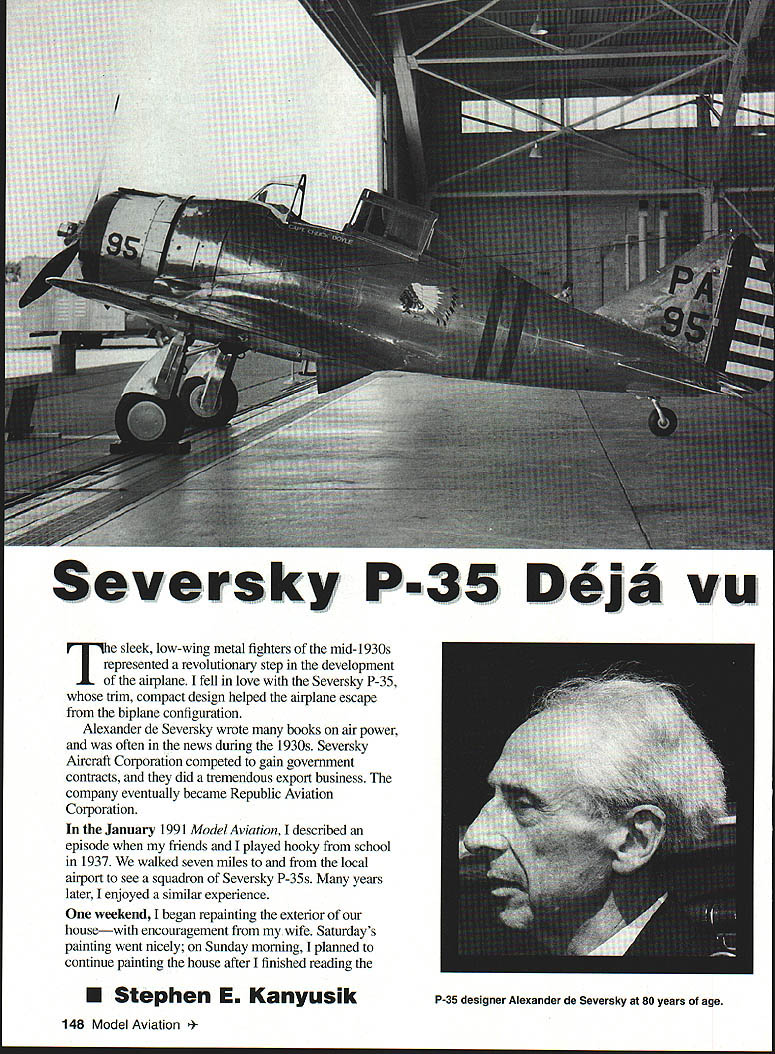
The sleek, low-wing metal fighters of the mid-1930s represented a revolutionary step in the development of the airplane. I fell in love with the Seversky P-35, whose trim, compact design helped the airplane escape from the biplane configuration.
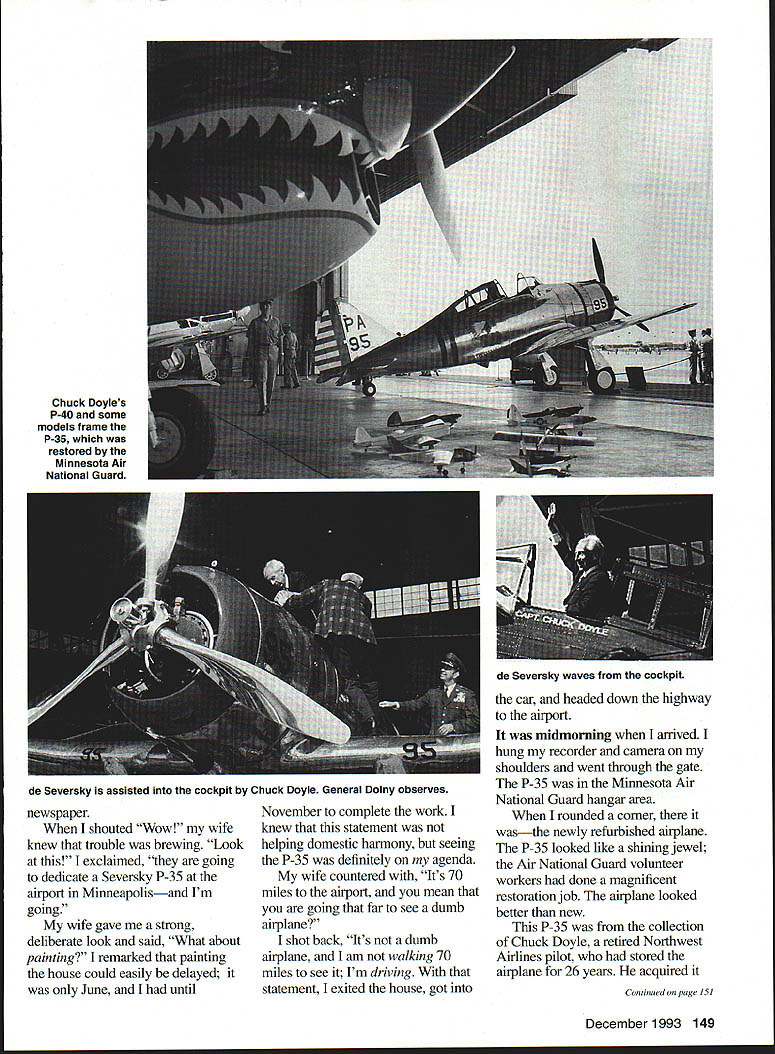
Alexander de Seversky wrote many books on air power, and was often in the news during the 1930s. Seversky Aircraft Corporation competed to gain government contracts, and they did a tremendous export business. The company eventually became Republic Aviation Corporation.
In the January 1991 Model Aviation, I described an episode when my friends and I played hooky from school in 1937. We walked seven miles to and from the local airport to see a squadron of Seversky P-35s. Many years later, I enjoyed a similar experience.
One weekend, I began repainting the exterior of our house—with encouragement from my wife. Saturday's painting went nicely; on Sunday morning I planned to continue painting the house after I finished reading.
When I shouted "Wow!" my wife knew that trouble was brewing. "Look at this!" I exclaimed, "they are going to dedicate a Seversky P-35 at the airport in Minneapolis—and I'm going."
My wife gave me a strong, deliberate look and said, "What about painting?" I remarked that painting the house could easily be delayed; it was only June, and I had until November to complete the work. I knew that this statement was not helping domestic harmony, but seeing the P-35 was definitely on my agenda.
My wife countered with, "It's 70 miles to the airport, and you mean that you are going that far to see a dumb airplane?"
I shot back, "It's not a dumb airplane, and I am not walking 70 miles to see it; I'm driving." With that, I exited the house, got into the car, and headed down the highway to the airport.
It was midmorning when I arrived. I hung my recorder and camera on my shoulders and went through the gate. The P-35 was in the Minnesota Air National Guard hangar area.
When I rounded a corner, there it was—the newly refurbished airplane. The P-35 looked like a shining jewel; the Air National Guard volunteer workers had done a magnificent restoration job. The airplane looked better than new.
This P-35 was from the collection of Chuck Doyle, a retired Northwest Airlines pilot, who had stored the airplane for 26 years. He acquired it from the Minneapolis Vocational School, where it had been used for training. The P-35 was on its way to the Air Force Museum in Dayton, Ohio.
I was able to take my pictures before the crowds arrived—and they certainly did. Grandfathers told their children and grandchildren about the airplane. "I remember seeing it at ..." was overheard all day long.
The highlight of this visit was the presence of Alexander de Seversky. He climbed into the cockpit of the P-35 using a handhold device, but refused help from Brigadier General John R. Dolny, commander of the Minnesota Air National Guard.
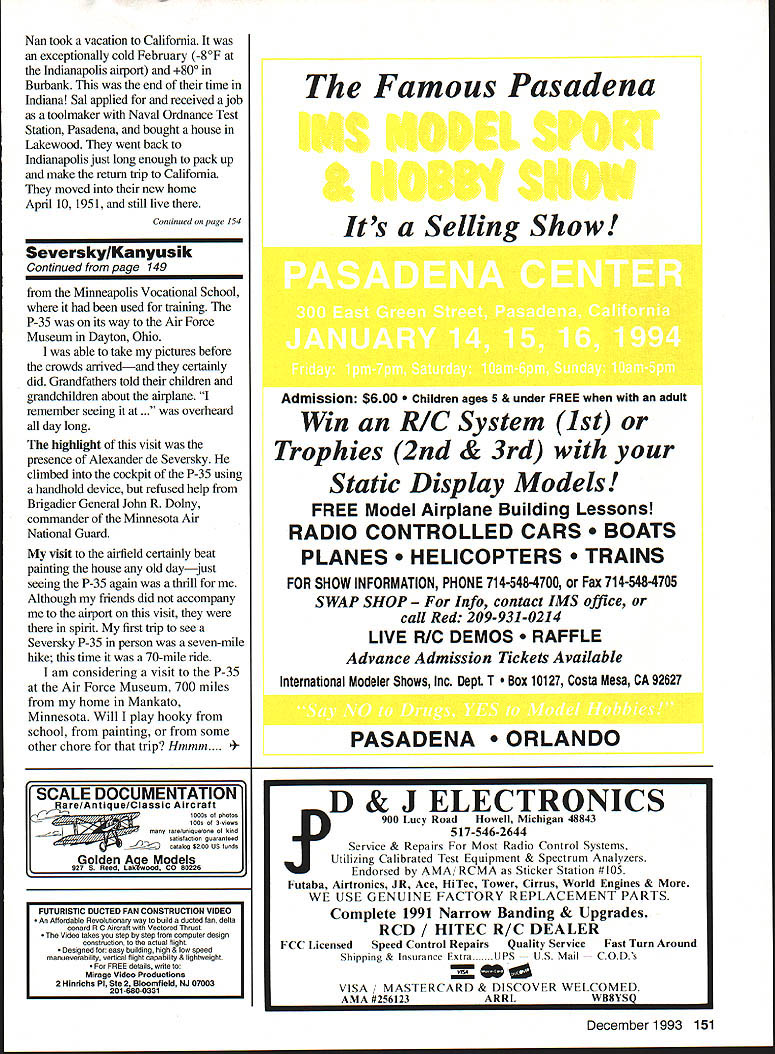
My visit to the airfield certainly beat painting the house any old day—just seeing the P-35 again was a thrill for me. Although my friends did not accompany me to the airport on this visit, they were there in spirit. My first trip to see a Seversky P-35 in person was a seven-mile hike; this time it was a 70-mile ride.
I am considering a visit to the P-35 at the Air Force Museum, 700 miles from my home in Mankato, Minnesota. Will I play hooky from school, from painting, or from some other chore for that trip? Hmmm....
Transcribed from original scans by AI. Minor OCR errors may remain.

