
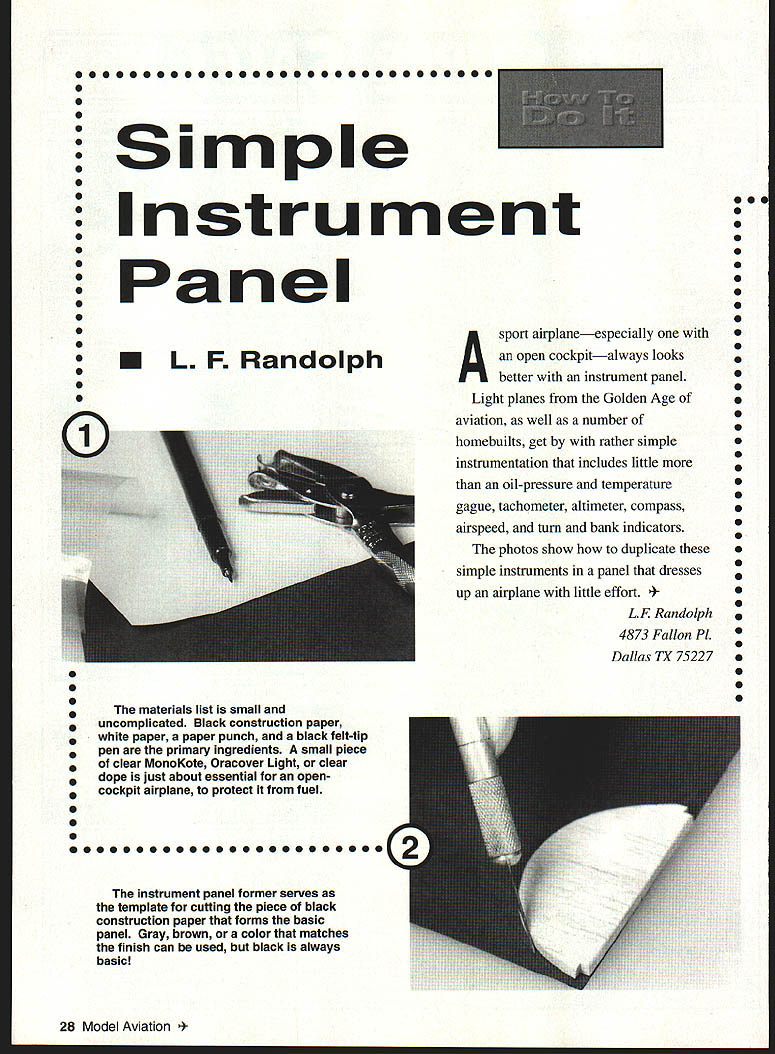
Simple Instrument Panel
L. F. Randolph
A sport airplane—especially one with an open cockpit—always looks better with an instrument panel.
Light planes from the Golden Age of aviation, as well as a number of homebuilts, get by with rather simple instrumentation that typically includes:
- oil-pressure and temperature gauge
- tachometer
- altimeter
- compass
- airspeed indicator
- turn-and-bank indicator
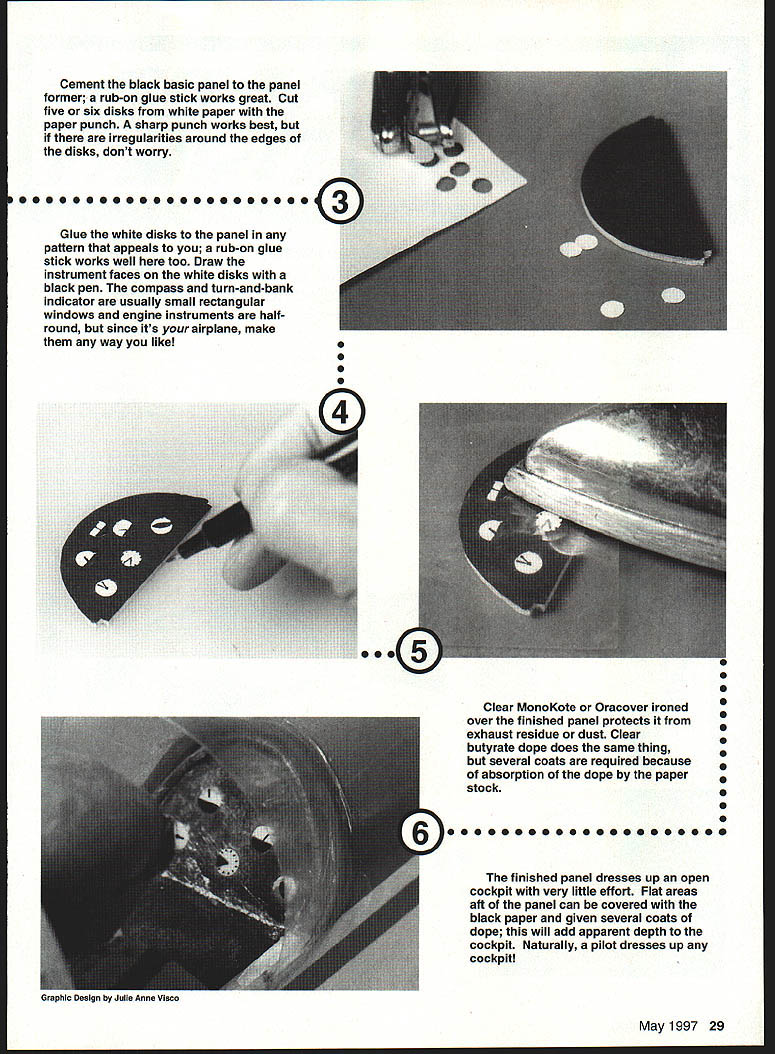
The photos show how to duplicate these simple instruments in a panel that dresses up an airplane with little effort.
Contact
L. F. Randolph 4873 Fallon Pl. Dallas, TX 75227
Construction
- Cement the black basic panel to the panel former; a rub-on glue stick works great.
- Cut five or six disks from white paper with a paper punch. A sharp punch works best, but if there are irregularities around the edges of the disks, don't worry.
- Glue the white disks to the panel in any pattern that appeals to you; a rub-on glue stick works well here too.
- Draw the instrument faces on the white disks with a black pen. The compass and turn-and-bank indicator are usually small rectangular windows and engine instruments are often half-round, but since it's your airplane, make them any way you like.
Finishing
- Clear MonoKote or Oracover ironed over the finished panel protects it from exhaust residue or dust.
- Clear butyrate dope provides similar protection, but several coats are required because the paper stock absorbs the dope.
- Flat areas aft of the panel can be covered with black paper and given several coats of dope; this will add apparent depth to the cockpit.
The finished panel dresses up an open cockpit with very little effort. Naturally, a pilot dresses up any cockpit.
Transcribed from original scans by AI. Minor OCR errors may remain.

