
SMOKE on the water, FIRE in the sky
Fred Berman
Overview / History
Ida Grove, Iowa, is home to Byron Godbersen, industrialist and founder of the modeling products that bear his name. In 1982 Byron conceived using part of his estate for a mammoth radio‑control (RC) show, complete with a special flying site, a hard runway, and full‑scale airport amenities. He envisioned a diversified aviation festival — more than a modelers' invitational — including a full‑scale air show and an action‑packed modeling drama recalling phases of World War II in the Pacific: the “Victory at Sea” spectacle.
Byron's event grew quickly. The Byron Expo, featuring a 1/5‑scale Air Force, became bigger and more sophisticated every year under the direction of Joe Schumacher, full‑scale aerobatic pilot and impresario. Byron’s modeling engineers built not‑for‑sale giant models and dramatic props to create the simulation, and the public responded enthusiastically.
The models and the set
Among the large models and set pieces created for the Expo were:
- Full‑scale‑looking 1/5‑scale aircraft: B‑24, B‑17, B‑29 (with a 30‑foot wing), P‑51s, Corsairs, Thunderbolts, Hellcats, and Warhawks.
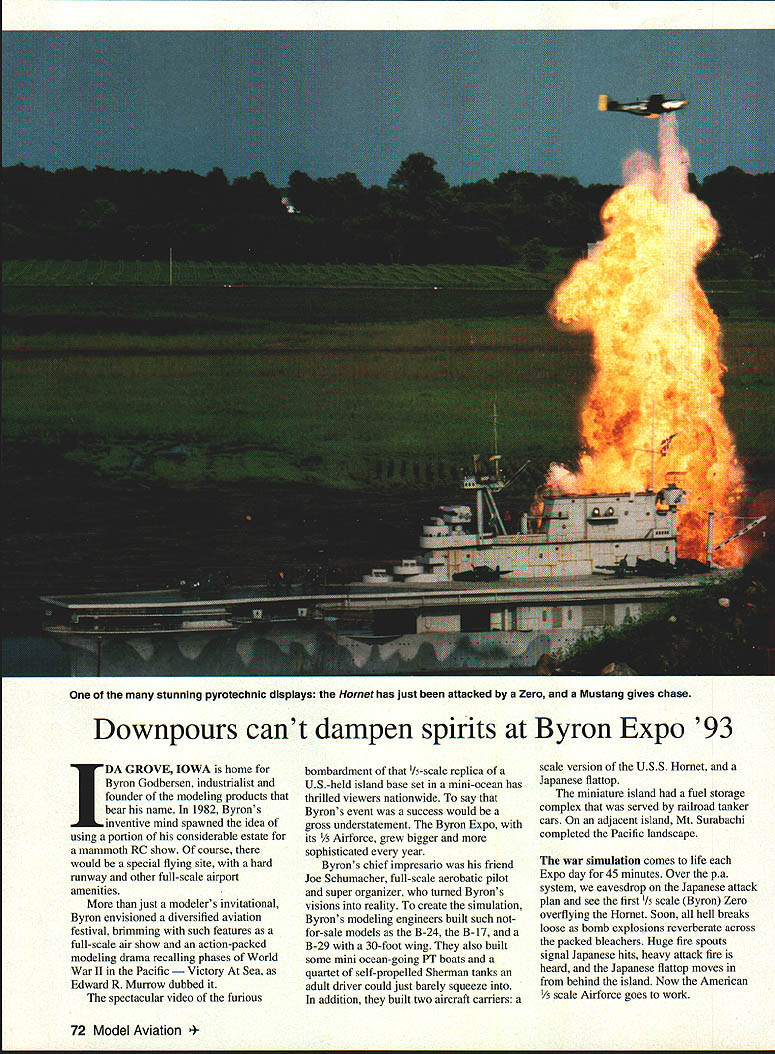
- Miniature naval and ground elements: a scale U.S.S. Hornet, a Japanese flattop, mini PT boats, and self‑propelled Sherman tanks (with adult drivers).
- Terrain and infrastructure: a miniature island with a fuel storage complex served by railroad tanker cars, and an adjacent Mt. Suribachi to complete the Pacific landscape.
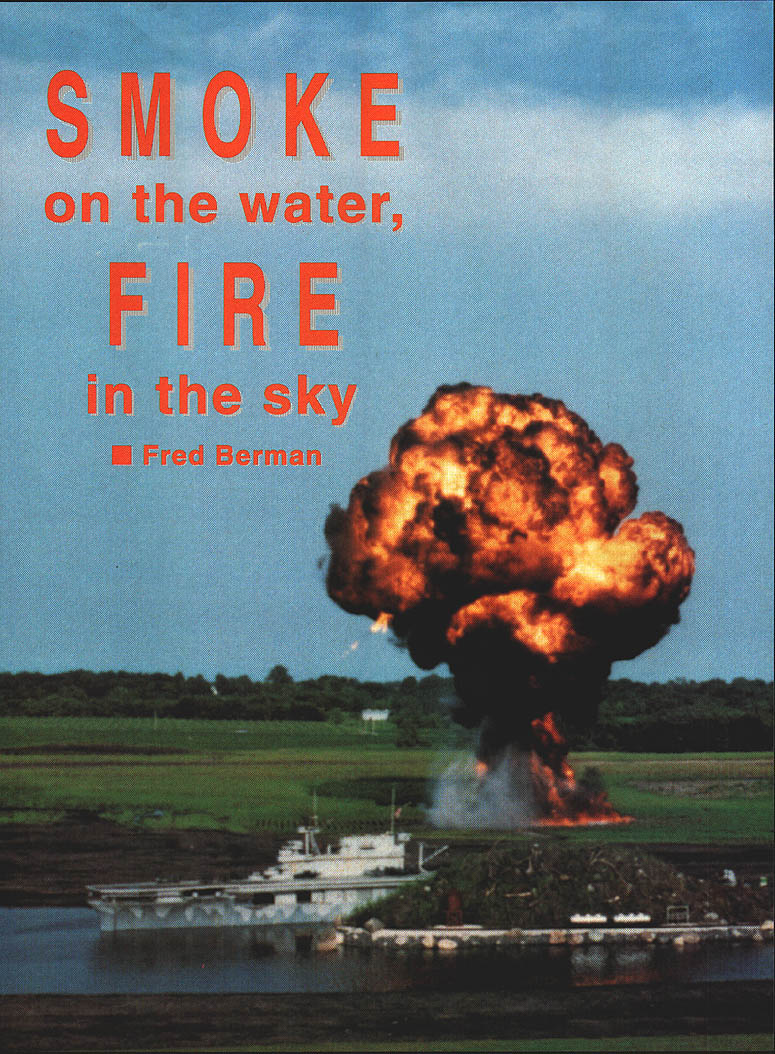
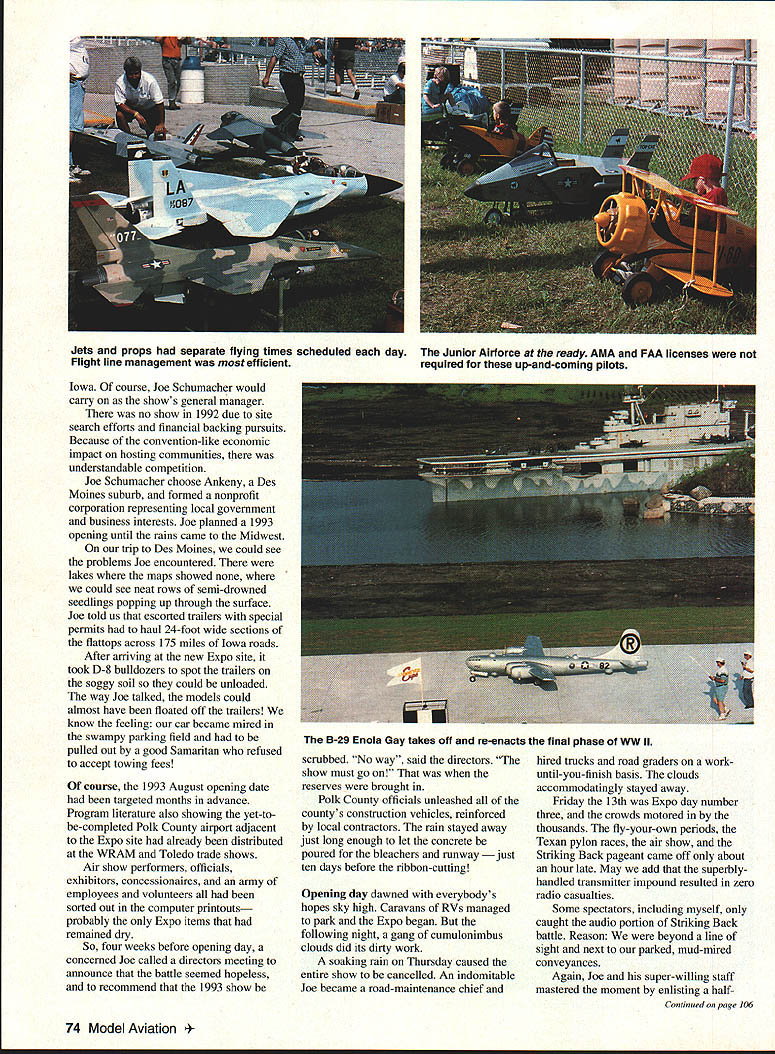
These elements were used to stage a 45‑minute mock battle each Expo day, complete with a voiced Japanese attack plan over the PA system, dogfights (Byron Zeros versus U.S. models), bombs, explosions, and fire effects. The sequence culminated with a giant B‑29 takeoff and a simulated “mushroom cloud,” followed by an emotional planting of Old Glory on simulated Mount Suribachi.
Striking Back (the pageant) was narrated by Jerry Schumacher, who reminded audiences that while the spectacle looks thrilling from the safety of bleachers, war is a living hell and the show’s purpose is not to glorify war but to remind viewers how terrible it can be.
Technical and operational notes
- Early giant models sometimes required two pilots and separate transmitters; modern 10‑channel technology later allowed a single skilled pilot to fly these mammoth models.
- The Expo maintained a transmitter impound and, in the year described, reported zero radio‑related incidents.
- Sig Manufacturing and Ace collaborated to set up two free flying‑lesson sites (RC and control line), with long queues of young aspirants — a positive step toward perpetuating the hobby.
Moving the Expo: site search and the Ankeny effort
By 1991 it became clear a more accessible site was needed for the expanding modeling community. Byron agreed that the set could be moved (Byron Originals continuing as part sponsor) provided the new site remained in Iowa. Competition to host the event was intense because of the convention‑like economic impact on hosting communities.
Joe Schumacher selected Ankeny (a Des Moines suburb) and formed a nonprofit representing local government and business interests. He planned a 1993 opening, but persistent Midwest rains created major problems:
- Fields that maps showed as firm were flooded, with rows of semi‑drowned seedlings visible through standing water.
- Escorting trailers and obtaining special permits to haul 24‑foot‑wide flattop sections across 175 miles of Iowa roads was daunting.
- After arrival, D‑8 bulldozers were required to spot trailers and prepare soggy ground for unloading.
Polk County officials and local contractors eventually brought in county construction vehicles and equipment. The rain held off long enough to pour concrete for bleachers and the runway just ten days before the scheduled ribbon‑cutting.
The 1993 Expo: weather drama and response
The 1993 opening day dawned with high hopes and caravans of RVs. However, a soaking rain on Thursday forced the entire show to be canceled that night. Four weeks earlier, directors had resisted canceling the show and reserves had been mobilized; after the setback they again mobilized resources.
Joe hired trucks and road graders on a work‑until‑finished basis, and volunteers and equipment kept the site serviceable. Friday the 13th — Expo day three — saw thousands of visitors, and the fly‑your‑own periods, Texan pylon races, the air show, and the Striking Back pageant eventually took place, about an hour late. Many attendees experienced parking and access difficulties: some spectators were beyond line of sight for the Striking Back audio, and many cars became mired in swampy parking fields. Joe and his staff enlisted half a dozen ATV tow vehicles to extricate stranded vehicles late into the evening.
On Saturday Joe implemented a revised parking plan: visitors parked at a dry schoolyard several miles away and were shuttled in by a quickly‑recruited convoy of school buses. The local police cooperated with the festival spirit in managing vehicles along the access roads.
Sunday’s final show occurred without cloudburst and closed a determined, if rain‑marred, Expo. Joe Schumacher and his team had essentially saved the event through intensive last‑minute work and community support. Construction of the adjacent North East Polk County airport (intended to accept air‑traveling Expo visitors) was still in progress and expected to better serve future events.
Highlights from the flying and air show
Model flying:
- About 375 registered pilots participated, bringing mostly large models.
- Notable model performances: Bubba Spivey with a Lanier Stinger doing lomcevaks (snap‑rolls); Ace’s four‑man formation team with Big Bingo models; Don Muddiman's Cloud Dancers and his .40‑size Flying Machine (a tiny model that performed aggressive aerobatics and was deadsticked to a successful landing).
- Half‑dozen RC parachutists dropped from a twin‑engine RC mothership, with most landing into their controllers’ arms despite a stiff crosswind.
Full‑scale air show and performers:
- Multiple parachute clubs jumped with about 20 chutes total; one jumper landed on a skateboard strapped to his feet and some carried colored smoke canisters. The Liberty Parachute Team delivered a stirring 25‑foot American flag.
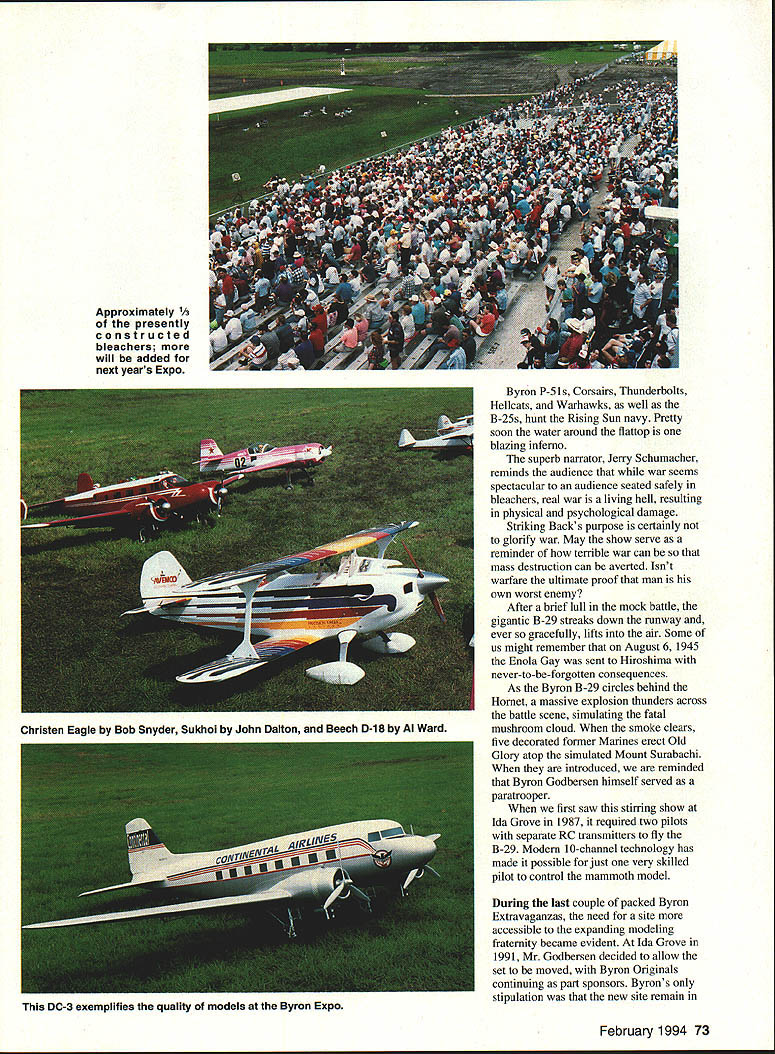
- Christen Eagle biplanes performed precision aerobatics in a three‑ship routine.
- Bill Beardsley flew a BD‑5J microjet (very fast and easy to miss), with his father announcing and a radio patch to the PA system.
- Other acts included a P‑41 Mustang (Regis Urschler), a comedy Cub routine (Captain Jim Mynning), and an Otto the clown helicopter (capable of dumping and picking up highway safety barrels from the cockpit).
- Aerobatic ace Clint McHenry flew a Sukhoi 26M with high‑g maneuvers; at 67 he remained an impressive performer.
The hobby and the man behind it
Aeromodeling is an all‑encompassing hobby involving:
- Sophisticated aeronautical design.
- High‑level handicrafting and finishing.
- Operating skills sometimes exceeding those of many professionals.
- Competition across numerous categories.
- Technical involvement with mechanical, electrical, and radio systems.
- Administrative participation for those engaged in the hobby’s large organizations.
Byron Godbersen is recognized as a catalyst and pioneer in giant scale modeling and propulsion. He deserves respect and appreciation not only for founding and sponsoring the Expo but also for his innovations in the hobby. Byron, who has faced health problems in recent years, is wished a full recovery on behalf of all modelers.
Closing
Joe Schumacher would carry on as the show’s general manager. With lessons learned from weather and site logistics, the Expo organizers looked ahead to improving the site and amenities for future events, hopeful that the next year’s festival would build on the spectacle, community involvement, and the enduring appeal of aeromodeling.
Transcribed from original scans by AI. Minor OCR errors may remain.

