
Snuff Can Fuel Tank
L. F. Randolph
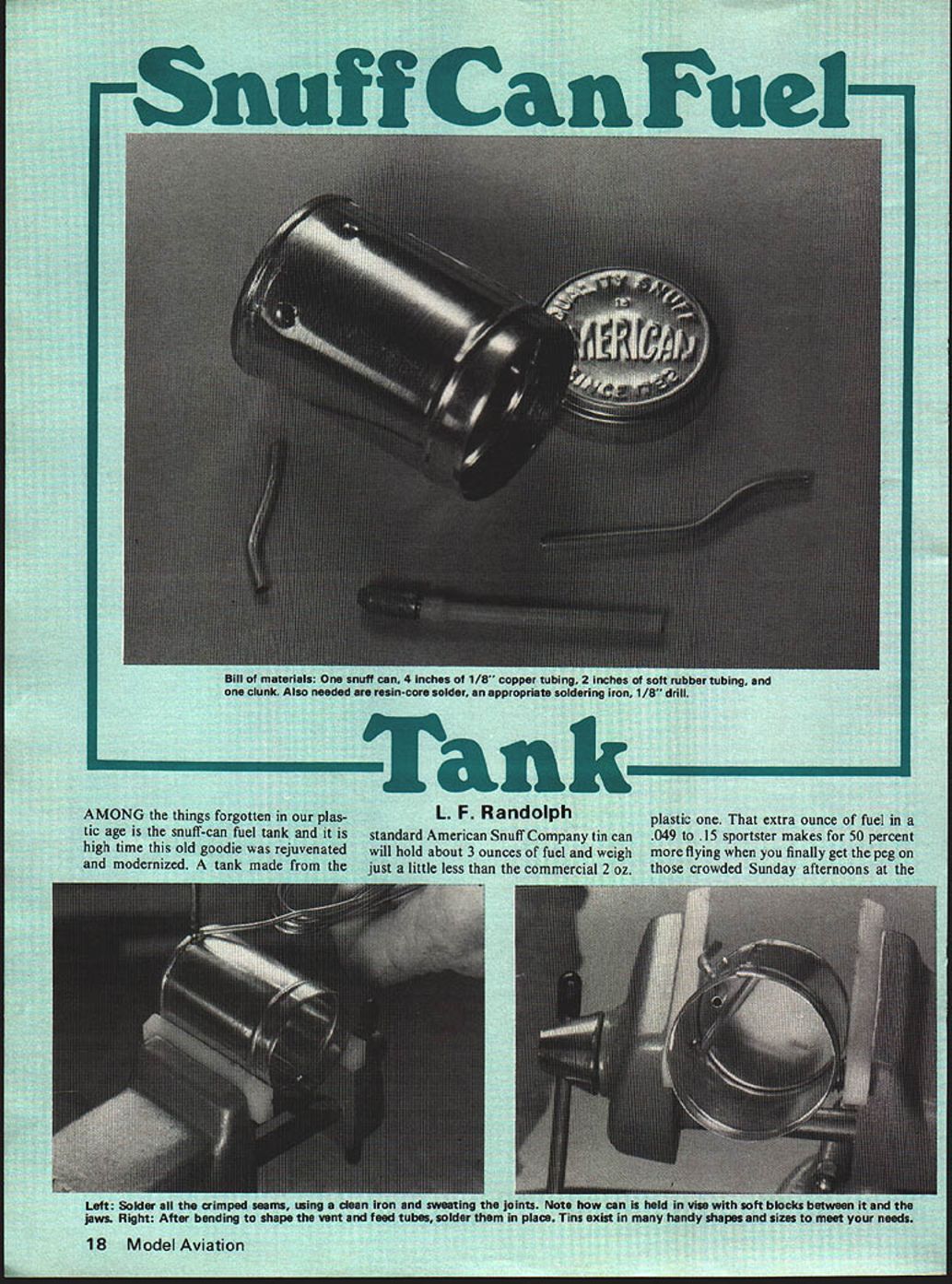
Among the things forgotten in our plastic age is the snuff-can fuel tank, and it is high time this old goodie was rejuvenated and modernized. A tank made from the standard American Snuff Company tin can will hold about 3 ounces of fuel and weigh just a little less than the commercial 2 oz. plastic one. That extra ounce of fuel in a .049 to .15 sportster makes for 50 percent more flying when you finally get the peg on those crowded Sunday afternoons at the field. All-up cost for this tank, less 30 minutes of labor, is 63¢, and you have the snuff left over. (Cost is reduced 35¢ if you already enjoy a dip.)
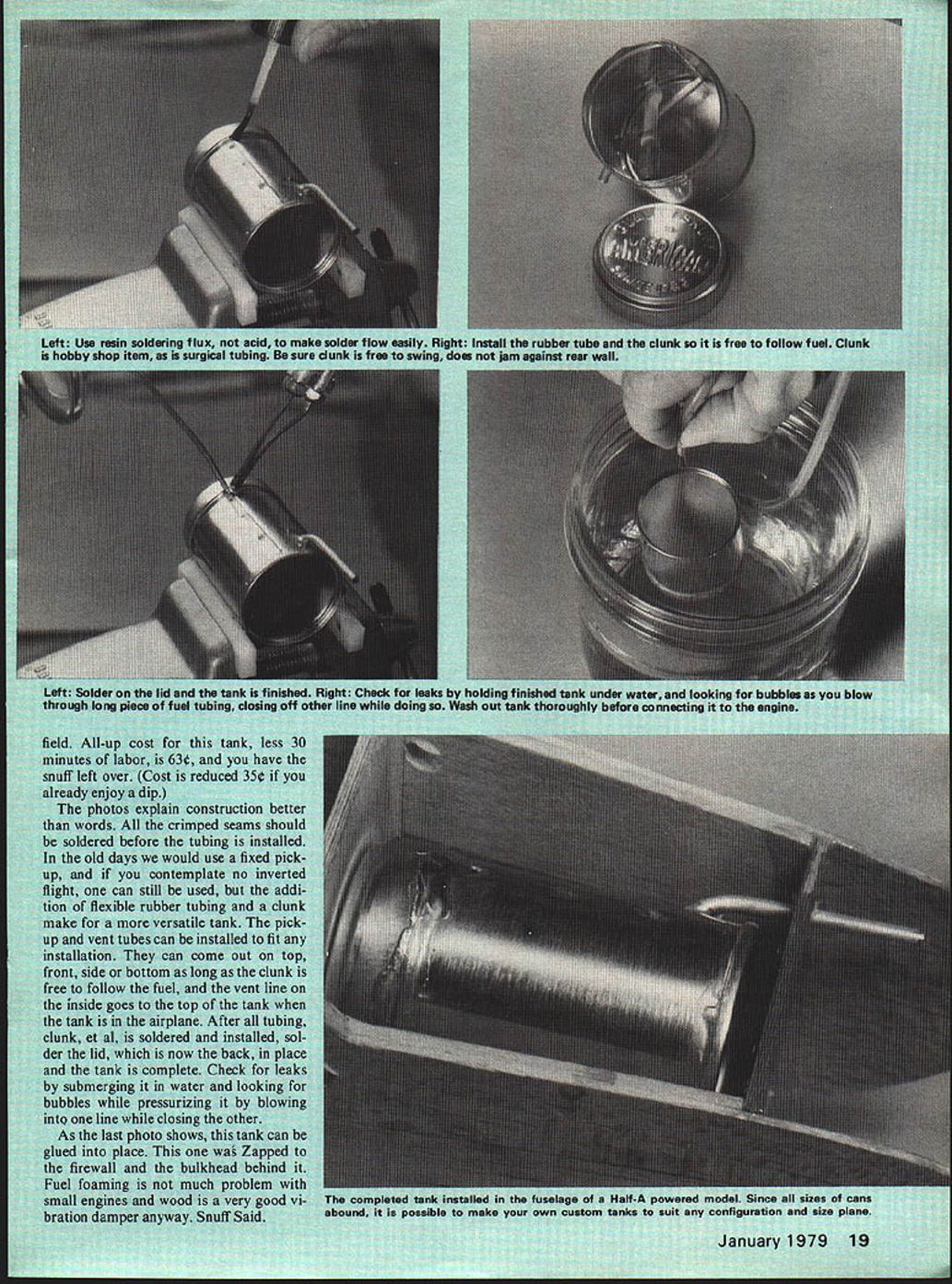
The photos explain construction better than words. All the crimped seams should be soldered before the tubing is installed. In the old days we would use a fixed pick-up, and if you contemplate no inverted flight, one can still be used, but the addition of flexible rubber tubing and a clunk makes for a more versatile tank.
The pick-up and vent tubes can be installed to fit any installation. They can exit on the top, front, side, or bottom as long as the clunk is free to follow the fuel, and the vent line on the inside goes to the top of the tank when the tank is in the airplane. After all tubing, clunk, et al., are soldered and installed, solder the lid (which is now the back) in place and the tank is complete. Check for leaks by submerging the tank in water and looking for bubbles while pressurizing it by blowing into one line and closing the other.
Assembly checklist:
- Solder all crimped seams before installing tubing.
- Install flexible pick-up tubing and clunk (or a fixed pick-up if no inverted flight is expected).
- Position pick-up and vent tubes so the clunk can follow the fuel and the internal vent reaches the top when installed.
- Solder the lid/back in place after all internal parts are installed.
- Test for leaks by submerging and pressurizing as described.
As the last photo shows, this tank can be glued into place. This one was Zapped to the firewall and the bulkhead behind it. Fuel foaming is not much of a problem with small engines, and wood is a very good vibration damper anyway. Snuff said.
Transcribed from original scans by AI. Minor OCR errors may remain.

