
Super Esquire: Adventures in Modeling
Introduction
SUPER Esquire, another quality kit by Midwest Products Co., continues a long line of Esquires and Squires with an excellent pedigree. For those who remember the Tri‑Squire and Esquire, it seemed likely another Sport Flier could be born to carry on the tradition. This article recounts building, outfitting and flying the Super Esquire, including construction notes, radio/engine installation, covering and first‑flight experiences.
Background and Equipment Choice
Reliving earlier experiences with the smaller Tri‑Squire, we chose a Kraft radio and an Enya engine again. The Enya .60 II (MRC Enya .60 II) was pulled from storage, cleaned and bench‑tested — it responded smoothly through throttle range and was selected for this build. For radio we used the 1979 Kraft Sport Series 4‑channel System (No. KPT‑4A), chosen because the Super Esquire is designed for 3 channels but many buyers later add a fourth function. A fifth channel can be added later if desired.
- 3‑channel flight package weight: a little over 10 oz.
- 4‑channel flight package weight: almost 12 oz.
- Recommended battery: 450 mAh pack (a good all‑around choice)
- Note: lighter/heavier flight packages will affect servo torque.
Kit and Construction
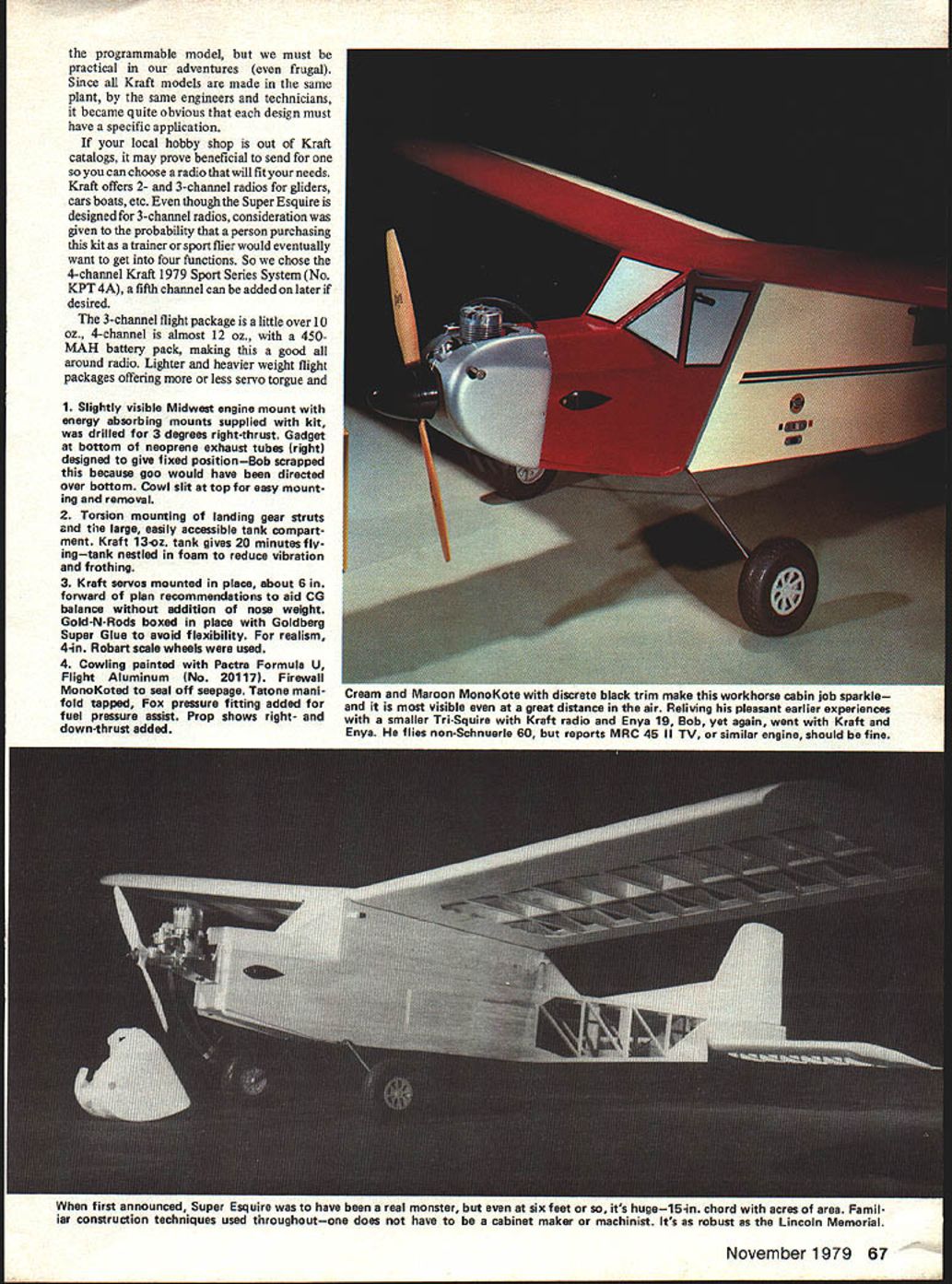
The Super Esquire kit lives up to Midwest's reputation. Micro‑cut balsa and die‑cut parts fit well and the supplied hardware, cowling and engine mount are comprehensive. The die cutting is excellent; parts almost fall into place. One minor annoyance: plans often show only half the wing, which slows builders who like to build both wing halves simultaneously.
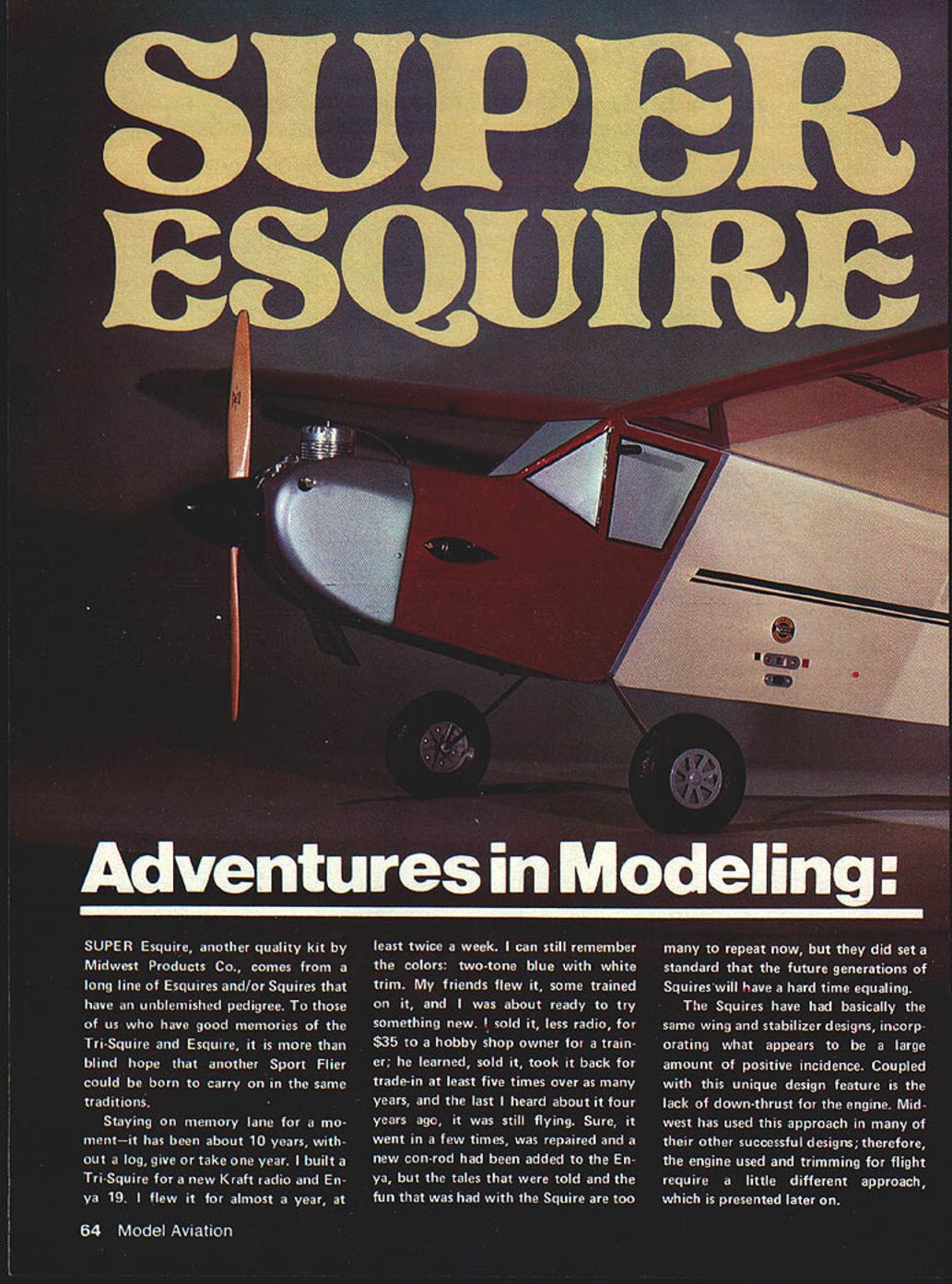
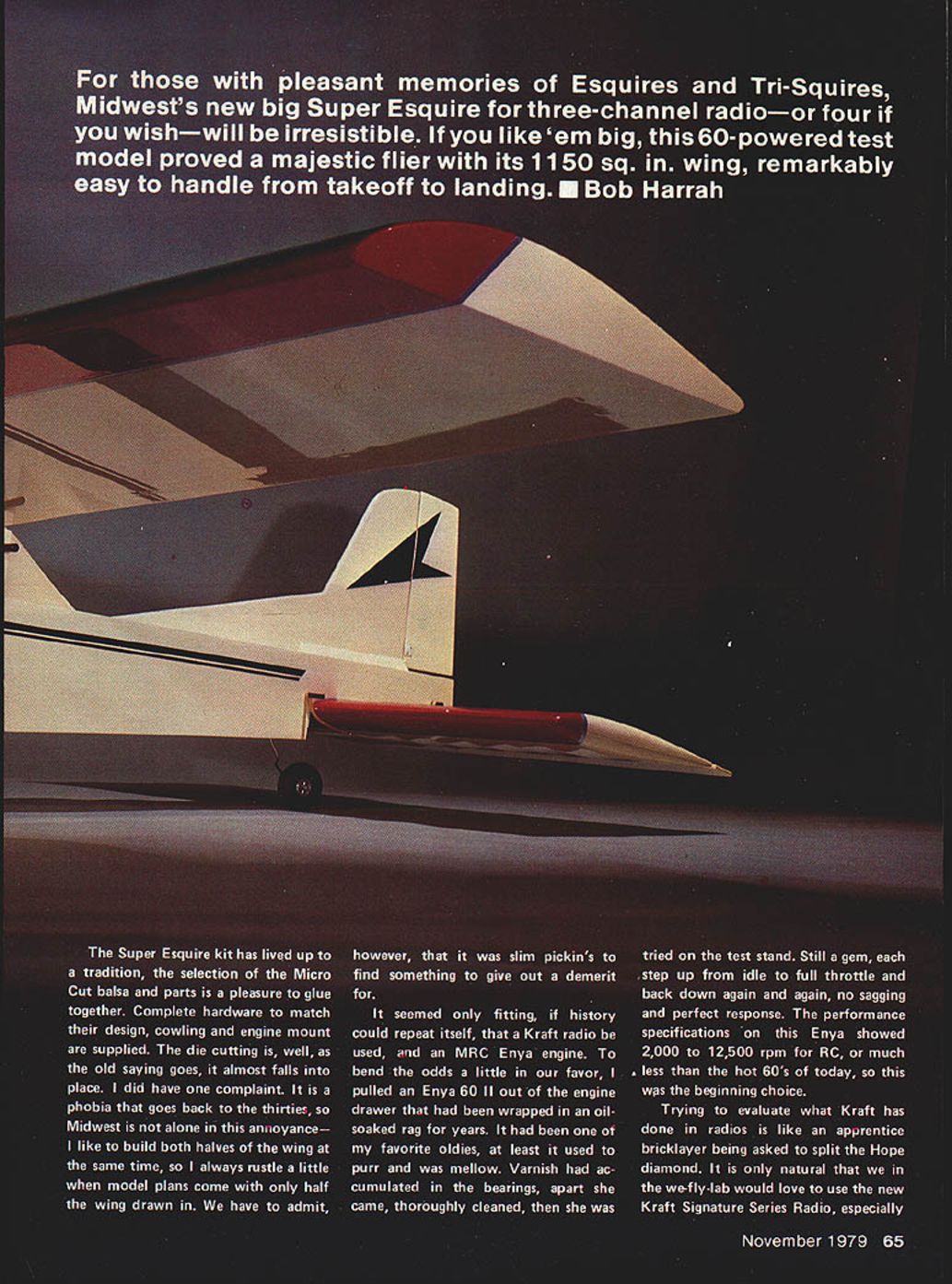
Familiar construction techniques are used throughout; you don't have to be a cabinetmaker or machinist. The structure is robust and the finishing (maroon MonoKote with black trim) makes the model highly visible in the air.
Engine, Mount and Hardware
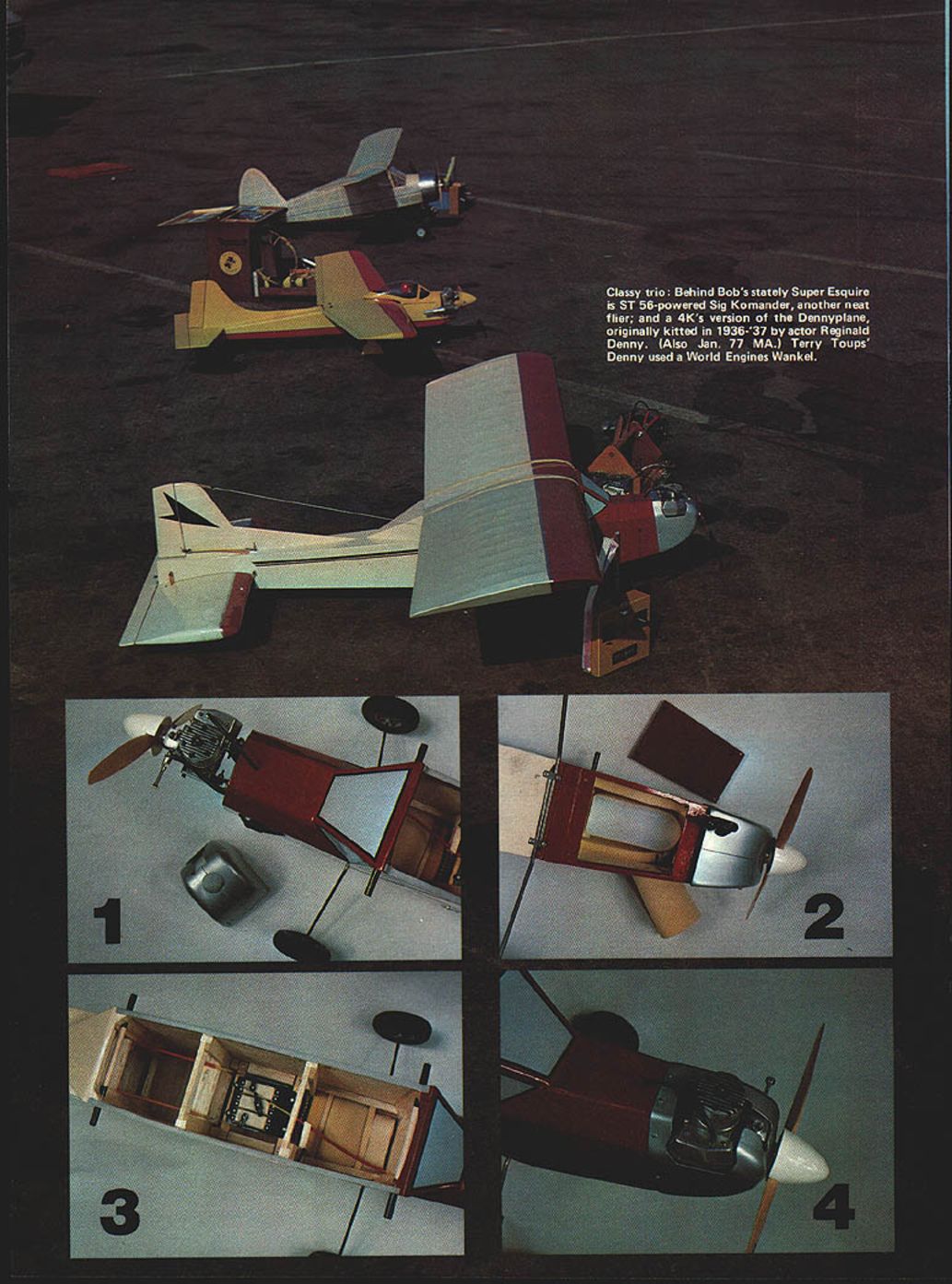
- Midwest engine mount is slightly visible and uses energy‑absorbing mounts drilled 3° right‑thrust.
- Neoprene exhaust tubes on the bottom locate the exhaust and help keep oil off the fuselage bottom.
- Cowl has a slit on top for easy mounting and removal.
- Landing gear uses torsion mounting struts and the tank compartment is large and easily accessible.
- Kraft 13‑oz. fuel tank gives about 20 minutes flying; the tank is nestled in foam to reduce vibration and frothing.
- Kraft servos were mounted about 6" forward of the plan recommendation to help CG balance.
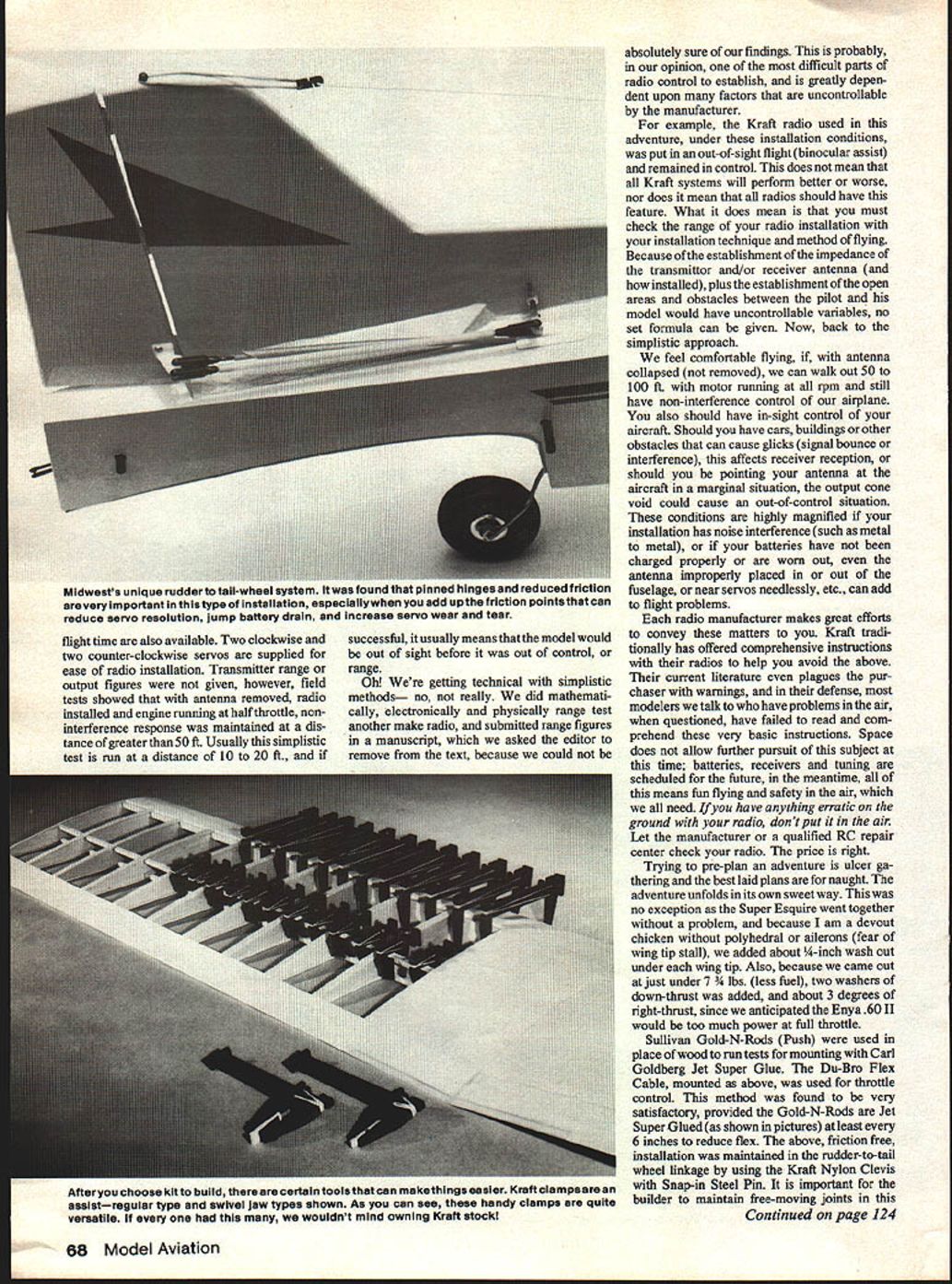
- Pushrods: Sullivan Gold‑N‑Rods (boxed in place) with Carl Goldberg Jet Super Glue to reduce flex.
- Wheels: 4‑inch Robart scale wheels used for realism.
- Cowling painted Pactra Formula "U" Flight Aluminum (No. 20117).
- Firewall sealed with MonoKote to reduce seepage.
- Tatone exhaust manifold (No. EM‑SB) tapped and fitted with a Fox pressure fitting to assist fuel pressure.
- Propeller installation shows slight right‑ and down‑thrust.
Radio, Servos and Linkages
Kraft radios are made in the same plant and by the same engineers; select the specific model that fits your application. Although the Super Esquire is designed for three functions, we installed a 4‑channel Kraft KPT‑4A so a fifth channel could be added later.
- Two clockwise and two counter‑clockwise servos were supplied to ease installation.
- Use Du‑Bro Flex Cable for throttle control; it proved satisfactory when Gold‑N‑Rods were glued at intervals (about every 6 inches) to stiffen the run.
- Rudder‑to‑tailwheel linkage used Kraft Nylon Clevis with snap‑in steel pin to maintain free, low‑friction movement.
Range and interference notes:
- Field tests with the antenna collapsed (or removed), radio installed and engine at half throttle gave non‑interference control at distances greater than 50 ft. A successful short‑range test (10–20 ft.) usually indicates the model will be out of sight before out of control.
- Definitive range is difficult to quantify; it depends on installation, antenna impedance, obstacles, and possible noise sources (metal near antenna, poor battery charge, worn antenna, antenna placement near servos).
- Practical test suggestion: if you can walk out 50–100 ft with engine running and retain control with the antenna collapsed, you’ll likely have safe control while keeping the model in sight. If anything feels marginal on the ground, do not fly — have the radio checked by the manufacturer or a qualified RC repairer.
Covering and Finish
Top Flite Cream and Maroon MonoKote were used for finishing. Tips for large coverage areas:
- Overlap the leading and trailing edges, covering the bottom side first.
- Use a heat gun with air directed away from sealed edges to avoid seam slippage during shrinkage.
- For large areas (like the cowl), trapped air can balloon the covering; add a few pinholes to let air escape.
- Shrink the top of the wing first if you’ve built washout into the wing so washout is preserved.
- The Trim Seal Tool is very useful for finishing; two are handy for large models.
Robart's Super Fueler was used for fueling convenience. Because the Enya .60 II ran well but we wanted pressure assist, a Fox pressure fitting into the Tatone manifold provided the desired help.
Center of Gravity and Final Setup
Before final radio installation (fuselage not yet covered) the CG was checked. The model was slightly tail heavy, so the radio flight package was moved forward about 6 inches beyond the plans. After final assembly and with the tank filled the Super Esquire balanced slightly nose heavy.
Notes on incidence and thrust:
- The Squires traditionally have significant positive incidence and little engine down‑thrust designed into the airframe. This requires different trimming approaches.
- On this build we added about 1/4-inch washout, two washers of down‑thrust and about 3° right‑thrust anticipating the Enya .60 II’s power.
Important: a tail‑heavy airplane of this size can be dangerous on the first flight. Test gliding is impractical for large models; confirm balance and control on the ground before attempting flight.
First Flight and Flight Report
First flight sequence:
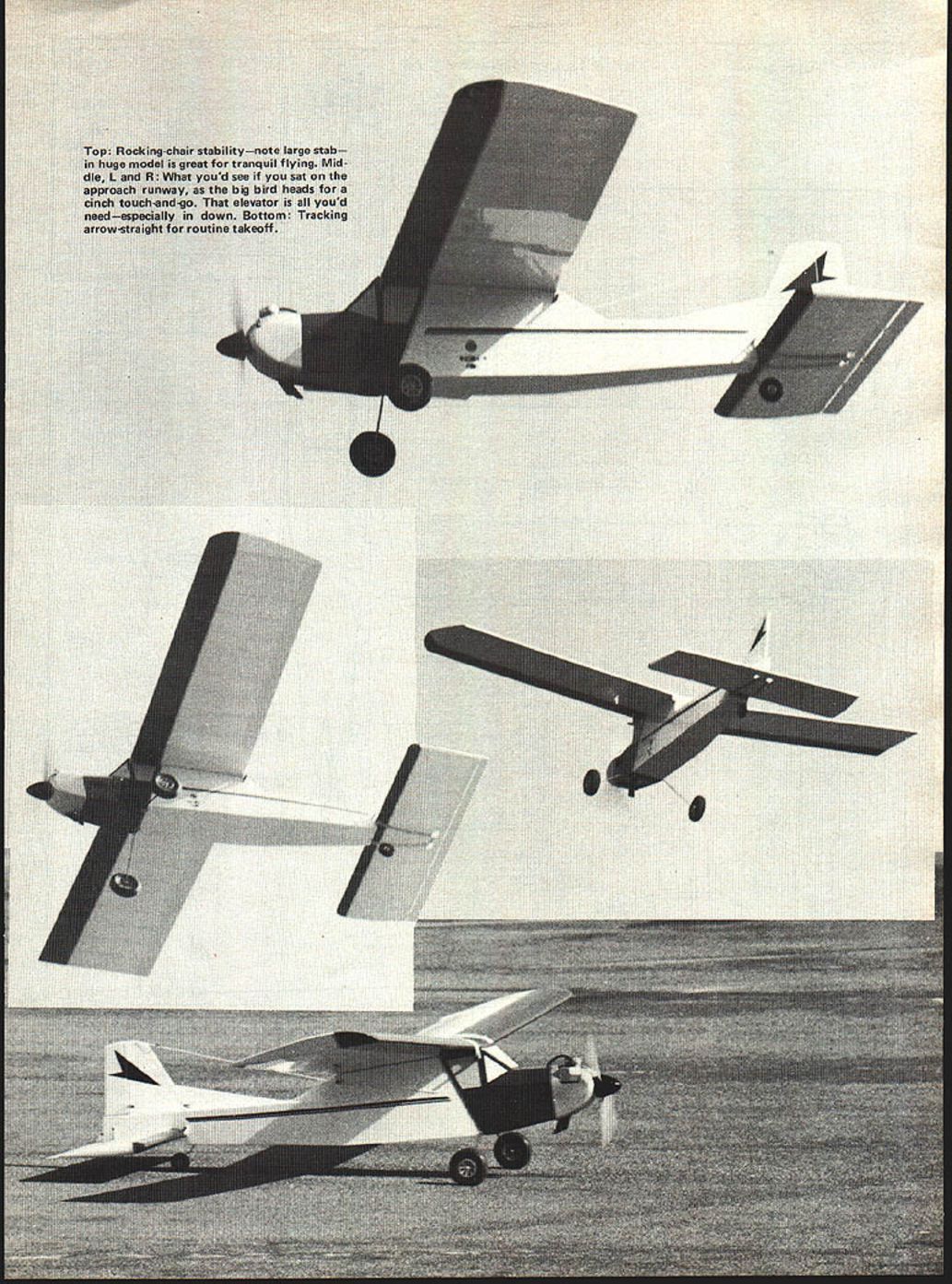
- Taxi and get feel and control response; maintain the nose into the wind and let the model fly itself off.
- At half throttle the Super Esquire became airborne easily. Full throttle required down trim; idle required slight up trim.
- The model caught a small asphalt thermal and flew well for the first passes. During a touch‑and‑go a little too steep an approach caused the prop to touch pavement. The prop did not break off completely, but the spinner chipped and the prop tips were clipped.
Landing:
- After losing the spinner and having the prop damaged, the model started sideslip; with down elevator and prompt handling a 180° turn was made and the Super Esquire performed a perfect dead‑stick landing.
- Spinner was chipped but washer and nut remained; the prop changed from a Rev‑Up 13/5 to a Rev‑Up 12½/5 as a result.
Overall flight impressions:
- The model flew well, floated nicely and was very visible thanks to the cream and maroon MonoKote.
- If using a .60 engine, at least one washer of down‑thrust is recommended; two washers required too many elevator trim changes on this airframe.
- A .45 (for example an MRC Enya .45 II TV) or a .40 would be adequate for sport flying and might not require down‑thrust, depending on final weight.
Recommendations and Weight Guidance
- If the finished weight is 8 lb or under, a .40/.45 engine should be sufficient for sport flying without excessive down‑thrust. For weights above about 8½ lb, consider using a .60.
- Always verify CG and control freedom before first flight.
- Check radio range and installation technique; be conservative and test radios on the ground under realistic installation conditions before flight.
Conclusion
Building and flying the Super Esquire was a pleasant continuation of Squire tradition. The kit fits together nicely, hardware and accessories are well chosen, and the finished model is robust, visible and rewarding to fly. With careful balancing, proper radio installation and prudent first‑flight procedure, the Super Esquire makes an excellent sport/trainer model and a fun project for experienced and returning builders alike.
Transcribed from original scans by AI. Minor OCR errors may remain.

