
Photo captions
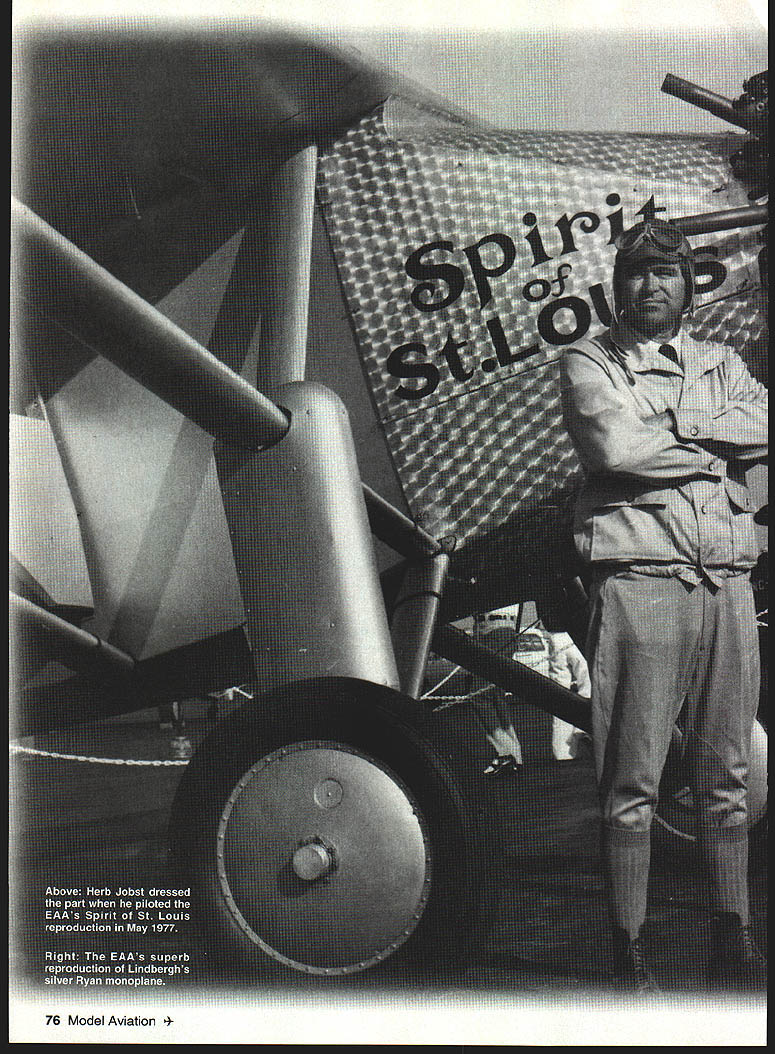
- Above: Herb Jobst dressed the part when he piloted the EAA's Spirit of St. Louis reproduction in May 1977.
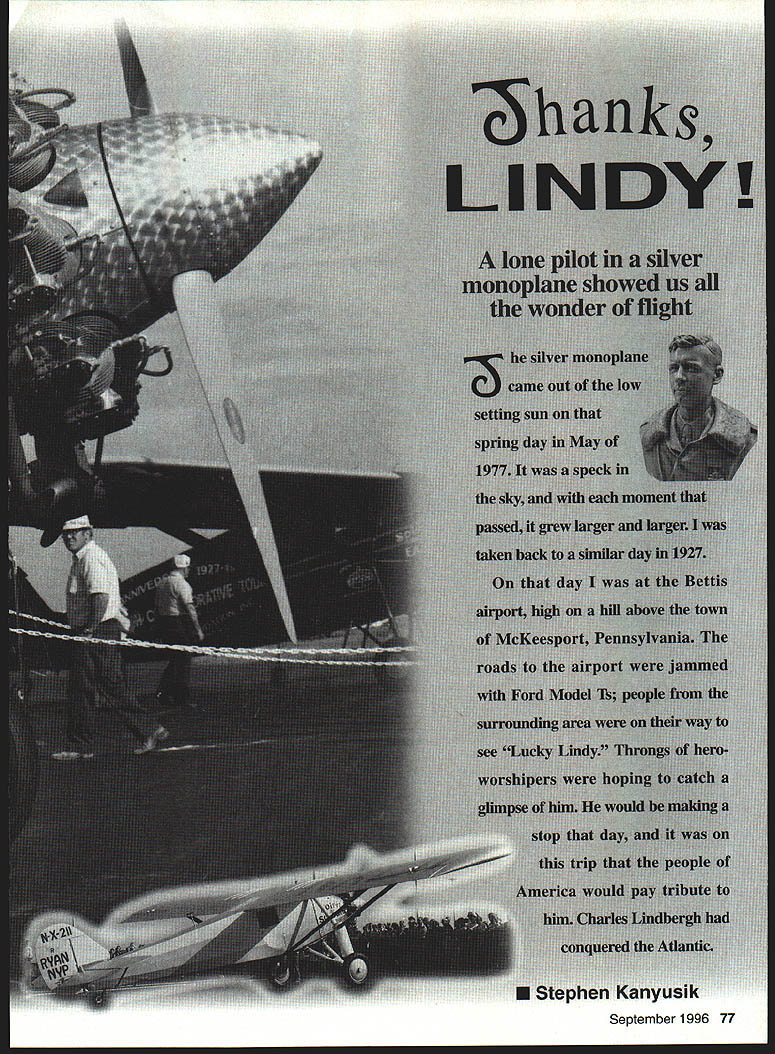
- Right: The EAA's superb reproduction of Lindbergh's silver Ryan monoplane.
Thanks, Lindy!
By Stephen Kanyusik
The silver monoplane came out of the low-setting sun on that spring day in May 1977. It was a speck in the sky, and with each moment that passed it grew larger and larger. I was taken back to a similar day in 1927.
On that day I was at the Bettis airport, high on a hill above the town of McKeesport, Pennsylvania. The roads to the airport were jammed with Ford Model Ts; people from the surrounding area were on their way to see "Lucky Lindy." Throngs of hero-worshipers were hoping to catch a glimpse of him. He would be making a stop that day, and it was on this trip that the people of America would pay tribute to him. Charles Lindbergh had conquered the Atlantic.
The flight had been the goal and, for many, the demise of others. These pioneers were aware of the price they had to pay for their attempts. These intrepid men and women were willing to take the risk. In the early days of aviation, flight may have seemed like a gamble, but in most cases it was not so. There was much preparation and planning.
These flights planted a seed in young people like myself. We were instilled with a desire to learn about the wonders of flight. Model airplane clubs were formed. The Jimmie Allen Flying Club and the Junior Birdmen of America were two of the early groups. The Plymouth automobile company sponsored flying contests; so did newspapers in many areas.
We began to dream about becoming fliers, and as we grew older this dream carried us to the skies. Many of us saw the skies of other continents in combat. Some fell from the sky at the hands of other dedicated combatants.
When we returned from war, flying became a job for some of us—a part of our lives. Some never extended their wings, and the magic lingers only in their memories.
"We began to dream about becoming fliers, and as we grew older, this dream carried us to the skies."
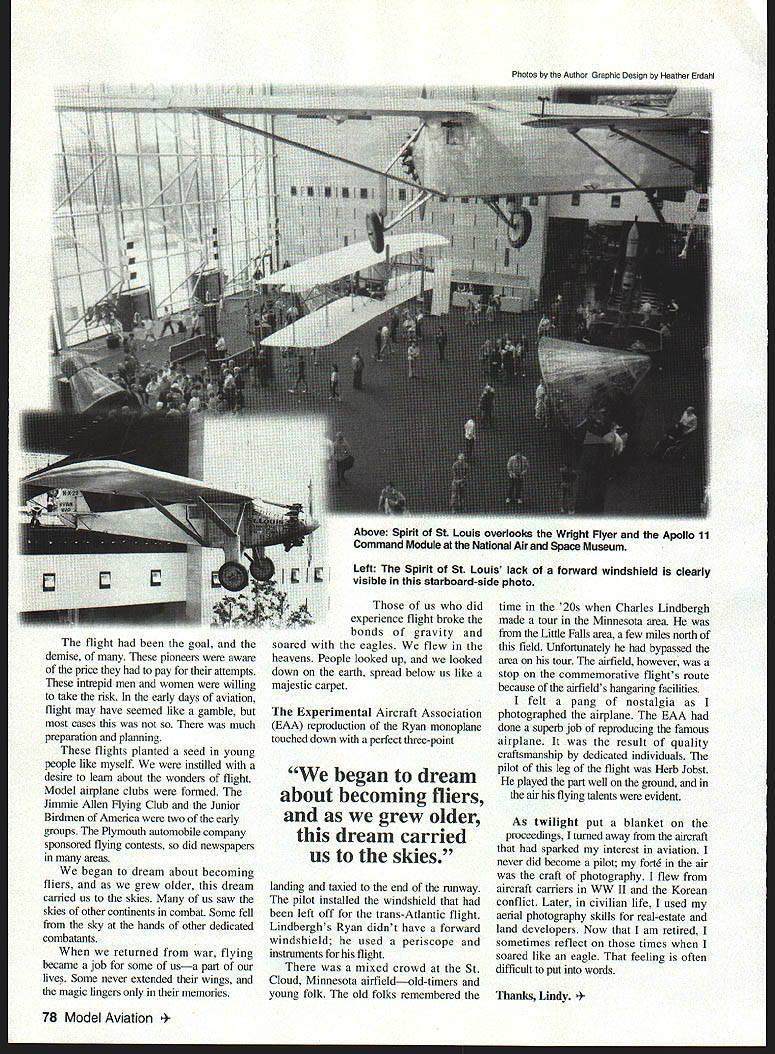
The Experimental Aircraft Association (EAA) reproduction of the Ryan monoplane touched down with a perfect three-point landing and taxied to the end of the runway. The pilot installed the windshield that had been left off for the transatlantic flight. Lindbergh's Ryan didn't have a forward windshield; he used a periscope and instruments for his flight.
There was a mixed crowd at the St. Cloud, Minnesota, airfield—old-timers and young folk. The old folks remembered the time in the '20s when Charles Lindbergh made a tour in the Minnesota area. He was from the Little Falls area, a few miles north of this field. Unfortunately he had bypassed the area on his tour. The airfield, however, was a stop on the commemorative flight's route because of the airfield's hangaring facilities.
I felt a pang of nostalgia as I photographed the airplane. The EAA had done a superb job of reproducing the famous airplane. It was the result of quality craftsmanship by dedicated individuals. The pilot of this leg of the flight was Herb Jobst. He played the part well on the ground, and in the air his flying talents were evident.
As twilight put a blanket on the proceedings, I turned away from the aircraft that had sparked my interest in aviation. I never did become a pilot; my forte in the air was the craft of photography. I flew from aircraft carriers in WWII and the Korean conflict. Later, in civilian life, I used my aerial photography skills for real-estate and land developers. Now that I am retired, I sometimes reflect on those times when I soared like an eagle. That feeling is often difficult to put into words.
Thanks, Lindy.
Transcribed from original scans by AI. Minor OCR errors may remain.

